Fruit Enzyme Face Polish: Can You Use It Daily?
Using a fruit enzyme face polish daily can leave skin looking smoother for a short time, then progressively more reactive. The problem is not that papain, bromelain, or other plant-derived enzymes are inherently harsh.
Leo Ashdown·Updated: September 06, 2026·12 min read
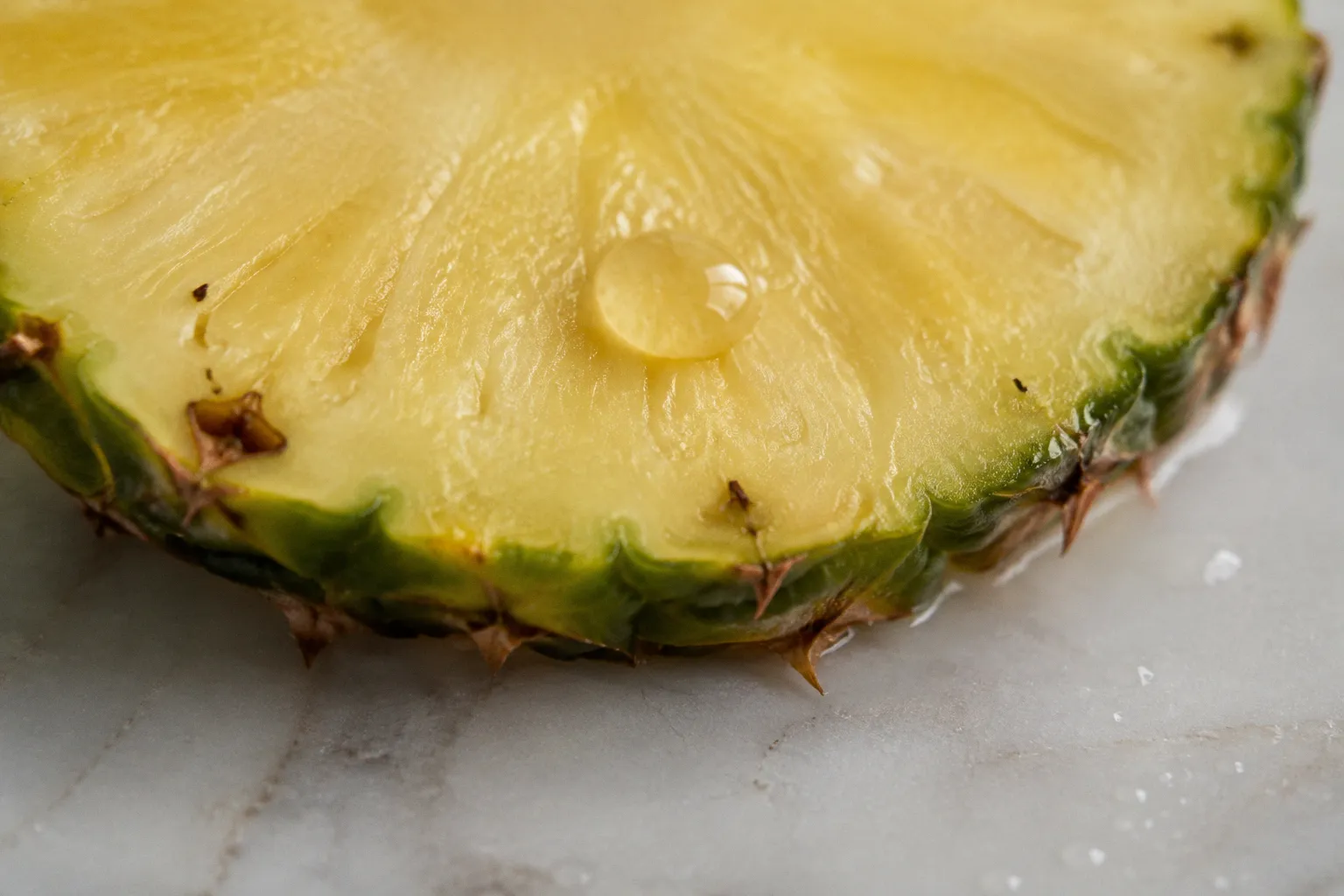
The problem is repetition: each application removes or loosens some of the surface material that helps the stratum corneum retain water and tolerate the rest of your routine.
For most skin, the practical frequency is one to three times per week, depending on the formula and your tolerance. Traditional enzyme peels and polishes are commonly positioned at one to two uses weekly. Sensitive skin should begin with once a week. Daily fruit enzyme exfoliation is not a sensible default, particularly when the product also contains physical particles, acids, retinoids, or strong acne treatments.
The goal is not to make the skin feel maximally polished every morning. The goal is to create enough controlled exfoliation to improve surface texture without increasing transepidermal water loss, dryness, redness, or breakouts caused by barrier disruption.
How fruit enzymes work on the skin
Fruit enzyme exfoliators use naturally derived proteolytic enzymes. These enzymes break down proteins, including the keratin proteins that help hold dead surface skin cells together.
Two familiar examples are:
- Papain, sourced from papaya.
- Bromelain, sourced from pineapple.
In a face polish or rinse-off peel, these enzymes help loosen accumulated corneocytes at the skin surface. That can make the complexion feel softer and look more even immediately after rinsing. The effect is surface-level refinement; it should not be confused with deep penetration into the dermis or with the stronger, more predictable action of high-strength acid exfoliation.
The exact experience depends on the complete formula, not only on the botanical ingredient named on the front of the package. A fruit enzyme face polish may also contain humectants, clays, oils, soothing plant extracts, acids, fragrance components, or physical exfoliating particles. Contact time and particle size also change the outcome.
This is why the label matters more than the word “fruit.” A gentle enzyme powder mixed with water is not equivalent to a creamy polish containing rice powder and a leave-on acid. Both may be described as botanical exfoliators, but they create different levels of friction and chemical activity.
Enzymatic exfoliation versus physical polishing
A purely enzymatic product relies primarily on the enzyme activity to loosen surface cells. A dual-action polish adds physical particles, such as biodegradable jojoba esters or fine rice powder, to accelerate the smoothing effect.
That combination can be useful when the skin tolerates it. It also reduces the margin for error. Rubbing a dual-action polish more firmly or using it more often does not necessarily produce a better result. It can simply add mechanical stress to an already active treatment.
| Formula type | Main action | Best starting frequency | Main risk when overused |
|---|---|---|---|
| Enzyme peel or mask | Proteolytic activity loosens dead surface cells | Once weekly | Dryness, sensitivity, visible redness |
| Enzyme face polish | Enzymatic exfoliation with a creamy or gel base | Once to twice weekly | Barrier stress from repeated exfoliation |
| Dual-action enzyme polish | Enzymes plus physical particles | Once weekly at first | Friction-related irritation and flaking |
| Enzyme powder cleanser | Lower-contact, rinse-off exfoliation depending on dilution | Once weekly, then assess | Cumulative dryness if used as a daily cleanser |
These are starting points, not universal rules. Product instructions take priority because enzyme concentration, particle size, and the intended contact time vary widely. Exact enzyme percentages are often not disclosed, so you cannot reliably calculate strength from the ingredient list alone.
A smoother finish is not proof that the skin needs more exfoliation. It is only proof that the surface has been altered.
Why daily use can damage the moisture barrier
The skin barrier is not a cosmetic detail to preserve after the “real” treatment. It is the system that limits water loss and helps the skin cope with cleansers, weather, active ingredients, and everyday friction.
When you exfoliate, you are deliberately changing the outer layer of the stratum corneum. A controlled treatment can improve feel and appearance. Repeating that treatment before the skin has recovered can shift the balance in the wrong direction.
Common results of over-exfoliation include:
- Tightness after cleansing or rinsing.
- Redness that lasts beyond the treatment.
- Flaking around the nose, mouth, or cheeks.
- Stinging when applying a normally comfortable moisturizer.
- Increased sensitivity to wind, heat, or water.
- A rough, shiny surface that looks polished but feels dehydrated.
- Breakouts that appear alongside irritation rather than as isolated clogged pores.
This is where daily fruit enzyme exfoliation becomes misleading. The skin may initially feel exceptionally smooth because surface roughness has been repeatedly reduced. At the same time, the barrier can become less comfortable and less resilient. Continued exfoliation then creates a cycle: roughness prompts another polish, the polish increases dryness, and dryness makes the texture look uneven again.
A plant-derived ingredient is not automatically compatible with unlimited use. “Natural,” “organic,” and “clean” describe sourcing or formulation choices; they do not remove the need to manage frequency. Papain and bromelain are active enzymes. Their botanical origin does not make them inert.
The interaction with an acne routine
Fruit enzymes can sit comfortably in some acne-prone routines, but they should not be treated as a universal acne solution. Breakout-prone skin often has two problems at once: congestion and irritation. Exfoliating more frequently may seem logical for congestion, yet barrier damage can make the skin more inflamed and less tolerant of the rest of the routine.
Be especially careful when your regimen already includes:
- Leave-on exfoliating acids.
- Retinoids or retinol.
- Benzoyl peroxide.
- Strong clay masks.
- Scrubs, cleansing brushes, or textured cloths.
- Spot treatments that cause local dryness.
You do not need to remove every active ingredient automatically. Instead, buffer the routine by separating stronger steps. For example, use the enzyme polish on an evening when you are not applying another exfoliating treatment. Follow with a clean hydrating moisturizer rather than stacking multiple corrective products.
If the skin is actively irritated, peeling, sun-exposed, or cracked, pause exfoliation. An enzyme product should not be used to smooth over a damaged barrier.
How often to use an enzyme face polish
For most skin types, one to three times per week is the useful range. The correct position within that range depends on the formulation and the way your skin behaves after application.
Start below the maximum. You can increase only if the skin remains calm, comfortable, and adequately hydrated over the following days.
A practical frequency guide
| Skin response or routine | Sensible starting point |
|---|---|
| Sensitive, reactive, or easily flushed skin | Once weekly |
| Dry skin with no active irritation | Once weekly |
| Combination skin with moderate tolerance | Once or twice weekly |
| Resilient skin using a mild, rinse-off formula | Up to two or three times weekly |
| Skin using several other active treatments | Once weekly or less |
| Skin with current redness, flaking, or stinging | Pause until comfortable |
The phrase “resilient skin” should not become permission to exfoliate daily. Even skin that tolerates a product well can become dry when the total routine changes. Cold weather, air conditioning, increased cleansing, travel, or the addition of a retinoid can all reduce tolerance.
A simple AM/PM placement
The safest structure is usually to keep the enzyme polish in the evening and make the following morning routine protective.
On the evening of exfoliation:
1. Cleanse without scrubbing or using very hot water.
2. Apply the fruit enzyme face polish according to the product’s contact time.
3. Massage lightly if the formula contains physical particles; do not use pressure to intensify the treatment.
4. Rinse thoroughly.
5. Layer a hydrating serum or moisturizer if the skin feels comfortable.
6. Finish with a barrier-supportive moisturizer. Occlude dry areas lightly if needed, but avoid creating a heavy, congested layer over breakout-prone zones.
The following morning:
1. Cleanse gently or rinse with water, depending on your skin’s needs.
2. Apply a hydrating moisturizer.
3. Use broad-spectrum sunscreen as part of your daytime protection routine.
The next evening, return to a basic routine if the skin feels tight or unusually sensitive. This gives you a clear read on the treatment instead of burying its effects beneath several other actives.
Do not extend the product’s contact time because the result seems subtle. Rinse-off enzyme polishes are designed around their stated use. Leaving them on longer does not make them equivalent to a more effective professional treatment; it only increases uncertainty about irritation.
Sensitive skin, breakout-prone skin, and the temptation to polish more
Sensitive skin should begin with once-weekly use, but frequency alone does not determine tolerance. Application technique matters.
Use less pressure than you think you need. If the product contains rice powder, jojoba esters, or another physical component, let the formula provide the movement. A short, gentle pass is enough. Avoid repeatedly working over the same areas, especially around the nostrils, mouth, and active blemishes.
For breakout-prone skin, keep the application selective if necessary. You do not have to treat the entire face with the same intensity. Areas with congestion may tolerate occasional use while the cheeks remain better served by a moisturizer and a low-friction routine.
However, do not apply an enzyme polish directly over open, picked, or broken blemishes. The issue is not that the enzyme will reach deep into the skin. The issue is that compromised areas are more likely to sting and remain irritated.
A useful test is the delayed response. Skin that looks fine immediately after rinsing has not necessarily tolerated the product. Check how it feels later that evening and the next morning:
- Does moisturizer sting?
- Does the face feel tight when you smile?
- Are the cheeks warmer or redder than usual?
- Has flaking appeared around the nose?
- Are you reaching for more product to suppress dryness?
If yes, reduce frequency or pause. The right gentle enzyme exfoliator frequency is the highest frequency that leaves the rest of the routine unchanged. If the polish forces you to add increasingly heavy products just to feel comfortable, it is being used too often.
For sensitive and breakout-prone skin, the best exfoliation schedule is the one that preserves tolerance for the rest of the regimen.
Dual-action polishes need a stricter approach
Dual-action formulas combine enzymatic exfoliation with physical polishing. They can produce a more immediate change in texture, which is precisely why they deserve more restraint.
The mechanical component introduces variables that the enzyme alone does not: pressure, duration, repetition, and particle shape. Even biodegradable particles can be irritating when rubbed aggressively or used too frequently.
Use a dual-action polish as a treatment, not as a daily cleansing substitute. Once a week is a reasonable starting frequency. If the skin remains comfortable, you can assess whether a second weekly use is necessary. There is rarely a sound reason to move directly to daily use.
To buffer the treatment:
- Apply to damp skin unless the product specifically directs otherwise.
- Use a small amount and spread it without pressing.
- Keep the massage brief.
- Avoid combining it with a facial brush or textured cloth.
- Rinse with lukewarm water.
- Apply hydration immediately after.
- Keep other exfoliating steps out of the same evening.
The product’s sensory effect can be deceptive. A strong polish may make the skin feel smooth because it has created more friction, not because it is better matched to your barrier. Smoothness is one outcome; comfort over the next forty-eight hours is the more useful measurement.
When to pause and reset the routine
Over-exfoliation rarely arrives with a clear alarm. More often, the skin becomes slightly tighter, then slightly more reactive, while the user continues the same schedule because the original product seemed to work.
Resetting does not require an elaborate recovery protocol. Strip the routine back to the basics until the skin feels stable:
1. Pause the enzyme polish and other exfoliating treatments.
2. Cleanse gently and reduce unnecessary washing.
3. Use a clean hydrating moisturizer consistently.
4. Avoid scrubs, brushes, masks, and fragranced treatments while the skin is reactive.
5. Resume one active at a time only after stinging, redness, and flaking have settled.
6. Restart the enzyme product at once weekly rather than returning to the previous schedule.
The reset period is also a useful diagnostic. If the skin improves when exfoliation stops, the issue may have been cumulative barrier stress rather than a lack of exfoliation. If redness, pain, persistent burning, or worsening breakouts continue, seek advice from a qualified healthcare professional rather than escalating cosmetic treatments.
Troubleshooting the routine
The skin feels tight immediately after use.
Reduce the amount of product and the massage time, then move to once-weekly use. If tightness persists, pause the product and focus on hydration.
The face stings when moisturizer is applied.
Treat this as a tolerance signal. Stop exfoliating until the moisturizer is comfortable again. Do not add another active to correct the texture.
Flakes appear two days later.
The delayed timing still matters. The skin may not tolerate the current frequency, the physical particles, or the combination with other actives. Reduce frequency or discontinue the polish.
The product seems to stop working.
Do not automatically increase use. Skin texture naturally fluctuates, and repeated exfoliation can make dryness look like roughness. Review cleansing, hydration, and the rest of the active routine first.
Breakouts appear after polishing.
Separate congestion from irritation. If the lesions are accompanied by redness, tightness, or stinging, barrier stress may be contributing. Pause the polish and simplify.
The skin tolerates one formula but not another.
That is expected. Enzyme source, particle content, contact time, supporting ingredients, and fragrance can all change the experience. Judge the complete formula, not the botanical label alone.
The workable answer on daily use
Can you use a fruit enzyme face polish daily? In most routines, you should not.
Use it once weekly when starting, particularly if your skin is sensitive, dry, breakout-prone, or already exposed to other active treatments. Increase to two or three weekly applications only when the formula is mild, the skin remains comfortable, and there are no signs of barrier stress. Traditional fruit enzyme peels and polishes are generally better treated as periodic resurfacing steps than as everyday cleansers.
The most effective routine is not the one with the highest exfoliation frequency. It is the one that creates a modest improvement in texture while preserving hydration, tolerance, and consistency. Buffer the treatment, layer moisture afterward, avoid competing actives on the same evening, and let the skin’s delayed response—not the immediate polished feeling—set the schedule.