Plant-Derived Hyaluronic Acid: Is It Better for Skin?
Dehydrated, acne-prone skin often needs water without additional oil, occlusion, or aggressive exfoliation.
Iris Ellingham·Updated: September 05, 2026·16 min read
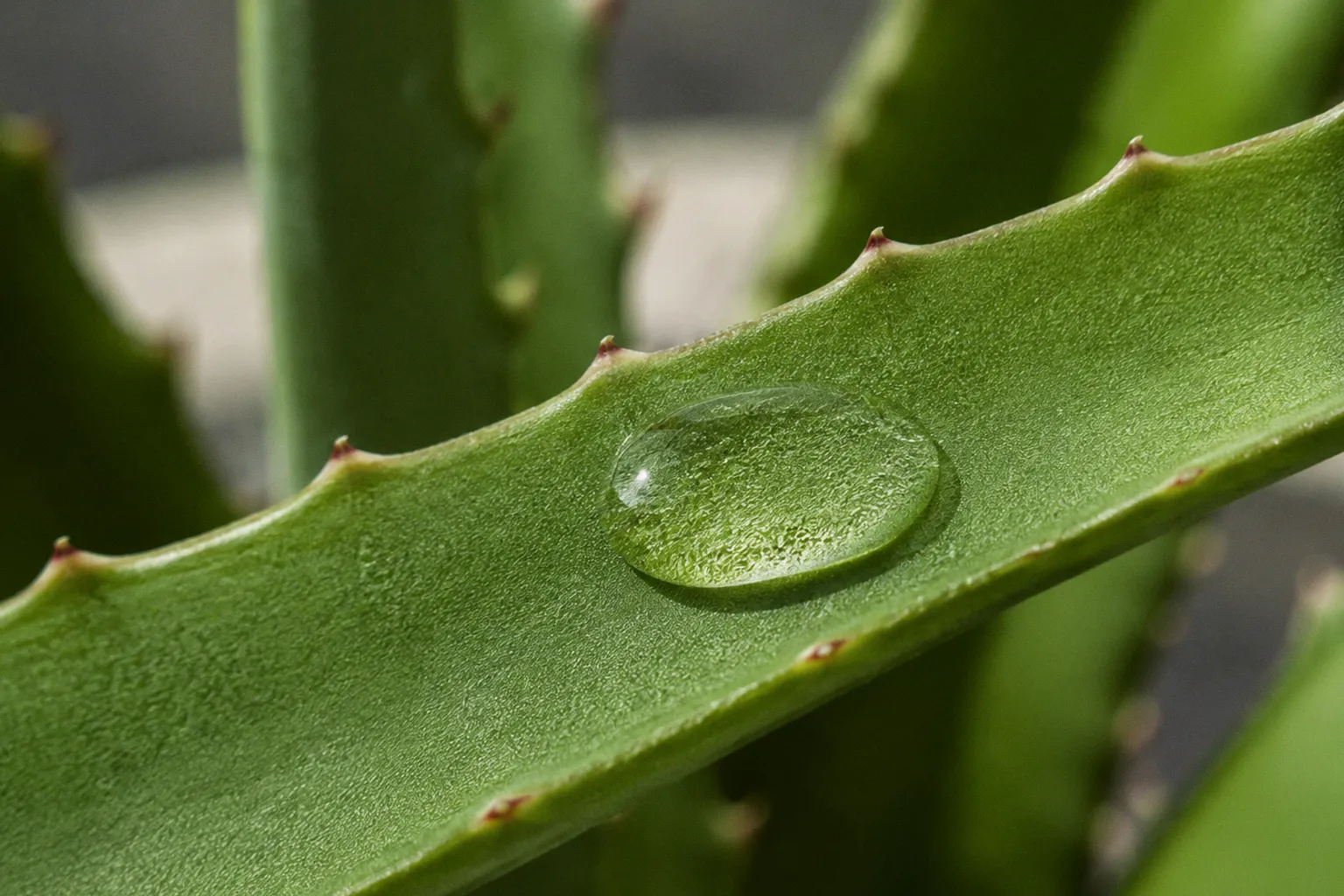
The ingredient most precisely suited to that task is hyaluronic acid: a glycosaminoglycan polysaccharide naturally present in human skin, eyes, and joints, capable of binding up to 1,000 times its weight in water.
But the phrase plant-derived hyaluronic acid is less straightforward than a label may suggest. Hyaluronic acid is not extracted from a leaf, seed, or mushroom in the same way that an oil is pressed or a botanical is macerated. Commercial vegan hyaluronic acid is generally made through microbial bio-fermentation, using plant sugars such as glucose from wheat or corn as the fermentation substrate. Other products use plant or mushroom polysaccharides that imitate some of hyaluronic acid’s humectant and film-forming functions without being chemically identical to it.
So, in the question of plant derived hyaluronic acid vs synthetic, the meaningful comparison is not simply natural against artificial. It is usually bio-fermented hyaluronic acid versus botanical polysaccharide alternatives, with skin compatibility depending more on molecular weight, formulation, preservation, and the rest of the ingredient list than on the origin story alone.
What “plant-derived hyaluronic acid” actually means
Hyaluronic acid is a long-chain polysaccharide built from repeating sugar units. Human skin produces it naturally, where it contributes to water retention, tissue cushioning, and the soft, hydrated quality associated with a functioning extracellular matrix.
Historically, commercial hyaluronic acid was obtained from rooster combs and other animal tissues. That approach created ethical concerns and carried the possibility of residual animal proteins, including proteins capable of provoking allergic reactions. Modern cosmetic hyaluronic acid is now most commonly produced through microbial fermentation.
The process is closer to brewing than to pressing an oil.
Plant sugars, often derived from wheat or corn glucose, are supplied as nutrients to microorganisms. During fermentation, those microorganisms produce hyaluronic acid. The material is then separated, purified, and converted into a cosmetic ingredient such as sodium hyaluronate. The plant provides the carbohydrate feedstock; it does not produce a molecule of human hyaluronic acid inside the seed or leaf.
This distinction matters because it allows a formulation to be vegan and plant-derived in origin while still containing true hyaluronic acid. The finished molecule is not an inferior botanical imitation simply because its starting sugars came from a crop. Once purified, fermentation-derived hyaluronic acid is chemically the same type of glycosaminoglycan used in many conventional skincare formulas.
The word “plant-derived” describes the route to the ingredient, not necessarily a molecule extracted directly from a plant.
The alternative category is made from botanical or fungal polysaccharides. Two names appear regularly in clean skincare:
- Cassia angustifolia seed polysaccharide, obtained from Indian senna seeds and used as a water-binding, film-forming ingredient.
- Tremella fuciformis extract, commonly called snow mushroom, whose polysaccharides create a flexible hydrogel-like film on the skin.
These ingredients can be excellent botanical humectants. They should not, however, be described as hyaluronic acid itself.
The science of bio-fermentation
Bio-fermentation is useful in skincare because it can produce substances with a high degree of consistency while avoiding direct extraction from animal tissue. For hyaluronic acid, the process begins with a carbohydrate medium. Plant-derived glucose may come from wheat or corn, although the final ingredient’s allergen profile depends on purification and the manufacturer’s processing standards rather than on the crop alone.
Microorganisms transform that sugar source into hyaluronic acid. The resulting polymer is purified and adjusted for cosmetic use. A formulator may then select different molecular weights or combine several grades to influence how the product behaves on the skin.
Molecular weight affects more than the marketing language on a serum label. Larger hyaluronic acid molecules tend to remain closer to the surface, where they bind water and create a soft, hydrated film. Smaller molecules can move more readily into the upper layers of the stratum corneum, although “low molecular weight” should not automatically be treated as superior. The skin’s response depends on concentration, the surrounding formula, and whether the ingredient is well tolerated.
A useful formula may contain several forms:
- High-molecular-weight hyaluronic acid for surface hydration and film formation.
- Lower-molecular-weight sodium hyaluronate for a lighter sensory profile and hydration within the upper stratum corneum.
- Crosslinked hyaluronic acid for a more persistent gel network, depending on the product’s formulation strategy.
The ingredient is a humectant, not a complete moisturiser. It attracts and holds water, but it does not supply the lipids needed to replenish a compromised barrier. If a serum contains only water-binding agents and is followed by nothing else, the skin may feel temporarily supple yet remain vulnerable to transepidermal water loss, particularly in dry air.
For acne-prone skin, that distinction is especially important. Dehydrated skin can become tight and reactive even when it produces excess sebum. A well-formulated humectant layer can reduce the temptation to compensate with heavy, pore-congesting products, but it cannot replace a barrier-supportive moisturiser.
Tremella mushroom and Cassia angustifolia: botanical alternatives
Tremella and Cassia are often grouped with plant-based hyaluronic acid because they produce a similar immediate sensation: water is drawn toward the skin, the surface feels smoother, and fine dehydration lines may appear softened. Their chemistry, however, follows a different path.
Tremella fuciformis polysaccharides
Tremella fuciformis is a mushroom rich in polysaccharides. After the fruiting body is processed, the water-soluble fraction can be extracted and purified for use in skincare. The extraction method matters. A carefully controlled aqueous extraction preserves the desired polysaccharide fraction, while excessive heat, poor filtration, or inconsistent raw material can affect colour, odour, viscosity, and performance.
Tremella polysaccharides can hold up to 500 times their weight in water. Their structures are described as smaller and more flexible than those of some conventional hyaluronic acid materials, allowing them to form a light hydrogel film over the skin.
That film can be useful in a hydrating serum or essence, especially when paired with glycerin, betaine, panthenol, or aloe-derived polysaccharides. Tremella is not a direct replacement for every grade of sodium hyaluronate, but it can provide a pleasing, cushion-like hydration profile without making a formula feel oily.
For reactive or blemish-prone skin, the extract itself is generally more relevant as a hydrating support than as an acne treatment. It does not dissolve sebum plugs, regulate sebaceous activity, or replace established acne actives such as salicylic acid, azelaic acid, or benzoyl peroxide. Its value lies in helping a routine remain comfortable when stronger treatments produce dryness.
Cassia angustifolia seed polysaccharide
Cassia angustifolia seed polysaccharide is obtained from the seeds of Indian senna. In cosmetic formulation, it functions as a botanical humectant and film-former. It can contribute to a smooth, hydrated finish and may improve the texture of a water-based product.
The raw material must be extracted rather than treated as a simple seed powder. A powdered botanical may contain a broad range of plant material, including insoluble particles that are unsuitable for an elegant leave-on serum. A purified polysaccharide fraction is more predictable: it can be dispersed into the aqueous phase, combined with other humectants, and preserved within the finished formula.
The distinction between crude plant powder and purified extract is one of the quiet dividing lines in clean formulation. A short INCI list is not automatically a sophisticated one. The skin interacts with the chemical fraction delivered by the formula, not with the botanical reputation of the plant.
Cassia can be a useful choice for skin that wants hydration without a rich oil phase. Yet the evidence for its direct superiority over fermentation-derived sodium hyaluronate, particularly in acne-prone skin, remains limited. It is more accurate to describe it as a functional botanical alternative than as a better version of hyaluronic acid.
Hyaluronic acid versus botanical polysaccharides
The comparison becomes clearer when the ingredients are placed side by side.
| Parameter | Bio-fermented hyaluronic acid | Tremella polysaccharides | Cassia angustifolia polysaccharide |
|---|---|---|---|
| Chemical identity | True hyaluronic acid, commonly used as sodium hyaluronate | Fungal polysaccharides that mimic humectant and film-forming effects | Seed-derived plant polysaccharide |
| Typical origin | Microbial fermentation using sugars that may come from wheat or corn | Aqueous extraction from Tremella fuciformis | Purified extraction from Indian senna seeds |
| Water-binding claim in the available research | Hyaluronic acid can bind up to 1,000 times its weight in water | Tremella polysaccharides can hold up to 500 times their weight in water | Performance depends on the extract and formula; a universal number is not established here |
| Main cosmetic role | Humectant, film-former, texture and hydration support | Humectant, flexible surface film, sensory softness | Humectant, film-former, viscosity and skin-feel support |
| Is it chemically identical to human hyaluronic acid? | It is the same class of molecule when properly produced and purified | No | No |
| Best reason to choose it | Predictable hydration with multiple molecular-weight options | Lightweight botanical hydration and a soft film | Botanical formulation preference and aqueous skin feel |
| Main limitation | Needs barrier-supportive ingredients around it | Not a direct substitute for every HA grade | Limited evidence for being superior to true HA |
The figure often used to describe hyaluronic acid’s capacity is striking: one gram may bind up to six litres of water under specified conditions. Such numbers describe the ingredient’s water-binding potential, not the amount of water a serum can force into living skin. Cosmetic performance is governed by the whole formula, the climate, the skin’s barrier, and the quantity applied.
This is why ingredient comparisons that stop at a single weight-binding number are incomplete. A humectant can bind water impressively in a laboratory system and still feel tight or tacky in a poorly balanced product.
Is plant-based hyaluronic acid better for acne-prone skin?
There is no universal botanical advantage. For acne-prone skin, the more useful question is whether the product hydrates without adding unnecessary irritants, heavy occlusives, or a complicated mixture of fragrant extracts.
Bio-fermented hyaluronic acid can be an excellent choice for acne-prone skin. It is oil-free, compatible with lightweight gel-serum textures, and available in molecular weights that allow a formulator to create anything from a barely perceptible aqueous layer to a more cushioning finish.
Tremella or Cassia may also be excellent choices, particularly for someone who prefers botanical formulas or finds a particular HA product sticky. But the botanical label itself does not make an ingredient more suitable for blemishes. A mushroom polysaccharide can be gentle and elegant; it can also be placed inside a formula containing high levels of fragrance, essential oils, or irritating alcohols. The surrounding composition remains decisive.
A practical acne-safe hydrating formula often has several features:
- A short, clearly disclosed ingredient list with humectants such as glycerin, betaine, panthenol, or hyaluronic acid derivatives.
- No reliance on essential oils to create the impression of botanical activity.
- A light emulsion or gel-cream to reduce water loss after the serum step.
- Barrier-supportive lipids, such as ceramides or carefully selected plant oils, in a proportion appropriate for the skin’s oiliness.
- A preservation system suited to the water content and packaging.
- Fragrance kept low or omitted when the skin is inflamed, sensitised, or undergoing acne treatment.
Cassia angustifolia seed polysaccharide for acne-prone skin should therefore be understood as a hydration ingredient, not an anti-acne active. The same applies to Tremella. They may help reduce the dry, uncomfortable feel associated with retinoids, exfoliating acids, or benzoyl peroxide, but they do not treat comedones or inflammatory lesions directly.
For blemish-prone skin, the best humectant is usually the one inside the simplest well-preserved formula your barrier can tolerate consistently.
The role of extraction and formulation
Botanical skincare is often discussed as though the plant name carries the entire result. In practice, extraction determines which compounds arrive in the bottle, while formulation determines whether those compounds remain stable and usable.
For a water-soluble polysaccharide, the process generally involves contact with purified water, controlled temperature, filtration, and concentration. A manufacturer may refine the extract further to remove insoluble material, reduce microbial burden, or standardise the functional fraction. The final ingredient can then be added to the water phase of a serum or moisturiser.
This differs from the production of a cold-pressed facial oil. Cold pressing preserves a lipid-rich fraction containing fatty acids, sterols, pigments, and sometimes delicate antioxidant compounds. It does not extract the same material as an aqueous polysaccharide process. Neither method is inherently more natural or more effective; each selects a different chemistry from the plant.
A serum containing Tremella, for example, may feel silky because the polysaccharide forms a hydrated film. A formula containing sodium hyaluronate may feel more elastic or slightly tacky, depending on the polymer grade and concentration. If both are combined with glycerin and a polymeric thickener, the sensory differences may become difficult to separate.
The pH also matters, although hyaluronic acid itself is not an exfoliating acid. A low-pH formula may be designed around vitamin C or another active and can feel more stimulating than a neutral hydrating essence. Preservatives, solvents, fragrance materials, and botanical co-extracts may influence tolerance more strongly than the choice between HA and Tremella.
For this reason, an “all-botanical” claim should never be treated as a guarantee of gentleness. Plants contain bioactive compounds, and bioactivity includes the possibility of irritation or sensitisation. The desirable fraction must be extracted, purified, preserved, and delivered at a concentration the skin can accept.
Plant derived hyaluronic acid vs synthetic: what the label does not tell you
The word “synthetic” is frequently used as a broad category, although it can describe several different things. A laboratory-made or fermentation-derived ingredient may be highly purified and chemically well defined. A plant extract may contain a complex mixture of polysaccharides, proteins, minerals, pigments, and trace compounds.
Neither complexity nor purity is automatically better.
If the product contains sodium hyaluronate, hyaluronic acid, or a named crosslinked HA, the ingredient is likely true hyaluronic acid, regardless of whether its glucose substrate was plant-derived. If the label lists Tremella fuciformis extract or Cassia angustifolia seed polysaccharide, the product contains a botanical alternative rather than hyaluronic acid itself.
The distinction can usually be read through the INCI list:
1. Look for the exact ingredient name. Sodium hyaluronate indicates a salt form of hyaluronic acid; Tremella and Cassia indicate different polysaccharide materials.
2. Read the position in the formula. An ingredient near the beginning is generally present at a higher level than one near the end, although INCI ordering has limits and does not reveal the precise percentage.
3. Assess the complete base. Water, glycerin, propanediol, betaine, panthenol, and a suitable preservative may support a calm hydrating formula more effectively than a single celebrated botanical.
4. Check whether the product is a serum or a moisturiser. A humectant serum needs a second layer if the skin loses water readily.
5. Consider fragrance separately from botanical identity. Essential oils are not interchangeable with non-fragrant plant polysaccharides.
6. Look for packaging appropriate to a water-rich product. An airless pump or controlled dispenser can reduce repeated contamination compared with an open jar.
A brand may reasonably call a fermentation-derived HA “plant-based” if the feedstock is plant sugar and the production is vegan. It should not imply that the finished molecule was pressed from a plant. Clear wording protects the consumer and gives botanical science the precision it deserves.
Which option should you choose?
For most routines, the choice can be made by texture, tolerance, and formulation quality rather than by the word “natural.”
Choose bio-fermented hyaluronic acid when you want:
- A well-established humectant with a broad formulation history.
- Multiple molecular-weight options within one product.
- A clear vegan alternative to historically animal-derived HA.
- Lightweight hydration that layers beneath an acne treatment or moisturiser.
Choose a Tremella-based formula when you want:
- A botanical polysaccharide with a soft, flexible surface film.
- Hydration in a serum that avoids an oily finish.
- A clean formulation built around mushroom-derived rather than true HA materials.
Choose Cassia angustifolia seed polysaccharide when you want:
- A plant-derived film-former and humectant.
- A smooth aqueous texture with botanical positioning.
- A formula that uses purified seed polysaccharides instead of conventional HA.
None of these choices removes the need for sunscreen, appropriate acne therapy, or barrier care. A hydrating serum can make an active routine more tolerable, but it cannot compensate for over-exfoliation, a damaged barrier, or a formula that contains several potential irritants.
Application is simple but precise. Apply the serum to slightly damp skin, then follow with a moisturiser that contains enough emollient or occlusive material to reduce water loss. If the skin is very dry or the climate is arid, a few drops of a suitable cold-pressed facial oil can be used over the moisturiser, but an oil alone will not add water to the skin. It will mainly slow evaporation.
Patch testing remains sensible, particularly with formulas containing multiple botanical extracts. Introduce one new product at a time, and do not treat an increase in stinging, persistent redness, or clustered bumps as evidence that the product is “working.”
The more honest answer
Plant-derived hyaluronic acid is not automatically better than synthetic hyaluronic acid because the phrase can refer to two different materials.
If it means bio-fermented hyaluronic acid made using plant sugars, the result is true hyaluronic acid produced without animal tissue. Its chemical identity is not weakened by its fermentation route, and it may be entirely appropriate for vegan, clean, and acne-conscious skincare.
If it means Tremella or Cassia polysaccharides, the product offers a botanical alternative with genuine humectant and film-forming value. These ingredients can be elegant, comfortable, and useful, but they are not chemically identical to hyaluronic acid, and current evidence does not establish that they are universally superior.
The most thoughtful sourcing begins with the ingredient itself, then moves outward to extraction, purification, preservation, packaging, and the needs of the skin. Seek the exact INCI name rather than relying on the front-label story. Prefer formulas that explain whether their hyaluronic acid is fermentation-derived or whether they use a botanical polysaccharide alternative. For acne-prone skin, keep the surrounding formula quiet, supportive, and free from unnecessary fragrance.
Botanical science does not need exaggerated claims to be compelling. Fermentation, aqueous extraction, polysaccharide chemistry, and barrier-aware formulation already offer something more valuable: hydration that can be understood, selected carefully, and used with intention.