Cold-Pressed Face Oils for Acne: How to Pick the Right One
A facial oil containing 70–80% linoleic acid is not equivalent to a heavy, high-oleic oil containing 55–83% oleic acid.
Jude Carstairs·Updated: September 01, 2026·18 min read
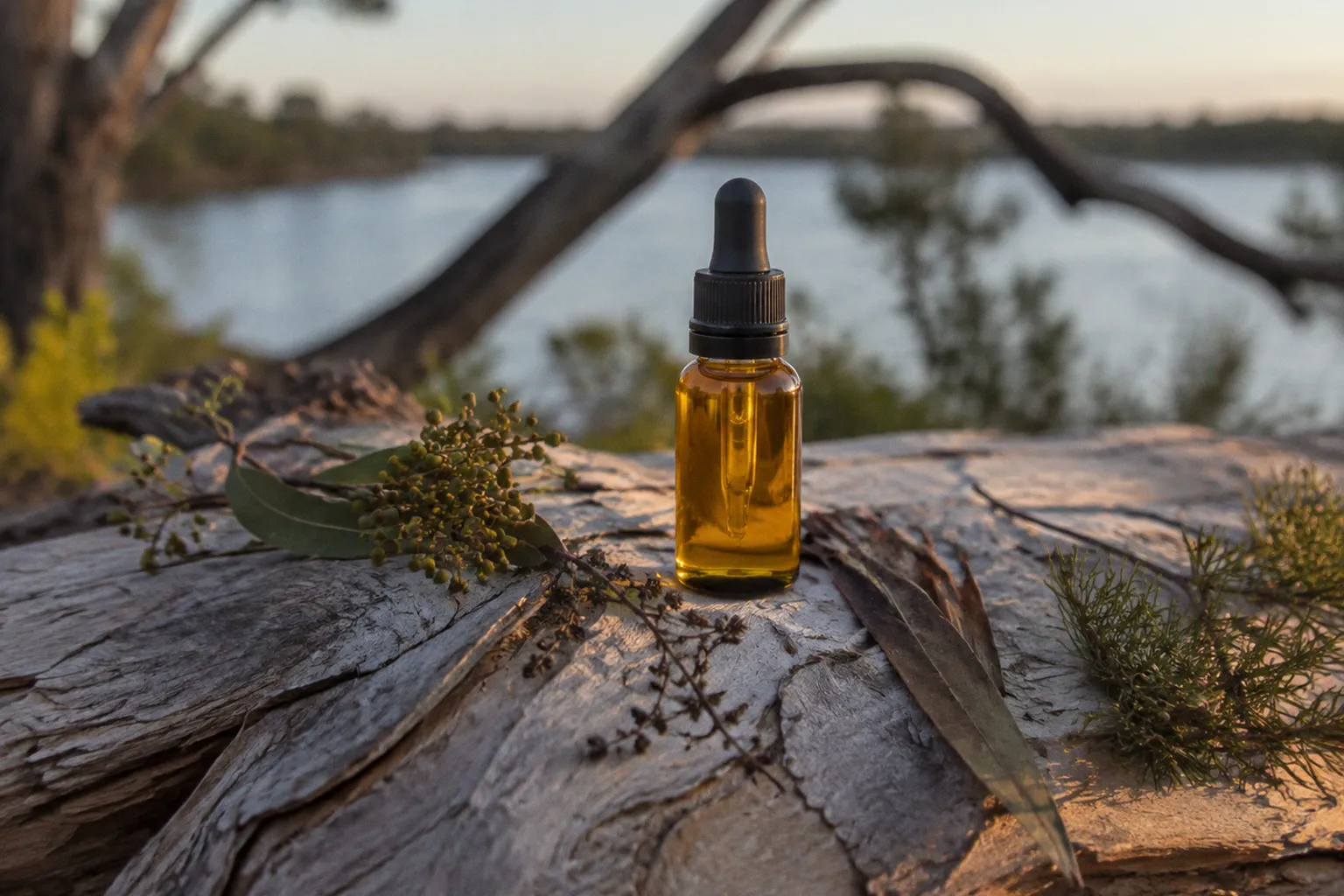
The distinction matters when acne-prone skin produces sebum that is already rich in oleic acid and relatively depleted in linoleic acid.
This is why cold pressed facial oils for acne prone skin cannot be selected by the words “natural,” “organic,” or “nourishing” on the label. Those terms describe sourcing or marketing position. They do not predict comedogenicity, fatty-acid profile, oxidation stability, or compatibility with active acne.
The useful variables are more specific: the oil’s dominant fatty acids, its pore-clogging potential, its packaging, its oxidation risk, and the quantity applied. A suitable oil may support barrier function and reduce the tendency toward thick, sticky surface sebum. An unsuitable one can increase occlusion and congestion.
The Science of Sebum: Why Acne-Prone Skin May Benefit from Linoleic Acid
Sebum is not chemically uniform across all skin types. Acne-prone skin frequently shows lower concentrations of linoleic acid, an omega-6 polyunsaturated fatty acid, and higher ratios of oleic acid, an omega-9 monounsaturated fatty acid, in its natural sebum.
That imbalance does not mean every person with acne has the same lipid profile. It does indicate why the fatty-acid composition of a face oil is more relevant than the generic category of “oil.” A product that adds a large amount of oleic acid to already congestion-prone skin is not performing the same function as one dominated by linoleic acid.
Linoleic acid has a structural role in the epidermal barrier. It is an essential component of ceramide 1, also known as an acylceramide. Ceramides help maintain hydration and the physical integrity of the lipid barrier. When barrier lipids are poorly organised, transepidermal water loss can increase, irritation becomes more likely, and the skin may tolerate acne treatments less effectively.
This does not make linoleic acid an acne medication. It does not directly replace a topical retinoid, benzoyl peroxide, azelaic acid, or any other targeted treatment. Its relevance is structural and formulation-based. The oil may complement a routine by supplying a lipid profile that is more compatible with barrier support.
The relevant question is not whether an oil is natural. It is whether its lipid profile is appropriate for the skin receiving it.
What linoleic-rich oils can and cannot do
A linoleic-rich facial oil may be useful when the skin has several simultaneous problems:
- active breakouts combined with dryness or flaking;
- impaired barrier tolerance from acne treatments;
- a tendency toward thick, sticky sebum;
- dehydration after over-cleansing or repeated exfoliation;
- irritation caused by using too many active products.
The mechanism is not cosmetic nourishment in the abstract. It is lipid selection. Linoleic acid contributes to the composition of barrier ceramides, while a lightweight oil can reduce the need for harsher occlusive products.
However, there are limits. No cold-pressed oil has been established as a stand-alone treatment for severe cystic acne. Persistent inflammatory lesions, nodules, scarring, or rapidly worsening acne require a clinical assessment. An oil can affect the vehicle and barrier environment of a routine. It cannot correct every driver of acne, including abnormal keratinization, inflammation, microbial activity, and hormonal signalling.
Decoding the Comedogenic Scale
The comedogenic scale rates ingredients from 0 to 5 according to pore-clogging potential:
| Rating | General interpretation |
|---|---|
| 0 | Little or no expected pore-clogging potential |
| 1–2 | Low potential; often considered a more suitable range for acne-prone skin |
| 3 | Moderate potential; individual response becomes more relevant |
| 4–5 | Higher potential for congestion and comedone formation |
Hemp seed oil has a comedogenic rating of 0. Rosehip seed oil and jojoba oil are typically rated between 1 and 2. These values make them reasonable candidates for a first screening process when evaluating non comedogenic botanical oils.
The scale is not a guarantee. It is a comparative filter. Comedogenicity depends on concentration, the rest of the formula, application quantity, cleansing routine, individual susceptibility, and whether the product is left on the skin. A low-rated oil can still cause problems for a particular user. A higher-rated oil may not trigger visible congestion in every case. The rating should narrow the options, not replace observation.
The same principle applies to “organic.” Organic certification can describe agricultural production standards. It does not mean an oil has a low comedogenic rating. Coconut oil remains a relevant example: it is plant-derived and widely used in natural skincare, but its higher pore-clogging potential makes it a poor default for many acne-prone routines.
The most relevant oil candidates
The following oils are useful because their fatty-acid profiles and comedogenic ratings point in different directions.
Hemp seed oil
Cold-pressed hemp seed oil has a comedogenic rating of 0 and contains approximately 55–60% linoleic acid. This combination makes it one of the clearest candidates for acne-prone skin when the objective is to use a lightweight, linoleic-rich oil.
Its main limitation is stability. Polyunsaturated fatty acids are more vulnerable to oxidation when exposed to light, heat, and air. Hemp seed oil should therefore be purchased in protective packaging and used before it develops an altered odour or changes noticeably in colour and texture.
Rosehip seed oil
Rosehip seed oil typically contains around 35–45% linoleic acid and has a low comedogenic rating, commonly between 1 and 2. It is less linoleic-rich than safflower, evening primrose, or hemp seed oil, but it remains a plausible option for a formulation intended to support acne-prone skin.
The name alone is not enough. Rosehip products vary according to species, extraction method, refinement, blending, and storage. The finished product should be assessed as a formula rather than assumed to have a uniform composition.
Jojoba oil
Jojoba oil is structurally similar to human sebum and carries a low comedogenic rating, typically between 1 and 2. Its composition differs from conventional triglyceride-rich plant oils because jojoba is primarily a liquid wax ester. That distinction affects its behaviour on the skin and its compatibility with sebum-focused formulations.
The claim that jojoba “tricks” the sebaceous glands into stopping oil production is too strong. Its molecular similarity to sebum may help signal a compatible lipid environment, but it should not be presented as a reliable sebum-suppression treatment. The more defensible position is that jojoba can function as a relatively low-risk emollient in a routine where heavier oils are unsuitable.
Safflower and evening primrose oils
Safflower oil and evening primrose oil can contain approximately 70–80% linoleic acid. That makes them chemically relevant to the question of linoleic acid oils for clogged pores and acne-prone skin.
Their high linoleic content does not automatically determine the performance of the final product. Oxidative stability, packaging, freshness, and the presence of other ingredients still matter. A very high linoleic percentage in a poorly stored oil is not a meaningful advantage.
High-Oleic vs. High-Linoleic Oils
The most important distinction in a cold-pressed facial oil is often the balance between oleic and linoleic acids.
Oleic acid is a monounsaturated omega-9 fatty acid. It is not inherently harmful. Many effective skincare formulas contain oleic-rich oils. The issue is context. High-oleic oils tend to feel heavier and more occlusive, and they may be less suitable when the skin is already prone to congestion.
Examples include:
- olive oil, with an oleic acid content of approximately 55–83%;
- avocado oil, with approximately 50–70% oleic acid;
- sweet almond oil, with approximately 64–70% oleic acid;
- coconut oil, which is commonly treated as a high-risk choice for acne-prone skin because of its comedogenic potential.
By contrast, hemp seed, safflower, and evening primrose oils provide much higher proportions of linoleic acid. Rosehip seed oil sits in a lower but still relevant range. The distinction is not a ranking of good oils and bad oils. It is a question of matching the emollient profile to the condition of the skin.
| Oil | Approximate relevant profile | Typical comedogenic rating | Practical interpretation |
|---|---|---|---|
| Hemp seed | 55–60% linoleic acid | 0 | Strong candidate for a low-occlusion, linoleic-rich routine |
| Safflower | 70–80% linoleic acid | Not specified in the available data | Chemically relevant, but freshness and formulation remain decisive |
| Evening primrose | 70–80% linoleic acid | Not specified in the available data | High-linoleic option requiring careful storage |
| Rosehip seed | 35–45% linoleic acid | 1–2 | Low-comedogenicity option with a moderate linoleic contribution |
| Jojoba | Sebum-like liquid wax ester | 1–2 | Low-risk emollient with a different lipid structure |
| Avocado | 50–70% oleic acid | Approximately 3 | Heavier option with greater congestion potential |
| Olive | 55–83% oleic acid | Not specified in the available data | High-oleic and potentially occlusive for acne-prone skin |
| Sweet almond | 64–70% oleic acid | Not specified in the available data | High-oleic profile; not a first-line choice for frequent congestion |
| Coconut | High occlusive and comedogenic potential | High relative risk | Poor default for active acne and comedone-prone skin |
The table does not establish that a higher linoleic percentage will produce a predictable reduction in lesions. There are no standardised large-cohort clinical trials establishing that cold-pressed oils reduce facial acne simply because they contain more linoleic acid. The evidence supports a formulation rationale, not a guaranteed treatment outcome.
Why high-oleic oils may be a poor first choice
High-oleic oils are often selected for their stability and rich emollient behaviour. That can be useful for dry body skin or a compromised barrier that tolerates occlusion. Facial skin with active comedones has different constraints.
A heavy oil can increase the amount of lipid material remaining at the follicular opening. If the skin is already producing thick sebum and shedding corneocytes irregularly, additional occlusion may worsen the local environment. The result is not inevitable, but the risk makes high-oleic oils less rational as a starting point.
This is also why “nourishing” is not a sufficient product description. Nourishment is not a measurable formulation category. Fatty-acid distribution, spread, residue, stability, and pore-clogging potential are measurable or at least assessable variables.
Cold-Pressing, Oxidation, and Dark Glass Packaging
Cold-pressed extraction is frequently treated as a quality guarantee. It is not. The term describes an extraction approach, not the final stability, purity, or acne suitability of the oil.
Cold-pressed oils may retain a broader range of naturally occurring compounds because they are not subjected to the same processing conditions as some refined oils. That can be relevant to a botanical formulation. It does not prove that the oil will be more effective against acne. The available evidence does not include standardised clinical trials comparing cold-pressed and solvent-extracted facial oils for acne reduction in large human cohorts.
The practical issue is oxidation. Linoleic acid is a delicate polyunsaturated fatty acid. Light, heat, and air accelerate oxidation. Once an oil oxidises, its original fatty-acid profile has not changed into a new acne treatment. Its quality has deteriorated.
For that reason, the packaging should be treated as part of the formula:
- dark or otherwise light-protective glass limits exposure to light;
- a small bottle reduces the time the oil spends opened and exposed to air;
- a controlled dispenser reduces repeated air exchange;
- storage away from heat is preferable;
- the cap should be closed immediately after use;
- an altered smell or visible change in the oil is a reason to stop using it.
Clear glass on a bright bathroom shelf is a poor storage system for a linoleic-rich oil. The label may be accurate on the day of production, but careless storage can reduce the value of the ingredient before the bottle is finished.
A high-linoleic oil is only an advantage while its polyunsaturated fatty acids remain stable.
Cold-pressed versus refined: what can be concluded
Cold-pressed oils are not automatically superior for acne. Refined oils are not automatically inferior. The relevant evaluation depends on the objective.
A cold-pressed oil may be selected when the formulation prioritises minimally processed botanical ingredients and the manufacturer provides appropriate packaging. A refined oil may offer greater consistency or stability in another formula. Neither extraction method, by itself, establishes low comedogenicity or clinical acne efficacy.
The rational hierarchy is:
1. Identify the fatty-acid profile.
2. Check the comedogenic risk where reliable data exists.
3. Assess the packaging and expected oxidation stability.
4. Review whether the oil is pure or combined with heavier emollients.
5. Apply a controlled quantity and observe the skin over time.
This is more useful than treating “cold-pressed,” “clean,” and “organic” as interchangeable evidence of performance.
How to Use Face Oil with Active Acne
Face oil should be the final lipid-focused step, not the central treatment for active acne. The most defensible method is conservative: use a small quantity, avoid saturating the skin, and do not introduce the oil at the same time as several other new products.
A practical dosage is 2–4 drops for the entire face. More product does not provide more linoleic acid in a clinically meaningful way. It mainly increases the amount of residue left on the skin.
A controlled application sequence
1. Cleanse without aggressive degreasing.
A harsh cleanser can remove surface lipids and increase irritation. The objective is to remove sunscreen, makeup, and excess residue without repeatedly disrupting the barrier.
2. Apply water-based treatments first.
Hydrating products, botanical serums, and targeted acne treatments generally sit before the oil. The exact order depends on the formula, but an oil is usually used after lighter leave-on products because its lipid phase can reduce water loss and alter the spread of later products.
3. Use 2–4 drops rather than a full dropper.
Press the oil across the face instead of repeatedly rubbing congested areas. The goal is a thin film, not a visibly wet layer.
4. Start with limited frequency.
Once or twice weekly can be a reasonable introduction for highly reactive or congestion-prone skin. If no increase in closed comedones, inflammatory lesions, or irritation occurs, use may be adjusted according to the rest of the routine.
5. Do not apply it indiscriminately over every active lesion.
A low-comedogenic oil may be appropriate for the surrounding barrier, but active lesions should not be treated as though they are simply dry patches. The product does not disinfect the follicle or normalise abnormal keratinization.
6. Introduce one variable at a time.
If a new oil is added alongside a new exfoliant, cleanser, and serum, any reaction becomes difficult to attribute. This is a basic formulation-control problem, not a matter of patience or brand loyalty.
Where the oil fits with acne actives
The phrase how to use face oil with active acne requires a distinction between support and treatment.
If the routine includes benzoyl peroxide, a topical retinoid, salicylic acid, or another acne active, the oil may be used to reduce dryness associated with the routine. It does not neutralise the active or make an irritating treatment automatically tolerable. If burning, persistent redness, scaling, or worsening inflammation develops, adding more oil is not a complete solution. The active regimen may need adjustment.
The same applies to exfoliation. A fruit enzyme face polish or gentle enzyme exfoliator is still an exfoliating product. Pairing it with an oil does not remove the risk of over-exfoliation. Excessive exfoliation can disrupt the barrier and increase sensitivity, particularly when retinoids or benzoyl peroxide are already present.
A basic structure may look like this:
- gentle cleanser;
- targeted acne treatment or brightening botanical serum, depending on the routine;
- clean hydrating moisturizer;
- 2–4 drops of a suitable facial oil only if additional lipid support is required;
- sunscreen during the day.
The exact products are less important than the interaction between them. A botanical antioxidant facial serum may be compatible with an oil, but the full ingredient list determines whether the combination is lightweight or heavily occlusive. A product marketed as a nourishing organic face oil may contain several high-oleic oils even if one linoleic-rich oil appears prominently on the front label.
Selecting the Best Organic Face Oil for Breakouts
There is no universal best organic face oil for breakouts. There are only better and worse matches for a particular lipid environment and routine.
A more rigorous selection process focuses on the following details:
- Fatty-acid profile: look for a meaningful linoleic contribution when congestion and thick sebum are central concerns.
- Comedogenic rating: prioritise oils rated 0–2 when reliable data is available, while recognising that ratings are not individual guarantees.
- Number of oils in the blend: a blend may dilute a favourable ingredient with high-oleic or heavier oils.
- Fragrance components: essential oils can introduce irritation without improving the oil’s suitability for comedone-prone skin.
- Packaging: dark glass or another light-protective container is preferable for oxidation-sensitive oils.
- Bottle size and dispensing system: smaller, well-sealed packaging generally limits prolonged exposure to air.
- Product age and storage: a fresh oil can become unstable when stored in heat or direct light.
- Routine compatibility: the product should not be added to an already overloaded regimen containing multiple exfoliants and retinoid products.
The term “detoxifying” should also be treated carefully when it appears on a clay mask or botanical oil product. Skin does not require an oil to remove undefined toxins. Pink clay may absorb surface oil and provide a temporary reduction in shine, but it does not correct the lipid composition of sebum or replace acne treatment. Terminology does not change mechanism.
Reading an ingredient list without overinterpreting it
A label that lists hemp seed oil after several high-oleic oils is not equivalent to a predominantly hemp-based formula. Ingredient order can help identify the major components, but it does not always reveal exact percentages. Claims about a single hero botanical should therefore be checked against the full composition.
The same applies to plant-derived hyaluronic acid. Hyaluronic acid is a humectant, not a facial oil, and the source does not change the basic need for an appropriate water-binding formula. If acne-prone skin is dehydrated, a clean hydrating moisturizer may address that need more directly than increasing the amount of oil.
Oil and water serve different formulation roles:
- humectants help bind water;
- emollients fill gaps between corneocytes and improve lipid comfort;
- occlusives reduce water loss by forming a surface film;
- acne actives target specific pathological processes.
A face oil is primarily an emollient and, depending on its spread and quantity, a partial occlusive. It is not a complete moisturiser unless the formula also contains water, humectants, and supporting emulsifiers.
When a Cold-Pressed Oil Is the Wrong Tool
A cold-pressed oil is a poor choice when the skin is reacting to nearly every product and the routine has not been simplified. Adding another botanical ingredient increases the number of possible irritants and makes the cause of the reaction less clear.
It is also the wrong tool when the principal concern is untreated moderate-to-severe acne. In that case, the oil may be used as a supporting product only if the skin tolerates it. It should not delay appropriate treatment.
Avoid relying on an oil as the primary intervention when there are:
- deep, painful nodules;
- persistent cystic lesions;
- rapid scarring;
- widespread inflammatory acne;
- significant swelling or tenderness;
- recurrent lesions that do not respond to a consistent routine.
There is a separate issue with post-acne marks. A linoleic-rich oil may support the barrier, but it should not be presented as a proven treatment for every form of hyperpigmentation. Brightening botanical serums, retinoids, azelaic acid, and sunscreen have different mechanisms and evidence profiles. Combining them requires control of irritation rather than indiscriminate layering.
The Definitive Selection Rule
For acne-prone skin, the strongest starting point is usually a low-comedogenic, linoleic-rich oil in protective packaging. Hemp seed oil is the most straightforward example because it combines a comedogenic rating of 0 with approximately 55–60% linoleic acid. Rosehip seed oil and jojoba oil are lower-risk alternatives, although they offer different lipid profiles. Safflower and evening primrose oils provide higher linoleic percentages, around 70–80%, but require careful attention to freshness and oxidation.
High-oleic oils such as olive, avocado, sweet almond, and coconut are not automatically unusable. They are simply less rational first choices for skin with frequent congestion, especially when the formula is heavy and the comedogenic risk is elevated.
Cold pressing is a processing detail, not proof of acne efficacy. Organic certification is a sourcing claim, not a pore-safety rating. A low comedogenic number is useful, but not absolute. The final decision should rest on the oil’s fatty-acid composition, packaging, application quantity, and response within the complete acne routine.
The verdict is precise: cold-pressed facial oils can support the barrier of acne-prone skin when they are linoleic-rich, low in comedogenic potential, fresh, and used sparingly. They cannot replace targeted acne treatment, and they are not interchangeable with every botanical or organic oil on the market.