Botanical Salicylic Acid: Why Willow Bark Calms Adult Acne
Salicin is the compound that gives willow bark its relevance to acne care. Derived from Salix alba or Salix nigra, it can be converted enzymatically into salicylic acid, a beta hydroxy acid…
Iris Ellingham·Updated: August 25, 2026·17 min read
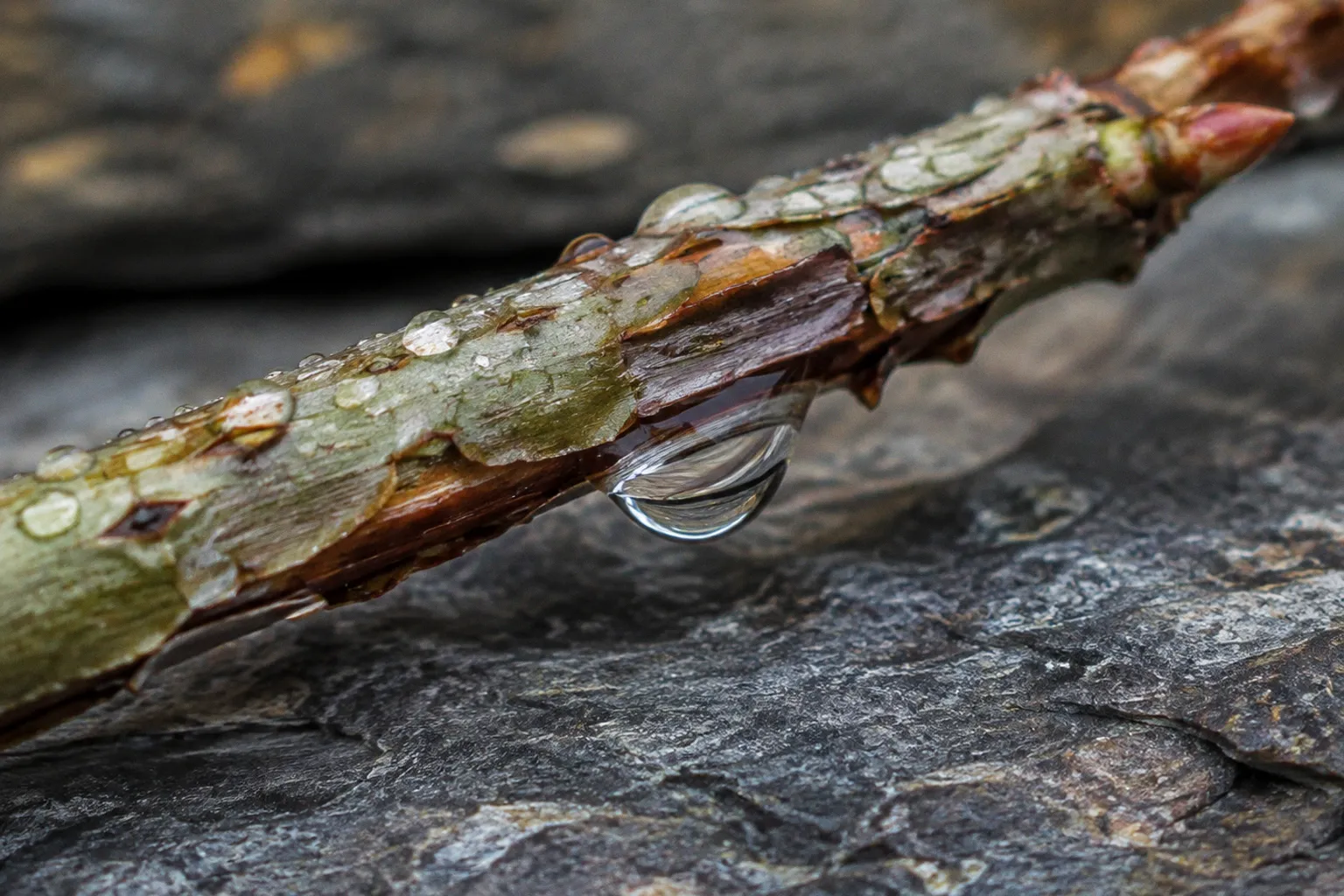
Salicin is the compound that gives willow bark its relevance to acne care. Derived from Salix alba or Salix nigra, it can be converted enzymatically into salicylic acid, a beta hydroxy acid associated with the loosening of dead cells and the clearing of congested pores. The difference is that willow bark does not usually deliver this activity in the same immediate, concentrated way as a conventional 2% salicylic acid treatment.
That slower botanical profile matters for adult acne. Mature skin is often dealing with more than excess sebum: a compromised barrier, recurring hormonal flare-ups, post-inflammatory redness, dehydration, and a growing intolerance for aggressive exfoliation. Willow bark extract offers one of the more interesting botanical salicylic acid alternatives for adult acne because it combines salicin with tannins, flavonoids, and polyphenols. Its action is therefore not limited to exfoliation alone.
The chemistry of salicin: how willow bark works on the skin
Willow bark’s acne relevance begins with salicin, a naturally occurring precursor. Once extracted from the bark and applied in a suitable cosmetic formulation, salicin may undergo enzymatic conversion into salicylic acid on or in the skin. This distinction is essential: willow bark extract is not simply synthetic salicylic acid in green packaging.
Synthetic salicylic acid is an isolated compound produced through industrial chemical synthesis. In modern skincare, a 2% formula acts directly and relatively quickly on the stratum corneum, helping to dissolve the bonds between accumulated dead cells and supporting the clearing of clogged pores. That strength can be useful when congestion is pronounced, but it may also bring peeling, dryness, tightness, or stinging, especially when the skin barrier is already unsettled.
Willow bark takes a more gradual route. Its salicin content forms part of a broader botanical matrix, and the rate at which it contributes salicylic-acid-like activity on living skin is not fully established. There are no reliable grounds for treating a raw willow extract serum as clinically identical to a medical-grade 2% salicylic acid product, particularly in the management of severe cystic acne.
The practical difference can be expressed simply:
| Feature | Willow bark extract | Synthetic salicylic acid |
|---|---|---|
| Primary active association | Salicin, converted enzymatically into salicylic acid | Directly applied salicylic acid |
| Typical action | Slower, gentler release of exfoliating activity | Immediate and more predictable exfoliation |
| Supporting compounds | Tannins, quercetin, kaempferol, and other polyphenols | Primarily the isolated active compound |
| Irritation profile | Generally less likely to cause intense peeling or stinging when well formulated | More likely to feel drying or irritating at higher strengths |
| Best suited to | Mild congestion, recurring blemishes, sensitive or easily dehydrated skin | More established congestion requiring a stronger, direct BHA |
| Main limitation | Potency and conversion vary by extract and formulation | Can be too active for a fragile or over-exfoliated barrier |
The word “natural” does not remove the need for formulation science. A poorly preserved or overly concentrated botanical product can still irritate the skin. What matters is the identity of the extract, its preparation, the salicin level where disclosed, the supporting ingredients, and the way the finished product is intended to be used.
Willow bark is not a weaker copy of synthetic salicylic acid. It is a slower botanical system, carrying exfoliating potential alongside compounds that influence redness, oiliness, and oxidative stress.
What the extract contains beyond salicin
Raw willow bark is chemically more complex than a single active ingredient. Alongside salicin, it can provide tannins, flavonoids such as quercetin and kaempferol, and a wider group of polyphenols. Each class contributes a different quality to an acne routine.
Tannins and surface congestion
Tannins are astringent polyphenolic compounds. In skincare, that astringency can create a temporarily more refined feel on the surface of the skin and may help formulas intended for excess oil and congestion. This does not mean tannins physically shrink pores or permanently reduce sebum production. Pores remain part of the skin’s anatomy. The more realistic benefit is a cleaner, less slick surface and a formulation that feels appropriate for blemish-prone skin.
There is also a useful distinction between astringency and harshness. A strongly alcohol-based toner may feel tight because it rapidly strips surface lipids and water. A willow bark formula can feel clarifying without necessarily relying on that kind of solvent-heavy sensation, provided the rest of the composition is barrier-conscious.
Flavonoids and oxidative stress
Quercetin and kaempferol belong to the flavonoid family. These compounds are valued in botanical skincare for their antioxidant potential, which is relevant because acne-prone skin is exposed to oxidative stress during inflammation. Sebum oxidation, environmental exposure, and inflammatory activity can all contribute to a less stable skin environment.
An antioxidant does not erase an active blemish, and willow bark should not be described as an anti-inflammatory medicine. Its role is more modest and more useful: it can support a routine designed to keep the skin’s inflammatory burden from being amplified by unnecessary irritation.
This is one reason a whole-plant extract may behave differently from an isolated acid. Synthetic salicylic acid is precise and direct. Willow bark may be less forceful, but it can offer a broader sensory and biological profile when paired with humectants, soothing agents, and a well-balanced preservative system.
Polyphenols and redness-prone skin
Polyphenols are not a single uniform substance, but a large group of plant compounds with antioxidant and astringent functions. In an acne routine, their value lies in supporting skin that is both blemish-prone and reactive. Adult breakouts often leave behind persistent redness, and repeated attempts to dry them out can make that redness more visible.
The extract cannot prevent every hormonal flare-up. Hormonal acne is influenced by internal androgen activity, sebum production, follicular keratinisation, and inflammation. A topical willow bark product addresses the surface and the follicular environment; it does not correct the hormonal driver itself. This makes it a supportive treatment rather than a complete solution for deep, recurrent lesions.
Why a slower botanical exfoliant can suit adult acne
Adult acne is often managed badly because the skin is treated as though congestion were the only problem. The response is familiar: a strong acid, a drying spot treatment, a scrub, and perhaps a retinoid added too quickly. The blemish may flatten, but the barrier becomes more permeable and uncomfortable. Then the routine is interrupted, restarted, and intensified again.
A slower plant based salicylic acid sensitive skin formula can be more useful when the central problem is inconsistency caused by irritation. Gentle does not mean inactive. It means that the treatment is less likely to dominate the routine.
For mild comedonal acne, occasional hormonal blemishes, and a tendency toward blocked pores, willow bark may fit into a daily or alternate-day routine depending on the finished product. The correct frequency belongs to the formulation, not to the plant in isolation. A low-dose toner containing approximately 0.1% salicin is a different proposition from a concentrated extract powder, a serum, or a leave-on treatment combined with other exfoliating ingredients.
Several signs suggest that a slower approach may be appropriate:
- The skin becomes tight or flaky after conventional BHA products, even when used sparingly.
- Congestion is persistent but not accompanied by large, painful cysts.
- Blemishes recur around the jawline or lower face, while the rest of the skin is easily dehydrated.
- The routine already contains retinoids, vitamin C, or other active ingredients.
- Redness remains for days after a spot has healed.
- The main objective is steady pore maintenance rather than a rapid peeling effect.
The alternative is not between “natural” and “chemical.” Willow bark is made of chemicals, as every botanical extract is. The more meaningful distinction is between a complex, plant-derived extract and a purified, directly active acid. Both can be useful. They simply offer different degrees of speed, predictability, and intensity.
Extraction, maceration, and why the finished formula matters
The plant’s identity is only the beginning. Willow bark must be prepared in a way that preserves the intended bioactive compounds and allows them to remain stable in the finished product.
A water-based extraction, glycerin extraction, or hydroalcoholic extraction will not produce the same material. Solvent polarity influences which compounds are drawn from the bark. Tannins and polyphenols can behave differently depending on the solvent system, extraction time, temperature, and the condition of the raw material. Maceration may be used to draw soluble constituents gradually into a carrier, while more controlled manufacturing can produce an extract with a defined concentration or marker compound.
For acne care, this matters because the INCI listing “willow bark extract” does not reveal the whole formulation story. It may refer to a dilute botanical water, a glyceritic extract, a powdered extract, or a more concentrated preparation. Two products can therefore display the same plant name while delivering very different quantities of salicin and accompanying compounds.
A thoughtfully designed blemish-clearing serum usually does more than add willow bark to a bottle. It should provide a stable pH, an appropriate preservative system, and a vehicle that spreads evenly without leaving an occlusive residue. Humectants such as glycerin can help counter the drying sensation associated with blemish treatments. Soothing materials may include oat-derived compounds, panthenol, or carefully selected botanical extracts, although the exact combination should be assessed as a whole rather than by collecting attractive ingredient names.
The extraction method also affects colour and odour. A genuine plant extract may bring a tan or amber tone, particularly when tannins are present. That is not evidence of superior efficacy, nor is a perfectly clear formula proof that the product lacks meaningful botanical material. Appearance is secondary to standardisation, stability, and transparent labelling.
What to look for on the label
When choosing a willow bark product, the most useful information is practical rather than romantic:
- The botanical name, ideally identifying Salix alba or Salix nigra, rather than relying only on a common name.
- The part of the plant used, since bark, leaf, and other plant materials do not have identical chemistry.
- Whether the extract is aqueous, glycerin-based, hydroalcoholic, or powdered.
- A declared salicin concentration or a clear explanation of extract standardisation.
- Supporting humectants and soothing ingredients that reduce the likelihood of a stripped, tight after-feel.
- A preservative system appropriate to the formula, especially when the product contains water or hydrosols.
- Directions that specify whether the product is intended for the whole face, selected areas, or occasional use.
- Packaging that limits repeated exposure to air and light when the formula contains oxidation-sensitive plant compounds.
Organic certification may be useful for confirming agricultural and processing standards, but it does not by itself prove that a product will suit acne-prone skin. Organic oils, essential oils, and plant extracts can still be sensitising or too rich for a particular face. Sourcing is strongest when the brand identifies the plant, extraction type, manufacturing standards, and testing practices without making the botanical material carry more claims than the evidence supports.
Understanding salicin concentration and potency
The numbers associated with willow bark require interpretation. Raw, dried Salix alba bark typically contains around 9% to 11% salicin, while specialised pharmaceutical-grade extracts may be standardised between 15% and 50%. These figures describe the raw material or refined extract, not automatically the concentration in a finished face serum.
A product can contain a small percentage of a highly concentrated extract, or a larger amount of a dilute extract. Without knowing the extraction ratio and the finished formula, the percentage of willow bark on the label tells very little about the amount of salicin reaching the skin.
This is where botanical skincare often becomes unnecessarily confusing. A high extract percentage may sound impressive, but it is not equivalent to a high concentration of the relevant active compound. Conversely, a modest-looking ingredient level may be meaningful if the extract is standardised and well delivered.
For consumers with sensitive skin, a low-dose formula may be the more rational starting point. A cosmetic toner containing approximately 0.1% salicin can be positioned as a gentle maintenance product, while a stronger conventional salicylic acid treatment at 2% is designed for a more direct exfoliating effect. These products should not be expected to produce the same result in the same time frame.
There is no established conversion table that allows a person to match a particular percentage of willow bark extract to a 2% synthetic salicylic acid product. The missing variables include the extraction method, salicin stability, the skin’s enzymatic environment, the pH of the formula, contact time, and the presence of penetration-enhancing ingredients. The responsible approach is to compare intended use and tolerability, not numbers alone.
Building an adult acne routine around willow bark
Willow bark works best when it is given a defined role. It is not necessary to layer several exfoliants simply because each one is plant-derived. Fruit enzymes, tea tree oil, exfoliating acids, retinoids, and abrasive powders can all become excessive when placed in the same routine.
A balanced morning might include a gentle cleanser, a light hydrating layer, moisturiser, and broad-spectrum sunscreen. In the evening, a willow bark toner or serum can follow cleansing, with moisturiser applied afterwards. If the skin is reactive, begin with a few evenings per week rather than assuming that a botanical product must be used every day.
For congested but sensitive skin, the order is less important than the overall load of active ingredients. A willow bark serum should not be introduced during the same week as a new retinoid, a strong exfoliating mask, and an essential-oil spot treatment. When several variables change at once, it becomes impossible to tell whether the skin is responding to the intended active or to cumulative irritation.
A practical sequence looks like this:
1. Stabilise cleansing first. Use a cleanser that removes sunscreen and excess sebum without leaving the face squeaky or tight. A damaged barrier makes every exfoliant feel stronger.
2. Introduce willow bark gradually. Apply the product to dry or slightly damp skin according to its directions, avoiding the immediate eye area and any visibly cracked patches.
3. Seal with a compatible moisturiser. Choose a texture that supports the barrier without feeling heavy or persistently occlusive on blemish-prone areas.
4. Keep other exfoliants separate. Do not automatically combine willow bark with synthetic salicylic acid, glycolic acid, fruit enzyme masks, or abrasive scrubs.
5. Observe the quality of the response. Fewer new clogged pores and less prolonged redness are more meaningful than a temporary tingling sensation.
6. Adjust before escalating. If the skin is stinging, peeling, or becoming unusually shiny and tight, reduce frequency rather than adding another soothing active on top.
A botanical blemish spot treatment may be appropriate for an isolated papule, but willow bark is often better understood as a maintenance ingredient. It supports the conditions in which congestion is less likely to accumulate. A painful, deep, or repeatedly scarring lesion requires a different level of assessment and may not respond adequately to a cosmetic botanical formula.
The most successful acne routine is rarely the most aggressive one. It is the routine the barrier can tolerate long enough for the active ingredient to do its quieter work.
Willow bark versus other botanical acne approaches
Willow bark is sometimes grouped with every plant-based remedy for blemishes, but its role is distinct. Tea tree oil, for example, is an aromatic essential oil with antimicrobial and anti-inflammatory interest, but it can irritate or sensitise the skin when used undiluted or in a poorly designed formula. Fruit enzymes act primarily through proteolytic activity on surface proteins and may offer a smoother-feeling exfoliation, but they are not substitutes for a pore-focused beta hydroxy acid mechanism.
Non-comedogenic facial oils serve another purpose. Lightweight oils can support comfort and reduce the dry, brittle feel produced by excessive acne treatments, but they do not necessarily clear follicular congestion. A facial oil may belong in a barrier-supportive routine without being an acne treatment in itself.
This is why botanical acne care should be built by function:
| Botanical approach | Primary contribution | Where it may fit | Main caution |
|---|---|---|---|
| Willow bark extract | Salicin, tannins, and polyphenols with gradual clarifying activity | Mild congestion and recurring blemishes | Potency varies; not equivalent to a 2% BHA |
| Tea tree oil | Aromatic compounds with antimicrobial interest | Carefully formulated spot or blemish products | Essential-oil sensitivity and irritation |
| Fruit enzymes | Surface-level enzymatic exfoliation | Dull, uneven texture alongside mild congestion | Can sting compromised skin |
| Soothing plant extracts | Support for redness and comfort | Barrier-focused acne routines | Do not confuse soothing with treatment of the cause |
| Lightweight facial oils | Reduced dryness and improved sensory comfort | Moisturising support for selected skin types | Rich or unsuitable oils may feel congesting |
The best choice depends on whether the skin needs pore maintenance, surface renewal, reduced dryness, or help tolerating an established treatment. Willow bark is particularly valuable when a person wants a natural BHA alternative for clogged pores but cannot comfortably use a strong acid every day.
When willow bark is not enough
A botanical approach has boundaries. Persistent nodules, painful cysts, rapid worsening, extensive scarring, or acne that repeatedly flares in a hormonal pattern may need medical guidance. Topical willow bark can support the skin’s surface, but it cannot address every internal or inflammatory pathway involved in adult acne.
It is also worth reconsidering the routine when blemishes appear alongside burning, diffuse redness, or pronounced flaking. Those signs may point to barrier disruption rather than a need for more exfoliation. The answer is often to simplify: gentle cleansing, moisturising, sunscreen, and a pause from strong actives until the skin becomes comfortable again.
Patch testing is sensible, particularly with concentrated extracts or products containing other aromatic botanicals. Apply a small amount to an unobtrusive area and observe the skin over time. A reaction may come from the willow bark itself, the preservative system, fragrance, essential oils, or another companion ingredient. Botanical does not mean non-reactive.
The uncertainty around topical salicin conversion should also remain part of the conversation. We know that salicin can be enzymatically converted into salicylic acid, but the exact rate of conversion on living human skin is not established. For this reason, willow bark should be judged by the finished product’s tolerability and visible performance, not marketed as a guaranteed plant-derived replacement for pharmaceutical-strength BHA therapy.
Choosing willow bark with a botanist’s eye
The most credible products are not necessarily the ones with the longest botanical ingredient list. They are the ones that explain what the extract is, how it has been prepared, and what the formula is designed to do.
Look for a brand that distinguishes between willow bark water, willow bark extract, and a standardised salicin preparation. Consider whether the product is leave-on or rinse-off, because contact time changes the practical effect. Check whether the texture leaves a persistent film, particularly if your skin is prone to closed comedones. In a humid Australian climate, a lighter water-gel or serum may be more comfortable than a rich balm, while dry or sensitised skin may need a more emollient base.
Sustainable sourcing also deserves attention. Bark harvesting should not be treated as an unlimited resource, and responsible brands should be able to describe their suppliers and processing standards. Organic cultivation can reduce exposure to certain agricultural inputs, but traceability remains more informative than a botanical seal used without explanation.
Finally, resist the language of instant transformation. Willow bark is best used as part of an intentional routine: consistent cleansing, adequate moisturising, daily sun protection, and a measured approach to exfoliation. It can help calm the cycle in which blocked pores become inflamed and irritated skin becomes more difficult to treat. Its strength is not theatrical speed. Its strength is compatibility with a slower, more respectful method of caring for blemish-prone skin.
Willow bark extract is therefore a promising botanical salicylic acid alternative for adult acne, especially where sensitivity and dehydration make direct acids difficult to sustain. Salicin provides the chemical bridge to salicylic acid, while tannins, flavonoids, and polyphenols give the extract a wider botanical profile. The result is not a perfect substitute for synthetic 2% salicylic acid, nor should it be sold as one. It is a distinct form of clarifying care—gentler in pace, broader in composition, and most effective when the formula and the skin barrier are treated with equal precision.