Pink Clay Detox Masks: Do They Cause Purging?
A pink clay mask lands on your shelf promising a "detoxifying reset." You smooth it on, let it set, rinse it off, and three days later a constellation of new blemishes appears along the jawline. The instinct is immediate: this must be purging.
Leo Ashdown·Updated: September 06, 2026·12 min read
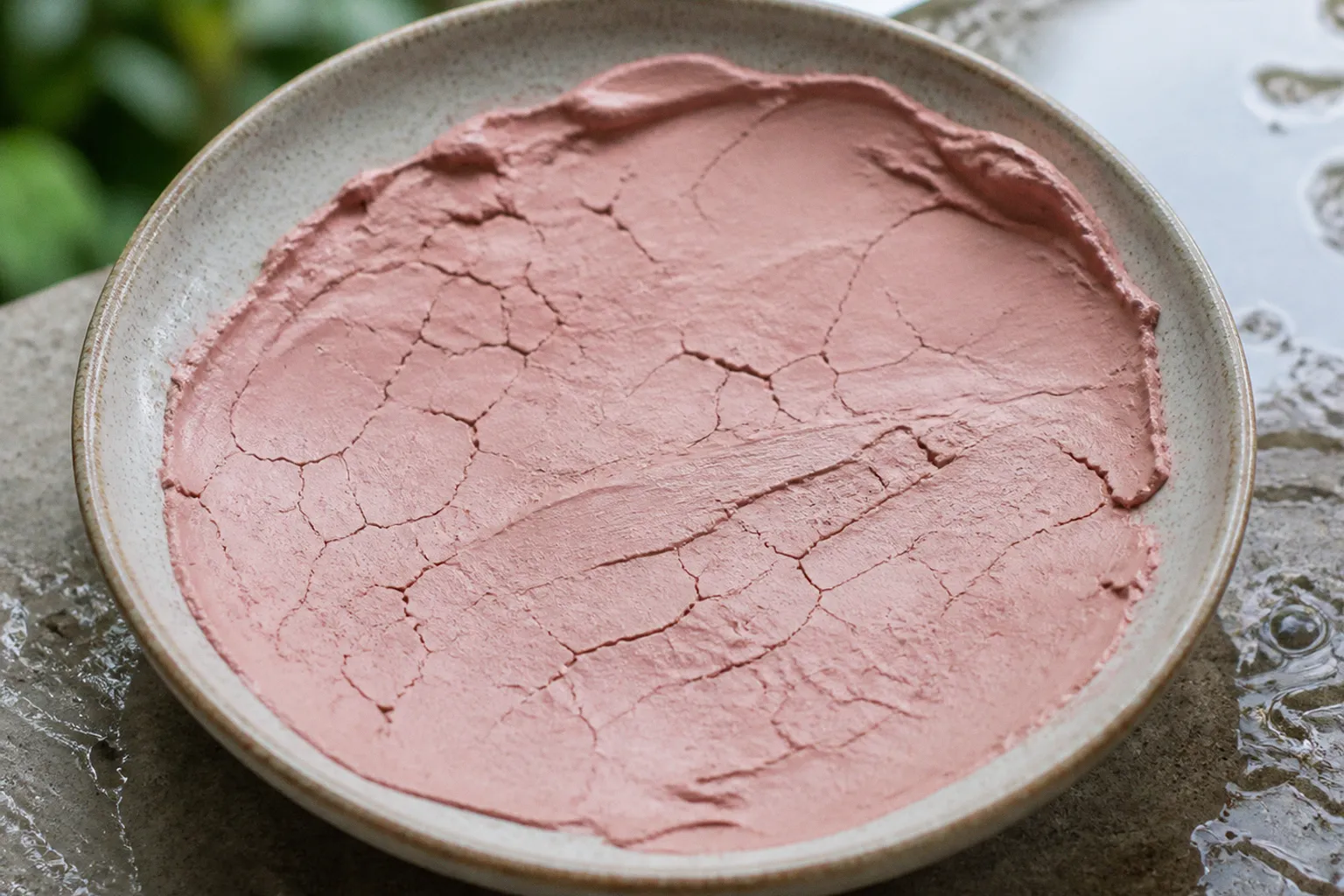
The clay is pulling impurities to the surface. The product is "working." But the textbook answer is more clinical than that — and for acne-prone skin, the distinction between a true purge and a breakout triggered by the mask itself determines whether you should push through or pull the mask out of rotation.
The short version: pure pink clay (kaolin-based formulations, in the Australian tradition) does not accelerate cellular turnover, so it cannot, on its own, cause a true purge. When breakouts follow a clay mask, the cause is almost always one of three things — the mask was formulated with added actives that genuinely speed up cell renewal, the mask disrupted the moisture barrier and triggered a rebound, or residue was left behind in the pores. Each of those scenarios requires a different response, and misreading them is how people damage otherwise healthy skin in the name of "detox."
Pure pink clay is an adsorbent, not an exfoliant. Breakouts after masking are a reaction to the routine, not a sign that the product is drawing toxins from deep within the skin.
The Mechanism of Adsorption: Why Pure Clay Doesn't Purge
To understand what a pink clay mask actually does, you need to separate two very different skin processes: adsorption and cell turnover.
Adsorption is a surface-level phenomenon. Kaolin clay — the mineral base of most pink clay formulas — carries a mild negative charge that binds to positively charged particles on the skin's surface. Those particles are mostly excess sebum, sweat residue, loose dead skin flakes sitting on top of the stratum corneum, and traces of cosmetic product left over from the morning. The clay lifts them off mechanically as it dries and is rinsed away. This is genuinely useful for oily or congested skin, because it reduces the slick, occlusive film that feeds Cutibacterium acnes in the first place.
What adsorption does not do is reach into the lower layers of the epidermis and accelerate the rate at which keratinocytes mature, separate, and shed. That process — desquamation, or cell turnover — takes roughly four to six weeks for a complete cycle in adult skin. A product "purges" the skin only when it shortens or disrupts that cycle, forcing pre-formed microcomedones to the surface faster than they would have appeared naturally. The classic actives that do this are retinoids, alpha-hydroxy acids like glycolic and lactic acid, beta-hydroxy acids like salicylic acid, and proteolytic enzymes such as papain and bromelain.
Pink clay, on its own, is not one of them. If your pink clay mask lists only kaolin, illite, water, and a handful of botanical infusions in its ingredient deck, you are holding an adsorbent. There is no biochemical mechanism by which it would force a microcomedone that was weeks away from surfacing to surface today. So when blemishes appear after using such a mask, the cause must lie elsewhere — either in the formula's other ingredients, or in how the mask interacted with your barrier.
When Exfoliants Change the Equation: Identifying Added Actives
The Australian clean beauty market has moved well beyond plain kaolin pastes. Most pink clay masks you can buy today are hybrid products: clay for the adsorbent base, plus a constellation of secondary actives designed to deliver visible results in a shorter window. This is where purging becomes a real possibility.
Read the ingredient list carefully. If you see any of the following listed above the 1% concentration mark, your mask is no longer a pure adsorbent:
- Glycolic, lactic, or mandelic acid — alpha-hydroxy acids that dissolve the intercellular glue between corneocytes and visibly brighten within days.
- Salicylic acid (BHA) — lipophilic, so it works inside the pore itself, loosening impaction.
- Fruit enzymes — papain from papaya, bromelain from pineapple, often labelled as "enzymatic exfoliant" or "natural AHA alternative."
- Retinol or retinaldehyde — direct cell-communication actives that genuinely accelerate turnover.
- Vitamin C (L-ascorbic acid) — not a recognised turnover-accelerating active in the way the above ingredients are, but at concentrations above roughly 10% it can irritate sensitive skin and amplify barrier stress. Any breakout it triggers is more likely a reaction to irritation than a true purge; the skin is inflamed, not renewing faster. If your mask contains high-strength vitamin C alongside AHAs or retinol, the exfoliants are the purging agents, not the vitamin C.
A mask containing any of the true purging actives — acids, enzymes, or retinoids — alongside its clay base can legitimately cause a purge, because the mask is performing two functions at once: clay is absorbing surface oil, while the added active is forcing microcomedones up faster. If you started using such a mask and broke out in areas where you normally break out — chin, jawline, lower cheeks, the T-zone if you're oilier there — and the blemishes are coming and resolving faster than your usual cycle, that pattern is consistent with purging.
| Formulation Type | Primary Mechanism | Can Cause True Purge? | Typical Use Window |
|---|---|---|---|
| Pure kaolin/pink clay + water + botanicals | Adsorption of surface sebum | No | Weekly maintenance |
| Clay + AHA/BHA (glycolic, lactic, salicylic) | Adsorption + chemical exfoliation | Yes, in acne-prone zones | 4–6 weeks for cycle to complete |
| Clay + fruit enzymes (papain, bromelain) | Adsorption + proteolytic exfoliation | Yes, mild | 2–3 weeks before assessing |
| Clay + retinol/retinal | Adsorption + cell-communication | Yes, pronounced | 4–6 weeks minimum |
The practical test is the ingredient list. If the mask contains only clay, a humectant like glycerin or aloe, a botanical infusion, and a preservative system, you can rule out purging as the cause of new breakouts and start troubleshooting elsewhere.
Barrier Disruption vs. Purging: Decoding Your Skin's Reaction
Even when a mask contains no exfoliant at all, acne-prone skin can respond badly — because clay, used incorrectly, is a moisture-stripping agent. This is the most common cause of post-mask breakouts in routine-conscious users who think they're doing everything right.
Here is the sequence. You apply the mask. You leave it on for the full 20 minutes, or — more often — you forget about it and leave it on for 35. The clay continues to adsorb sebum long after it has set. Once sebum is gone, it begins pulling water out of the stratum corneum through evaporation. Transepidermal water loss (TEWL) increases. The barrier, already compromised if you're using actives elsewhere in your routine, tips into dehydration.
The skin's response is predictable. Sebaceous glands receive a signal that the surface is dry and compromised, and they compensate by ramping up sebum production over the next 24 to 72 hours. You wake up on day two with skin that looks oilier than before you masked. By day three or four, that excess sebum is mixing with the residual dry, flaky cells from the dehydrated surface and forming fresh impactions in pores that were previously clear. The result: new blemishes, often along the cheeks and jawline — exactly where you applied the mask most thickly.
This is not purging. It is barrier disruption, and the visual signature is different from a true purge in three ways worth memorising:
1. Location. A purge shows up in your established breakout zones — the places where you already get blemishes cycle after cycle. Barrier-driven breakouts tend to appear in areas that are usually clear but received heavy mask contact.
2. Texture. Purging produces microcomedones and small inflamed papules that resolve in days. Barrier damage produces deeper, slower, more cystic lesions, often surrounded by a backdrop of tightness, flaking, or visible dehydration lines.
3. Adjacent symptoms. If your skin feels tight after rinsing, stings when you apply your regular serum, or shows patches of redness where the mask sat thickest, you are looking at barrier stress, not a purge.
There is also a third, less common scenario: genuine contact irritation. If the mask contains added fragrance, essential oils at high concentration (lavender, tea tree, citrus), or a preservative you are sensitive to, you may see pinpoint redness, hives, or itching alongside the blemishes. This is an immune response, not a purge, and the correct action is to discontinue use immediately rather than push through.
A purge feels neutral — your skin is doing something mechanical, and the blemishes resolve on a familiar timeline. A barrier break feels uncomfortable — tightness, stinging, dryness — and the blemishes appear in unfamiliar places.
The Role of Residue: Why Incomplete Removal Triggers Breakouts
Clay is, by design, hard to rinse. As water evaporates from the mask, the kaolin particles bind together and to the skin, forming a thin film that is not always visible to the naked eye. If you rinse quickly, splash with cool water, and pat dry, trace amounts of clay remain lodged in pores, fine lines, and around hair follicles.
That residue is occlusive. It holds sebum underneath rather than lifting it out, which is the precise opposite of what the mask is supposed to do. Within 48 hours, the trapped sebum begins to oxidise and the follicle wall starts to swell — a textbook setup for a closed comedone or a small inflammatory papule.
The fix is mechanical, not product-driven. Spend longer rinsing than you think you need to. Use a soft, damp microfibre cloth in gentle circular motions rather than relying on water alone. For acne-prone skin in particular, this step matters more than the choice of mask itself. If your skin is breakout-prone and you find that every clay mask you try seems to "cause purging," the variable most likely at fault is rinse technique rather than the formulation.
Optimizing Your Masking Routine for Acne-Prone Skin
A pink clay mask, used correctly, is genuinely useful for acne-prone skin — it lowers the surface sebum load, helps other actives penetrate more evenly, and gives a clearer reading on what your pores are doing week to week. Used incorrectly, it becomes a source of barrier damage and rebound breakouts. The difference is sequencing.
Selecting the right formula
For acne-prone skin in active flare-up, a plain kaolin or pink clay formula with a short, recognisable ingredient list is the safer starting point. Avoid masks that combine clay with strong acids or retinol in a single step — those products are better deployed on alternate evenings, not stacked together, because the cumulative exfoliation pressure on the barrier is what produces the worst outcomes. If you want both adsorption and exfoliation in a routine, separate them: a clay mask on Sunday, a salicylic or enzyme treatment on Wednesday, your regular routine on the other days.
Application sequence
Apply the mask to clean, dry skin after cleansing and toning, but before any serum or oil. The clay needs direct contact with the surface to adsorb effectively, and any occlusive layer underneath will block it. Spread it in a thin, even layer rather than a thick mask — a thicker application does not adsorb more, it just dries longer and increases barrier stress. Around the eyes and corners of the nose, where the skin is thinner and more reactive, apply sparingly or skip entirely.
Timing the leave-on
Ten minutes is the default for sensitive or acne-prone skin. Twenty minutes is the upper limit for resilient, oilier skin. Beyond twenty, the mask has finished its useful work and is beginning to extract water from the stratum corneum. If you ever feel the mask "tightening" aggressively or your skin pulling as it dries, rinse immediately regardless of the clock.
Rinsing and finishing
Rinse thoroughly with lukewarm water and a soft cloth, taking a solid minute to ensure no residue remains. Pat dry, then apply a hydrating layer immediately — a water-based serum with humectants like glycerin or plant-derived hyaluronic acid, followed by a barrier-friendly moisturiser. This step rehydrates the stratum corneum and signals to the sebaceous glands that the surface is not in deficit, which prevents the rebound oil surge that triggers post-mask breakouts.
Reading the Signals: Purge, Barrier Break, or Something Else?
Use this when blemishes appear after a pink clay mask and you are unsure whether to continue or stop.
- The blemishes are in your usual breakout zones — possible purge, give it two weeks before deciding.
- The blemishes are in new areas where the mask sat thickly — barrier disruption, reduce frequency or leave-on time.
- The breakouts are accompanied by tightness, stinging, or flaking — barrier stress, pause masking and focus on hydration for one to two weeks.
- You see pinpoint redness, itching, or hives — contact irritation, discontinue the mask.
- You rinse quickly and notice new breakouts along the cheeks within 48 hours — likely residue, extend rinse time and consider a microfibre cloth.
- Your mask lists salicylic acid, glycolic acid, lactic acid, retinol, or fruit enzymes — true purge is possible; expect four to six weeks before the cycle resolves.
- Breakouts persist beyond six weeks at the same intensity — this is no longer a purge, regardless of ingredients; reassess the formula.
- You use other actives (retinoids, acids) in your routine on the same week — cumulative exfoliation is the more likely culprit, not the clay mask itself.
The line that separates these outcomes is thin but real. Pink clay is one of the most useful tools in a clean routine for acne-prone skin, precisely because it works through adsorption rather than chemical disruption — it does not force the skin to do anything new. When problems appear, they almost always trace back to overuse, poor removal, or a mask that was quietly doing more than it advertised on the front label. Treat the mask as a sequenced step rather than a standalone treatment, protect the barrier around it, and the routine holds.