Plant-derived hyaluronic acid: is it better for acne-prone skin?
A consistent claim circulates in clean beauty marketing: plant-derived hyaluronic acid is gentler, more biocompatible, and categorically safer for acne-prone skin than lab-fermented sodium hyaluronate. The clinical evidence does not support this hierarchy.
Jude Carstairs·Updated: September 21, 2026·8 min read
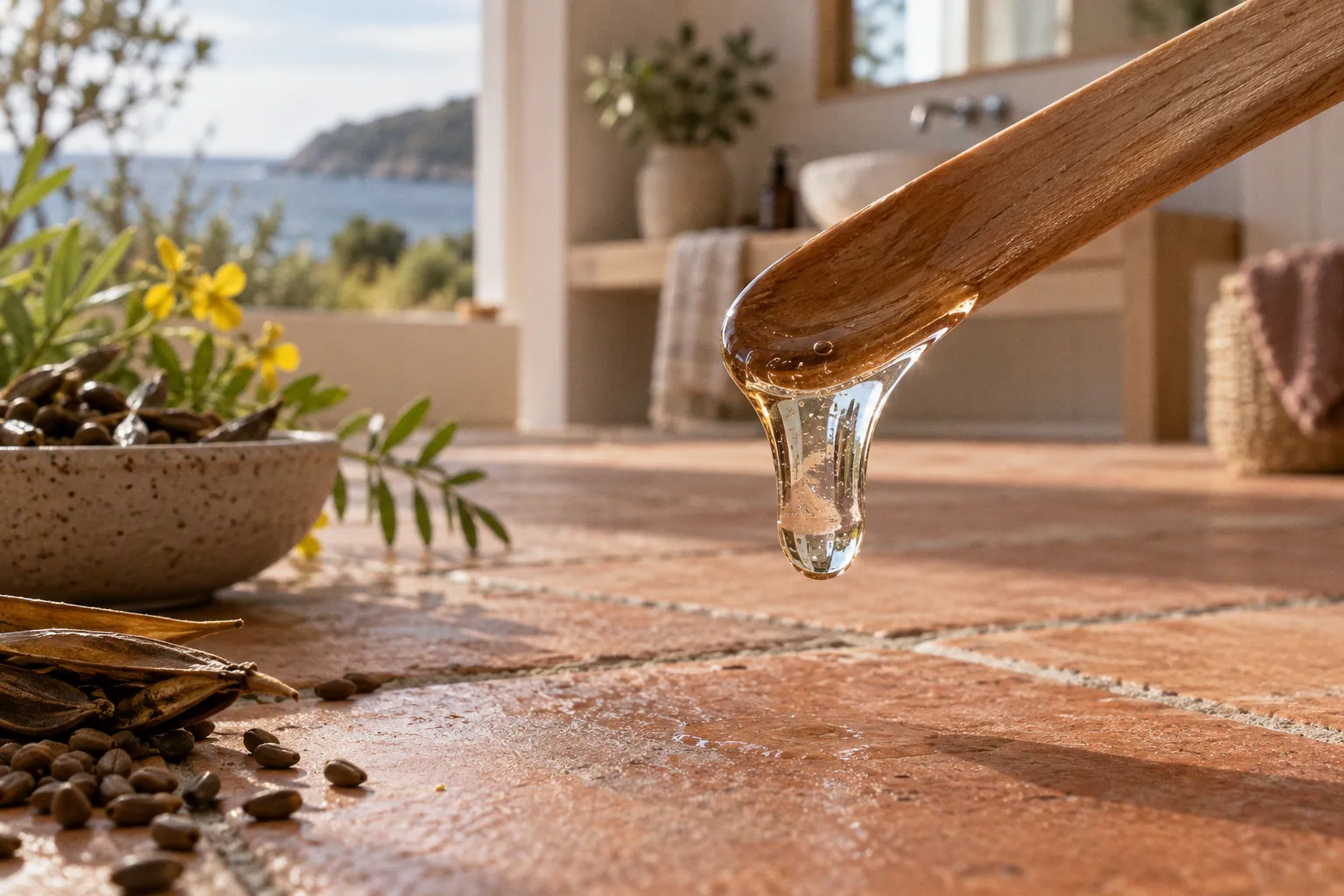
Plant-Derived Hyaluronic Acid vs Synthetic for Acne: A Chemical Reality Check
The distinction between "natural" and "synthetic" in hyaluronic acid is largely a labeling category, not a functional one—and overlooking this distinction leads to poorly constructed routines for acne-prone complexions.
The Chemistry of Hydration: Bio-Fermentation vs Botanical Extracts
Hyaluronic acid is a glycosaminoglycan with a specific repeating disaccharide structure. When produced through microbial fermentation using bacterial strains such as Streptococcus or Bacillus, the resulting molecule is chemically identical to hyaluronic acid derived from any other source. Over 70% of the global hyaluronic acid supply now comes from microbial fermentation—a process that replaced older animal-derived sources such as rooster combs for reasons of yield, purity, and the elimination of animal protein contaminants. It was not a marketing decision.
Sodium hyaluronate from fermentation and hyaluronic acid from any other source are the same molecule. Origin does not alter the chemistry.
Plant-derived alternatives operate on a different chemical basis entirely. Cassia angustifolia seed polysaccharide—the most common botanical humectant marketed as a hyaluronic acid substitute—is not hyaluronic acid. It is a separate polysaccharide chain with its own molecular weight range, branching structure, and water-binding behavior. Calling it "botanical hyaluronic acid" is a structural misnomer. Its mechanism overlaps with true hyaluronic acid at the surface level—humectancy and breathable film formation—but the molecules are not interchangeable in formulation design.
Cassia Angustifolia: What It Actually Does for Inflamed Skin
Cassia angustifolia, traditionally recognized in Senna seed preparations with documented medicinal use dating to at least the 9th century, has measurable anti-inflammatory properties at the biochemical level. Extracts from the seeds inhibit nitric oxide production and prostaglandin E2 synthesis—both inflammatory mediators implicated in the erythema and tissue irritation that accompany acne lesions. The seed polysaccharide also functions as a humectant, binding water to the skin and forming a lightweight, breathable protective film on the surface.
For acne-prone skin, this dual mechanism is more relevant than humectancy alone. A polysaccharide that binds water and simultaneously modulates local inflammatory signaling has an action profile that lab-fermented sodium hyaluronate does not possess. Sodium hyaluronate performs hydration; it does not act on prostaglandin pathways or nitric oxide mediators. The two ingredients solve different problems in a routine, even when both are labeled as "hyaluronic acid alternatives."
Cassia seed extracts may calm the inflammatory signaling around acne lesions. They do not treat the lesions themselves.
The boundary of the claim matters here. Cassia angustifolia seed polysaccharide is not clinically validated as a primary anti-acne active. It may improve the inflammatory microenvironment around existing lesions and reduce the visible redness that often accompanies them, but it does not substitute for established anti-acne ingredients such as salicylic acid or benzoyl peroxide. Positioning it as a supportive layer for barrier comfort during acne treatment is reasonable; positioning it as an acne cure is not.
Molecular Weight and Penetration: Why Size Matters More Than Origin
The variable that actually governs how a hyaluronic acid–type ingredient behaves on acne-prone skin is molecular weight, not botanical origin. The 100 kDa threshold is a structural determinant: hyaluronic acid molecules below this size can penetrate the outer epidermal layers, and lower-molecular-weight fractions reach the dermal compartment. Molecules above 100 kDa remain on the stratum corneum surface, where they form a hydration film without crossing into deeper tissue.
This rule applies equally to fermentation-derived sodium hyaluronate and to plant-derived polysaccharide alternatives. A 50 kDa sodium hyaluronate and a 1,800 kDa version of the same molecule behave differently on the skin; the same is true for low- and high-molecular-weight variants of Cassia polysaccharides. Manufacturers control this parameter through their fermentation or extraction conditions, and the final molecular weight distribution is what governs performance—not the marketing category on the label.
For acne-prone skin specifically, the relationship between molecular weight and comedogenicity is more nuanced than the clean beauty conversation suggests. Both high- and low-molecular-weight hyaluronic acid variants are generally classified as non-comedogenic in standardized cosmetic testing, but comedogenicity in practice is driven by the full formulation, not by any single humectant ingredient. A lightweight, water-based serum carrying low-molecular-weight sodium hyaluronate is functionally different from a heavy cream carrying the same molecule—and that difference comes from the vehicle, not the active.
Debunking the Synthetic Myth: What Formulation Science Actually Shows
The persistent claim that fermentation-derived or nature-identical hyaluronic acid is inherently worse for acne-prone skin has no biochemical basis. Sodium hyaluronate does not contain the structural features—large molecular rings, dense aromatic groups, or high lipid content—that characterize known comedogenic ingredients. Its comedogenicity rating in standard cosmetic references is typically zero or negligible across molecular weight ranges. Skin does not differentiate between a hyaluronic acid molecule produced in a fermenter and one extracted from animal tissue; the receptor-level interaction is identical because the molecules are identical.
What does trigger acne in skincare is a combination of formulation-level factors: occlusive heavy oils, certain fatty alcohols and isopropyl esters, and emulsifier systems that compromise the lipid barrier. Sodium hyaluronate sits on the opposite side of that spectrum. It is water-soluble, contributes to a hydrated stratum corneum, and supports barrier function rather than disrupting it.
Acne formation in skincare is driven by the vehicle and full formulation, not by whether the humectant came from a fermenter or a plant.
There is, however, a legitimate distinction worth keeping. Plant-derived alternatives such as Cassia angustifolia seed polysaccharide offer additional biological activity—anti-inflammatory action, secondary antioxidant contribution from accompanying phytochemicals—that pure sodium hyaluronate does not provide. This is a functional difference, not a purity or safety difference. The decision between the two for acne-prone skin should rest on whether the additional anti-inflammatory profile is genuinely useful in the routine, not on assumptions about the inferiority of fermented ingredients.
Strategic Integration: Building a Humectant Layer That Works for Acne
For a routine designed around acne-prone skin, the humectant selection should follow a clear hierarchy. First, the formulation context: lightweight serums and water-based hydrating layers typically deliver humectants without contributing excess lipid load. Heavy creams and rich balms are not disqualifying, but they add variables that have to be managed elsewhere in the routine. Second, the molecular weight profile: low-molecular-weight variants below 100 kDa reach deeper skin layers, while high-molecular-weight versions provide surface hydration and a temporary barrier-supporting film. Many effective formulations layer multiple molecular weights to cover both zones. Third, the active ingredient system already in use. If the routine includes salicylic acid, benzoyl peroxide, or retinoids—which compromise the barrier to varying degrees—a humectant that supports barrier recovery has a clear mechanical role.
| Routine Context | Better Humectant Choice | Reason |
|---|---|---|
| Inflammatory acne with visible redness | Cassia angustifolia seed polysaccharide | Anti-inflammatory modulation of NO and PGE2 |
| Routine with retinoids or exfoliating acids | Sodium hyaluronate (multi-weight) | Direct hydration without biological interference |
| Non-inflammatory acne (blackheads, closed comedones) | Either; depends on full formula | Comedogenicity driven by vehicle, not humectant |
| Dehydrated skin without active lesions | Either; molecular weight is the deciding factor | Same hydrating function across both ingredient types |
Concentration also matters, though often less than brand copy suggests. Hyaluronic acid and Cassia polysaccharide alternatives function at low inclusion rates—typically 0.1% to 2% in aqueous systems. Higher concentrations do not produce proportionally better hydration and can leave a tacky residue that some users find objectionable, though that is a sensory consideration, not a clinical one.
The Verdict: Origin Is Not the Variable That Matters
For acne-prone skin, the decisive variables are molecular weight, full formulation vehicle, and whether the humectant is paired with barrier-disrupting actives. Sodium hyaluronate from microbial fermentation and hyaluronic acid from any other source are the same molecule, with the same water-binding capacity—up to 1,000 times its weight in water—and the same non-comedogenic profile. Calling fermentation-derived HA "synthetic" carries no chemical penalty, and the claim that lab-produced hyaluronic acid causes breakouts solely because of its origin is not supported by cosmetic chemistry.
Plant-derived polysaccharide alternatives are different molecules, and they offer different performance characteristics. Cassia angustifolia seed polysaccharide brings documented anti-inflammatory activity to a formulation that pure sodium hyaluronate does not. For consumers managing inflammatory acne alongside dehydration, this is a meaningful addition. For consumers managing non-inflammatory acne, supporting a routine through retinoid use, or simply looking for barrier-friendly hydration, a well-formulated sodium hyaluronate performs the job at a high level.
The market's insistence on ranking these ingredients by origin rather than function reflects brand positioning, not clinical evidence. An informed consumer reads the molecular weight specification supplied by the manufacturer, examines the full INCI list for comedogenic vehicles and heavy lipid components, and selects the formulation that fits the routine they have already constructed—not the marketing category that fits a brand's narrative. The acid tested at the formulation bench is indifferent to its origin. The skin that uses it should be too.