Cellular Extracts vs Herbal Infusions: Which Suits Your Skin?
You've swapped your foaming cleanser for a botanical oil, traded your salicylic acid for a Kakadu plum serum, and you still wake up to the same congested T-zone and the dull, post-inflammatory marks that refuse to fade.
Leo Ashdown·Updated: September 07, 2026·17 min read
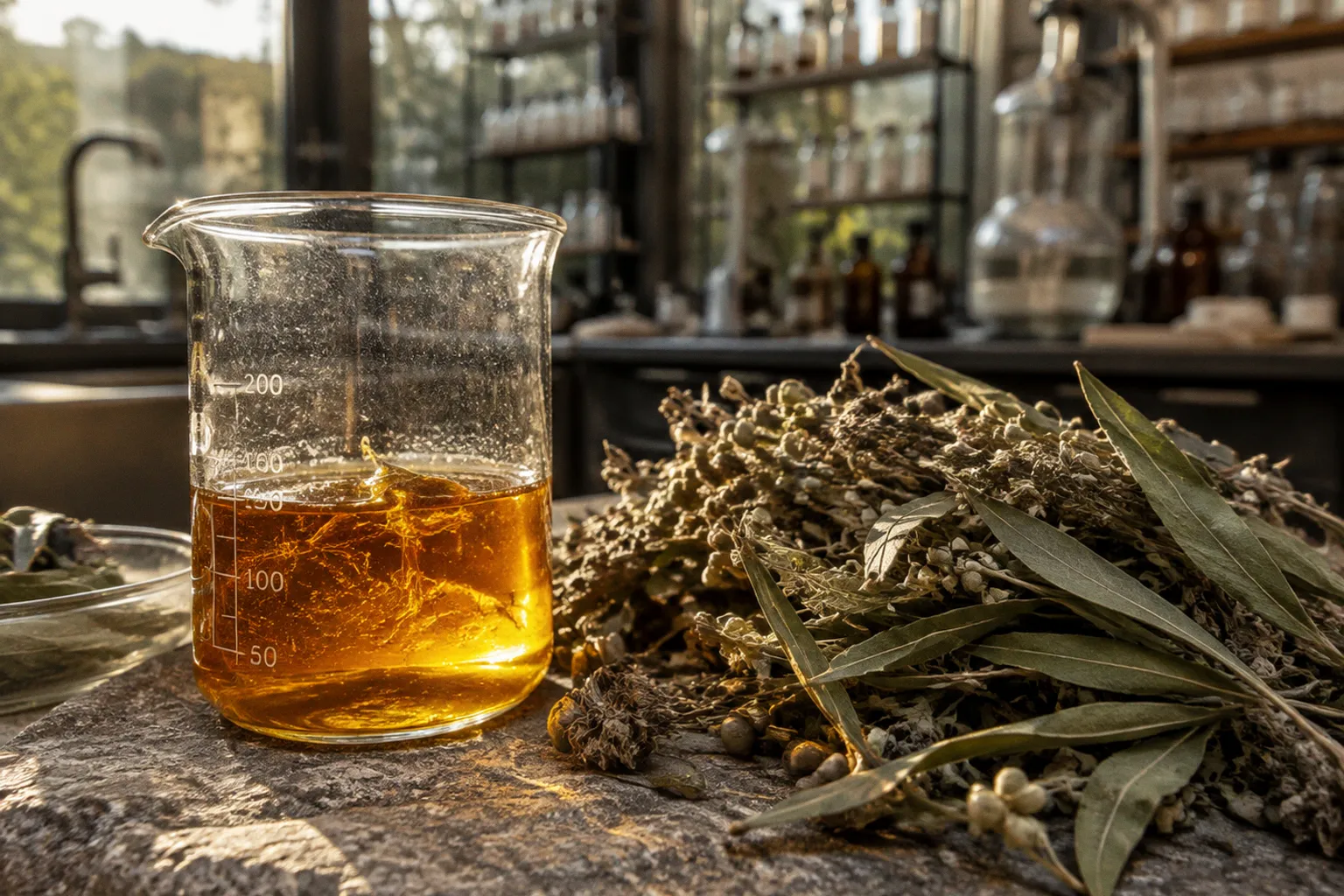
The bottle says “natural,” “wildcrafted,” even “Australian native,” and somewhere between the marketing copy and the ingredient deck, you assumed plant-based meant effective.
It does not, automatically.
The format of the extract matters almost as much as the plant printed next to it. A botanical ingredient is not a single thing. Its chemistry depends on the plant material, the part harvested, the solvent, the temperature, the duration of extraction, the way the finished formula is preserved, and whether the resulting compounds remain stable once they are on your skin.
Two formats appear repeatedly in A-beauty: cellular extracts, a newer category of concentrated botanical ingredients designed to retain a broader plant profile in a water-compatible medium, and herbal infusions, the older method of steeping plant material in oil, water, or alcohol. They share the word “botanical,” but they do not deliver the same material to the skin.
For acne-prone or reactive skin, that difference is not theoretical. It affects texture, layering, potential irritation, the type of compounds present, and what the formula can realistically do.
Format is not a marketing detail. It helps determine which part of the plant’s chemistry reaches the finished product — and how that product behaves on your skin.
The Science of Cellular Integrity: Beyond Traditional Steeping
Cellular extraction is built around a straightforward ambition: preserve more of the plant’s native chemical profile during processing, rather than extracting only the fractions that happen to dissolve in one chosen carrier. Depending on the producer and the raw material, the process may aim to retain a mixture of phenolics, flavonoids, organic acids, sugars, minerals, and other plant constituents in a water-compatible concentrate.
That does not mean the final ingredient contains an untouched plant cell suspended in serum. “Cellular” is a description of an extraction approach and ingredient concept, not a guarantee that every compound in the original plant survives in its original state. Heat, oxygen, pH, water activity, storage, and preservation still matter. The useful question is whether the manufacturer can explain what has been extracted, in what medium, and with what level of standardisation.
Traditional herbal infusions work differently. Dried or fresh plant material is placed in a carrier — commonly oil, water, or alcohol — and allowed to release the compounds that are compatible with that carrier. The method is old, inexpensive, and still entirely appropriate for many purposes: herbal teas, salves, massage oils, body products, and simple emollient preparations.
Its limitations are not that it is primitive. They are that every carrier selects for certain fractions and excludes others.
An oil infusion tends to favour compounds with meaningful affinity for the oil phase, including many lipophilic constituents, pigments, waxes, and oil-soluble vitamins. A water infusion favours water-soluble constituents but may be more vulnerable to microbial growth and oxidation unless it is properly preserved. An alcohol-based extraction can draw out another profile again, while also creating formulation and tolerance considerations of its own.
The plant name on the label cannot tell you which of these profiles is present.
What happens to the plant chemistry?
Heat and light can degrade fragile compounds, but the outcome depends on the molecule and the processing conditions. Some plant constituents tolerate warmth well; others are more sensitive to oxidation, prolonged exposure to air, or changes in pH. Kakadu plum is a useful example because its ascorbic acid content is often central to its cosmetic appeal. Once plant tissue is disrupted, the stability of vitamin C-related compounds depends on the surrounding environment, packaging, oxygen exposure, and the rest of the formula. An infusion is not automatically ineffective, but it may not preserve the same profile as a carefully controlled concentrate.
The same caution applies to Australian native botanicals more broadly. Tasmanian mountain pepper berry contains compounds with different physical properties from the organic acids associated with finger lime. Lemon myrtle is known for aromatic constituents such as citral, which are lipophilic and can be compatible with oil phases. Finger lime’s citric acid fraction is water-soluble. These compounds should not be treated as if they all behave alike simply because they come from native plants.
That is the central correction to the usual cellular-extract sales pitch: water-soluble does not mean superior, and oil-soluble does not mean useless. The carrier determines which constituents are preferentially extracted. The best format depends on the target compound, the intended skin effect, the finished product, and the way the ingredient is used.
A traditional infusion can be a poor vehicle for a water-soluble organic acid, while an oil infusion may be a sensible way to deliver an oil-compatible aromatic fraction. A cellular extract may capture a broader hydrophilic profile, but that does not prove that every relevant compound is more active or more penetrating in the finished product.
Bioavailability and Absorption: Why Water-Solubility Matters for Acne
Bioavailability is often used loosely in skincare. In a strict sense, it asks how much of a compound becomes available at the site where it is meant to act. For a topical product, that is not simply a question of whether an ingredient dissolves in water.
The outermost skin layer, the stratum corneum, is a dense barrier made of corneocytes surrounded by organised intercellular lipids. Topical compounds can move through several routes: between the cells through the lipid matrix, across the cells, or through appendages such as hair follicles and sweat ducts. The route depends on molecular size, polarity, partitioning behaviour, concentration, the vehicle, skin hydration, contact time, and the condition of the barrier.
Water-solubility is therefore one formulation variable, not a universal absorption switch.
A very hydrophilic compound may struggle to cross the lipid-rich parts of the stratum corneum. A very lipophilic compound may remain in the outer lipid layers or fail to move into deeper, more aqueous tissue. Compounds with an intermediate balance of properties may partition more effectively, but even then, the vehicle can either encourage or limit release. The formula’s pH, emulsifier system, humectants, solvents, occlusives, and delivery structure all change the outcome.
This is why the statement that a molecule either dissolves in the “watery channels” of the stratum corneum or stays on top is too simple. The skin does not contain a single aqueous channel system waiting to carry botanical actives inward. It is a layered, lipid-dominant barrier with multiple possible pathways, and penetration is molecule- and formulation-dependent.
Why the distinction still matters for acne-prone skin
The correction does not make extraction format irrelevant. It makes the discussion more precise.
A water-based cellular extract may be easier to formulate into a lightweight serum, and it may be a practical way to include water-compatible plant fractions alongside humectants and other barrier-supportive ingredients. That can make the product easier to layer under moisturiser and sunscreen, particularly for people who dislike a heavy oil film.
An oil infusion can be useful when the desired result is emollience, surface protection, and reduced water loss. An oil phase can also be the appropriate home for lipophilic plant constituents. The fact that it sits partly at the skin surface is not automatically a defect; for a protective facial oil, that is part of the function.
The problem begins when the carrier conflicts with the user’s skin and routine. A rich oil may feel uncomfortable on a congested T-zone, interfere with sunscreen application, or add too much occlusion for someone already dealing with follicular blockage. Conversely, a very light water-based serum may not provide enough lipid support for a compromised barrier.
Neither format can guarantee treatment of acne. Botanical extracts may support a routine aimed at irritation, redness, uneven tone, or comfort, but they do not replace evidence-based acne therapies when lesions are persistent, painful, or scarring.
| Parameter | Cellular Extracts | Herbal Infusions |
|---|---|---|
| Typical carrier | Often water-compatible or aqueous | Oil, water, or alcohol |
| Main extraction bias | Depends on the process; often designed to retain water-compatible and mixed plant fractions | Determined strongly by the chosen carrier |
| Lipophilic constituents | May be limited unless the system is designed to include them | Often well represented in oil infusions |
| Water-soluble constituents | Often a better fit for aqueous systems | More likely to appear in water or hydroalcoholic infusions |
| Skin delivery | Depends on molecule, vehicle, concentration, and barrier condition | Depends on molecule, carrier, and contact with the skin |
| Sensory profile | Usually lighter and easier to layer in a serum | Often more emollient, occlusive, or film-forming |
| Best practical role | Lightweight treatment and formula flexibility | Emollience, surface protection, or delivery of oil-compatible fractions |
| Stability | Depends on preservation, packaging, pH, oxygen, and the compounds present | Depends on the carrier, antioxidants, packaging, and storage |
| Allergen disclosure | The same regulatory principles apply to the finished cosmetic | The same regulatory principles apply to the finished cosmetic |
The table is a formulation map, not a ranking. “Cellular” does not automatically mean more potent, and “infusion” does not automatically mean crude.
The Evolution of Australian Phyto-Tech: From Crude Herbs to Concentrates
Australia’s native flora is a phytochemical treasure chest with a marketing problem. The plants are unusual — high-UV-adapted, chemically defended, evolved on an isolated continent — and the supply chains are unusual too: small harvests, wildcrafted plots, native title agreements, and slow growth cycles. Early A-beauty formulations leaned on the simplest possible extraction: macerate the dried herb in a carrier oil, bottle it, and let the plant name do much of the selling.
That approach still has a place. A well-made infusion can be transparent about its carrier, pleasant to use, and exactly right for a product designed to soften and protect the skin. The issue is not whether the method sounds old-fashioned. The issue is whether it extracts the compounds the formulator is claiming to deliver.
Plant material left after an infusion is often called the marc. Depending on the plant and solvent, some chemistry will remain in it. That observation encouraged the development of more controlled extraction methods designed to improve yield, reproducibility, or the range of compounds available to the finished formula.
Australian phyto-tech producer NATIVE EXTRACTS, for example, has built a catalogue of more than 400 cosmetic ingredient cellular extracts. The significance is less that one extraction method has replaced every other method, and more that the industry now has a broader technical vocabulary. Formulators can choose between different carriers and extraction systems rather than treating a whole plant as a single undifferentiated ingredient.
That shift is important for native Australian skincare because consistency is difficult when the raw material varies by season, location, plant age, harvest conditions, and storage. A named botanical may be recognisable to the consumer while still representing very different chemistry from one batch to another. Extraction and quality-control data help narrow that variation, although the label alone rarely tells you how much standardisation has been achieved.
A Kakadu plum cellular extract, for instance, may be designed to provide a more consistent water-compatible profile that includes vitamin C-related compounds. Kakadu plum material infused into oil will favour a different set of constituents, and the finished formula may be designed primarily as an emollient rather than a brightening serum. Neither statement proves which product will perform better for every person. It explains why the two products should not be judged as interchangeable simply because they carry the same plant name.
The same principle applies to mountain pepper, finger lime, lemon myrtle, quandong, and other native ingredients. Ask what part of the plant was used, how it was extracted, which compounds are being prioritised, and whether the brand provides any information beyond a romantic origin story.
Regulatory Realities: Understanding Allergen Thresholds and Labeling
This is where format choice meets the fine print on the back of the bottle — and where clean beauty marketing can become deliberately vague.
Under European cosmetic regulations, a framework that many Australian brands use as a reference point for products intended for international markets, individual fragrance allergens may require disclosure when they exceed specified thresholds in the finished product. The commonly cited thresholds are 0.01% for rinse-off products and 0.001% for leave-on products. These are safety and labeling triggers, not measures of botanical potency.
An extract can appear under one INCI name, such as a fruit or leaf extract, while containing a complex mixture of naturally occurring compounds. The label may not tell you the concentration of the plant’s characteristic constituents, the extraction yield, or whether the ingredient was produced by infusion, pressing, hydroalcoholic extraction, or a cellular extraction process.
“Cellular extract” and “infusion” are not interchangeable technical declarations on every cosmetic label. Neither term, by itself, tells you how much active material is present or how well it will perform in a particular serum.
What the label can and cannot tell you matters:
- If the brand identifies the extraction method or names the ingredient producer, there is more information to investigate.
- If the label says “infused” or “macerated in oil,” expect the carrier to shape the extractive profile.
- If it identifies a water or hydroalcoholic extract, expect a different selection of compounds from an oil infusion.
- If it only says “botanical extract,” you know the plant source but not necessarily the method, concentration, or standardisation.
- If a product lists essential oils or fragrant botanical materials, consider the potential for irritation separately from the question of whether the plant is organic or native.
For acne-prone skin, the regulatory question is less important than the formulation question: what is the product designed to do, and is the carrier compatible with your skin?
A heavy oil infusion may be perfectly sensible in a barrier-supportive night balm and uncomfortable in a congested daytime serum. A water-based cellular extract may be easier to layer, but it may also need a moisturiser with enough lipids to prevent tightness. A product can be legally labelled and still be a poor match for your routine.
Selecting the Right Botanical Profile for Your Skin Barrier
The mistake is treating “cellular” and “infusion” as a hierarchy. They are different tools. Match them to the job rather than assuming the newer-sounding format wins.
For a barrier-repair evening routine, the sequence can be simple:
1. Cleanse with a low-irritation formula. A low-pH cleanser may be comfortable for some people, but the more important point is to avoid a cleansing step that leaves the skin tight, hot, or squeaky. The barrier you are trying to repair is the one your cleanser leaves intact.
2. Apply a water-based treatment if that is the texture your skin tolerates. A cellular extract serum can be useful here because it is often designed for an aqueous formula. Kakadu plum may suit a routine focused on uneven tone; mountain pepper may appeal to someone looking for a calming botanical profile. Choose according to the full formula, not the plant name alone.
3. Use a straightforward moisturiser. Look for a balance of humectants, emollients, and barrier-supportive lipids rather than adding several active botanicals at once.
4. Add an oil infusion only where it earns its place. A calendula-in-squalane or rosehip infusion may work as the final emollient step for dry areas, but it is not compulsory for the whole face.
5. Keep congested zones under observation. If the T-zone becomes shinier, bumpier, or more prone to closed comedones after adding an oil, reduce the amount or reserve it for drier areas.
For morning use, a lightweight botanical serum under moisturiser and broad-spectrum sunscreen is usually easier to manage than a thick oil layer. Oils can affect the feel and film of sunscreen, and some formulas may pill when layered together. That is a compatibility problem, not proof that every facial oil is comedogenic.
The same discipline applies to the number of actives. If a serum contains Kakadu plum, lemon myrtle, mountain pepper, finger lime, tea tree, and several fragrant oils, the plant list may look impressive while making it harder to identify the source of irritation. A shorter formula is not automatically better, but it is easier to understand and troubleshoot.
Match the format to the function. A cellular extract may suit a lightweight treatment layer; an oil infusion may suit protection and emollience. Neither format gets a free pass on formulation quality.
Reading a Botanical Formula Without Overpromising
When comparing Australian cellular extraction skincare with conventional botanical infusions, focus on the complete formula rather than the most exotic ingredient on the front label.
Look for:
- The position of the botanical in the INCI list. A plant extract near the end may still have a role, but the name alone does not establish a high concentration.
- The carrier system. Water, glycerin, propanediol, oils, alcohol, and emulsifiers each shape how the ingredient behaves.
- The extraction description. “Cellular,” “aqueous,” “hydroalcoholic,” “pressed,” “distilled,” “infused,” and “macerated” point toward different processes, although marketing language still needs checking.
- The plant part used. Fruit, leaf, bark, root, seed, and flower can contain substantially different chemistry.
- The fragrance load. Native essential oils can contribute sensory appeal and characteristic aroma, but natural origin does not remove the possibility of irritation.
- The packaging. Oxygen, light, heat, and repeated exposure during use can affect sensitive compounds. An opaque, well-sealed package is often more reassuring than a clear dropper bottle left on a sunny bathroom shelf.
- The product’s actual role. A serum, balm, cleansing oil, mist, and moisturiser should not be judged by the same performance criteria.
For acne-prone skin, also separate three different questions that brands often blend together:
1. Does the formula feel light enough for your skin?
2. Does it contain ingredients with a plausible role in your routine?
3. Is there enough evidence to treat the acne itself?
A botanical product may answer the first two questions and still not be an acne treatment. Persistent inflammatory acne, painful nodules, or scarring deserves a more reliable clinical plan than a rotating collection of native extracts.
Troubleshooting Your Botanical Routine
If your botanical routine is not delivering, work through the formula before blaming the plant.
- Read past the word “extract.” Look for the extraction method, the carrier, and the order of ingredients. A plant name without process information tells you very little about the finished material.
- Check the texture against the job. A rich oil may be useful for dry, flaky skin and uncomfortable on an oily T-zone. A watery serum may be elegant but insufficient on its own when the barrier is severely dry.
- Introduce one new product at a time. If you add a cellular serum, facial oil, exfoliant, and new sunscreen in the same week, you lose the ability to identify what caused congestion or stinging.
- Do not equate water-solubility with penetration. A water-compatible ingredient still needs a suitable vehicle, concentration, contact time, and route through the skin barrier.
- Do not equate oil-solubility with surface failure. Some useful botanical constituents are lipophilic, and an oil phase can be the appropriate delivery environment for them.
- Watch for changes in colour and smell. Browning, rancid odour, separation, or a marked change in texture can indicate instability or contamination, although not every colour change proves that an active has degraded.
- Patch test cautiously. Even a water-based botanical can irritate reactive skin, particularly when it contains aromatic compounds or is used alongside acids, retinoids, or benzoyl peroxide.
- Give acne treatments enough space. If a botanical serum is layered with several strong actives, irritation may look like worsening acne. Simplify before escalating.
- Use sunscreen consistently for post-acne marks. A brightening extract cannot compensate for daily ultraviolet exposure that keeps uneven tone visible.
Cellular extracts and herbal infusions are not competitors in a beauty-page showdown. They are two extraction and formulation strategies, each with advantages and limitations. A cellular extract may be the more convenient choice for a lightweight serum carrying water-compatible plant fractions. An oil infusion may be the better choice when the goal is to soften the skin, reduce surface water loss, or deliver oil-compatible constituents in an emollient base.
The useful comparison is not cellular extracts versus traditional extracts in the abstract. It is the specific plant, the specific compound, the specific carrier, and the specific skin problem. Look past the Australian origin story and ask what the formula is actually built to deliver. That is where the difference between a persuasive botanical label and a genuinely useful routine begins.