Clean Skincare Preservatives: How Stable Are They?
A serum that reads like a botanical garden — watermelon extract, kakadu plum, hyaluronic acid derived from fermented wheat — still needs a preservation system that works outside the marketing copy.
Iris Ellingham·Updated: September 07, 2026·15 min read
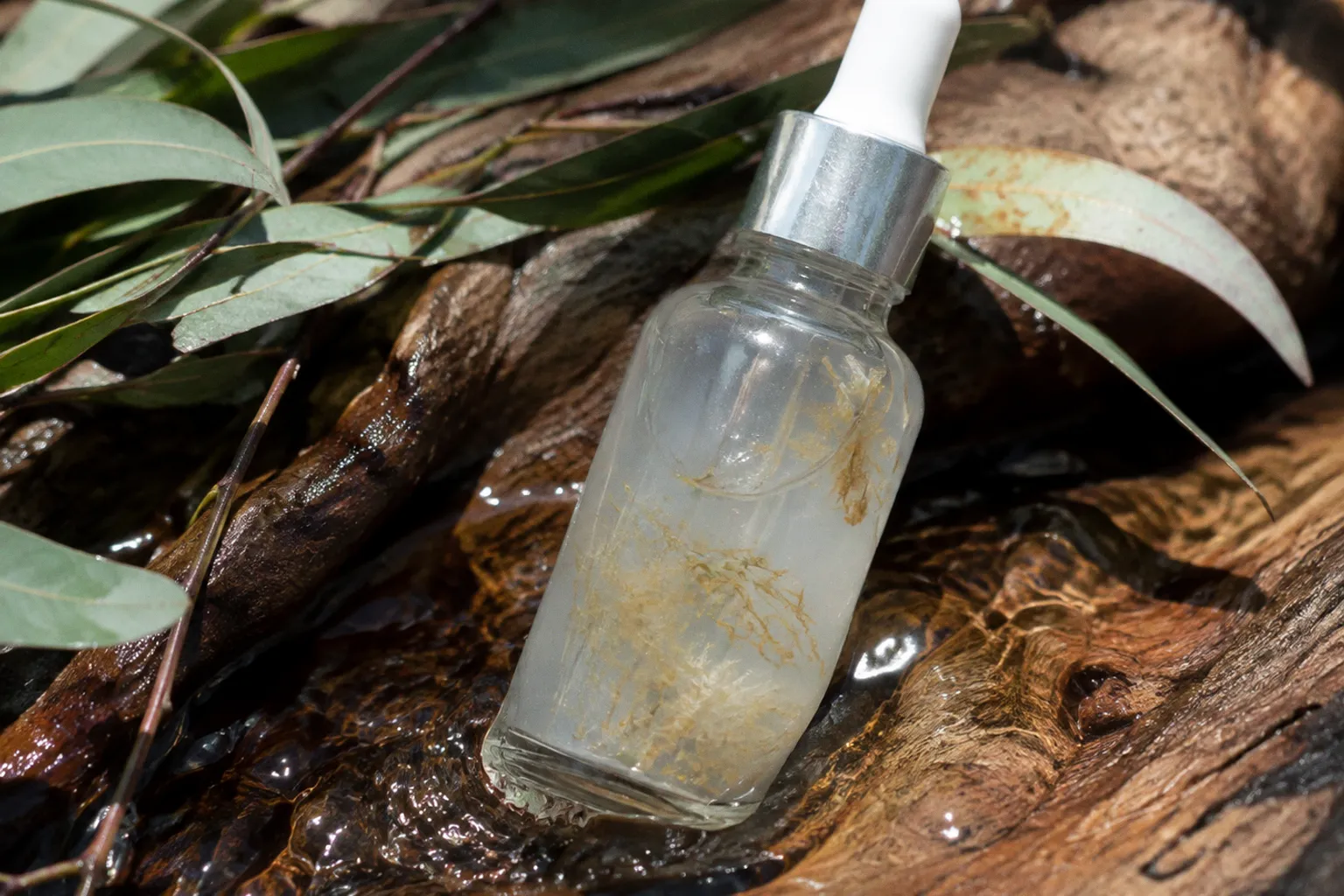
The concern is reasonable: when a product contains water, plant extracts and a long list of nutrient-rich ingredients, it also creates conditions in which bacteria, yeast or mould may become a problem if the formula is poorly protected.
The useful question is not whether a product is labelled “natural” or “clean”. It is whether the complete formulation has been designed and tested to control microbial growth throughout its intended life. That depends on the interaction between pH, water activity, preservative chemistry, packaging and the way the product is expected to be used.
Natural preservatives in clean skincare can be part of a reliable safety strategy. But they do not work by virtue of being botanical, fermented or familiar. They work when the formula gives them the right conditions — and when testing confirms that the finished product remains stable.
The Science of Hurdle Technology in Botanical Formulations
No single plant-derived ingredient provides universal, broad-spectrum protection in every cosmetic formula. This is the foundational distinction between serious formulation and wishful thinking. A preservation system built around naturally derived materials generally relies on several complementary barriers rather than one hero ingredient.
This approach is known as hurdle technology. Each hurdle makes survival more difficult for a microorganism:
- an acidic pH can improve the activity of weak organic acids;
- reduced water activity limits the amount of available moisture;
- chelating agents bind metal ions that some microorganisms use for growth and enzyme activity;
- selected botanical or fermentation-derived materials may add antimicrobial activity;
- suitable packaging reduces repeated contamination during use.
None of these controls should be treated as a complete substitute for preservation on its own. The strength comes from the combination. If one hurdle is weaker than expected, the others reduce the pressure on the system and narrow the opportunity for microbial growth.
A clean-formulation preservation strategy may include:
1. Organic acid systems. Sodium benzoate and potassium sorbate are widely used in products with a suitably acidic pH. Their performance depends strongly on the proportion of acid present in its active, undissociated form.
2. Botanical antimicrobial materials. Rosemary extracts, certain aromatic plant fractions and fermentation-derived ingredients may contribute to microbial control. Their effect is formulation-specific, and their presence on an ingredient list does not establish that the finished product is adequately preserved.
3. Chelating agents. Sodium phytate and disodium EDTA bind metal ions. They are usually supporting ingredients rather than stand-alone preservatives, helping to improve the performance of the wider system.
4. pH adjustment and buffering. A formula must remain within the pH range in which its preservative system is effective. A product that starts in the right range but drifts during storage may no longer have the same level of protection.
5. Water-activity control. Glycols, polyols, salts and high levels of certain dissolved materials can reduce the water available for microbial growth. This is a useful additional barrier, not a universal guarantee of safety.
6. Packaging and dispensing design. Airless pumps, sealed tubes and single-use formats can reduce the amount of contamination introduced during normal application.
The point is not to make a formula hostile to everything alive. It is to create a controlled environment in which likely contaminants cannot multiply to unsafe or spoilage-related levels during the product’s intended use.
Why pH Levels Below 5.5 Are Critical for Organic Acids
pH is one of the most important variables in an organic-acid preservation system. Sodium benzoate and potassium sorbate are salts of weak acids. Their antimicrobial activity is linked largely to the undissociated acid form, which can move across microbial membranes more readily than the charged form.
Benzoic acid has a pKa of roughly 4.2, while sorbic acid has a pKa around 4.76. As the pH rises, a smaller proportion of each preservative exists in the undissociated form. The result is not an instant on-or-off switch, but a progressive reduction in the conditions that make these preservatives effective.
That is why botanical toners, essences and water-based serums using organic acid systems are often formulated in an acidic range, commonly around pH 4.0–5.2. The exact target depends on the entire formula: the preservative blend, concentration, buffering capacity, packaging, water activity and compatibility with the skin and other ingredients.
A pH below 5.5 can support the performance of organic acids, but it should not be treated as an automatic pass. A product can have an apparently suitable pH and still fail a challenge test. Conversely, a formula using a different preservation strategy may not depend on the same pH window.
The practical issue is pH drift. Botanical extracts can vary between batches. Raw materials may introduce minerals or nutrients. Emulsions can change as they age, and some active ingredients slowly alter the chemical environment of the formula. A reading taken on the day of manufacture does not prove that the product will remain at that pH after months in a warm bathroom.
The safety of a natural preservative system is not measured by the ingredient list alone. It depends on the pH, water activity, packaging and test data for the finished product.
For consumers, a brand’s pH disclosure can be useful context, particularly when sodium benzoate or potassium sorbate appears prominently in a water-based formula. But pH information is not a replacement for evidence that the complete system controls bacteria, yeast and mould.
Decoding ISO 11930: How Challenge Testing Validates Safety
ISO 11930 is an international method used to evaluate the antimicrobial protection of cosmetic products. It is commonly associated with the Preservative Efficacy Test, also called a challenge test. The basic idea is deliberately demanding: the finished product is inoculated with selected microorganisms, then monitored to see whether the formulation reduces or controls them over time.
The organisms used in the test represent different contamination and spoilage challenges:
| Test organism | Type | What it helps assess |
|---|---|---|
| Staphylococcus aureus | Gram-positive bacterium | The formula’s ability to control a common bacterial challenge |
| Pseudomonas aeruginosa | Gram-negative bacterium | Resistance to a difficult water-associated contaminant |
| Escherichia coli | Gram-negative bacterium | Performance against another representative bacterial challenge |
| Candida albicans | Yeast | Control of yeast growth in a water-containing product |
| Aspergillus brasiliensis | Mould | Resistance to filamentous fungal growth |
The product is sampled at defined intervals after inoculation, and the number of viable microorganisms is measured. The test does not simply ask whether the product kills everything immediately. It evaluates whether the microbial population falls sufficiently and whether organisms remain controlled during the observation period.
The acceptance criteria are not a universal single sentence that can be reduced to one bacterial kill figure and one fixed final day. Interpretation depends on the method used, the category of product, the organism being assessed and the applicable acceptance table. Some cosmetic products may be evaluated under different approaches within the standard, and borderline results require professional interpretation rather than a marketing simplification.
This distinction matters because challenge testing is often described too casually. A claim that every product must achieve a particular reduction by day 28 and then show no recovery at a universal day-42 endpoint gives a false impression of how ISO 11930 works. The important point is that the finished formula must meet the relevant acceptance criteria for the test method and product type, including control of bacteria, yeast and mould over the defined test period.
The test is also product-specific. Testing sodium benzoate in a laboratory solution does not prove that a serum containing sodium benzoate is protected. The finished product may contain botanical sugars, proteins, starches, hydrosols, minerals and other ingredients that change preservative performance. Viscosity and emulsion structure affect how evenly a microorganism is exposed to the system. Packaging may influence contamination after the test sample is opened and used.
A robust organic skincare preservative system therefore needs to be considered as a whole:
- the exact formula is tested, not just selected ingredients;
- the intended packaging is relevant to the microbial-risk assessment;
- the product category and test method are documented;
- results are interpreted against the appropriate ISO acceptance criteria;
- stability and compatibility work support the challenge-test result.
Passing a challenge test does not mean a product is immune to contamination under every imaginable condition. It means that, under the defined test conditions, the formula demonstrated an appropriate ability to control the selected microorganisms. That is a meaningful result — and far more useful than the phrase “self-preserving” on a product page.
Accelerated Stability Protocols and Real-World Shelf Life
Challenge testing and stability testing answer different questions.
A challenge test asks whether the preservation system can control deliberate microbial contamination. Stability testing asks whether the product remains physically, chemically and microbiologically acceptable during storage. The two forms of evidence complement each other; neither should be presented as a substitute for the other.
Accelerated stability protocols place samples under conditions more demanding than ordinary room-temperature storage. Elevated temperature, freeze–thaw cycles, light exposure and transport simulation may all be used, depending on the product. The aim is to identify likely changes in the formula before the product reaches the customer.
During this work, formulators may monitor:
- Colour and odour, which can reveal oxidation or degradation of botanical materials;
- pH, because movement outside the intended range may weaken an organic-acid system;
- viscosity and texture, including thinning, thickening or phase separation;
- emulsion integrity, particularly in creams and milky serums;
- appearance of particles or sediment, which can indicate incompatibility or instability;
- assay of sensitive actives, where relevant;
- microbial counts, to confirm that the product remains within specification.
Temperature-based acceleration can help predict likely shelf-life behaviour, but it is not a perfect mathematical conversion. The common rule that every increase of 10°C doubles a reaction rate is a simplified application of the Arrhenius model. It may be useful for thinking about chemical degradation, but cosmetic formulas contain many interacting materials, and not every process responds in the same way.
A sample stored at 40°C is not literally identical to a product kept in a bathroom. Heat may accelerate oxidation, while repeated opening introduces contamination and humidity. Sunlight, temperature cycling, shipping vibration and contact with wet fingers create different stresses. For that reason, real-time stability data and in-use testing remain important, especially for products with high botanical content or sensitive active ingredients.
The shelf life printed on a product should come from the manufacturer’s stability programme. It cannot be reliably inferred from the label terms “organic”, “natural” or “preservative-free”. A period-after-opening symbol is also product-specific. It indicates the manufacturer’s declared usable period after opening, but consumers still need to store the product as instructed and avoid introducing water or other contaminants.
Water activity: useful control, not a guarantee
Anhydrous products — oil serums, balms and facial oils containing no intentionally added water — generally have a lower microbial risk than emulsions, gels or hydrating toners. Microorganisms need more than an ingredient they can metabolise; they also need suitable available water and a permissive environment.
Water activity, written as aw, describes how much water is available for biological use. Lowering it can inhibit many bacteria and can make growth more difficult for a broad range of microorganisms. However, a value at or below 0.8 should not be described as a universal point at which bacteria and mould simply cannot proliferate. Some yeasts and moulds are more tolerant of reduced water activity and may grow below that level, depending on the complete environment.
This is especially relevant to botanical products, which may contain pockets of moisture, plant solids or ingredients that change the local microenvironment. Water activity is therefore one measurement within a wider risk assessment. It does not automatically remove the need to consider fungal growth, packaging contamination, raw-material quality or the possibility of water entering the product during use.
Pure oils usually present a different problem: oxidation and rancidity rather than conventional water-driven microbial growth. Tocopherol, rosemary extract and other antioxidants may help slow oxidation, but antioxidants are not interchangeable with antimicrobial preservatives. They protect oils from reacting with oxygen; they do not provide a blanket solution for a water-containing formula.
The Role of Chelating Agents and Packaging in Microbial Defense
Two elements of organic skincare preservative systems are easy to overlook because neither makes a compelling headline: chelation and packaging. Both can materially change how much work the preservative system has to do.
Chelation as a supporting hurdle
Chelating agents such as sodium phytate and disodium EDTA bind certain metal ions. Those ions can influence oxidation, formula stability and the behaviour of microorganisms. In some systems, removing or tying up available metal ions makes the environment less favourable to microbial survival and improves the performance of other preservation ingredients.
Chelation is not a stand-alone kill step. Sodium phytate does not turn an inadequately preserved serum into a safe one, and the presence of EDTA does not remove the need for challenge testing. Its value lies in supporting the rest of the system, particularly when it is combined with an appropriate pH, organic acids and a suitable packaging format.
This is one reason an ingredient list should be read as a system rather than a ranking of supposedly “good” and “bad” chemicals. A modest amount of a supporting chelator may be more useful to formula safety than a prominent botanical extract with uncertain antimicrobial performance.
Packaging is part of the preservation system
The container determines how much contamination reaches the product after manufacture. A well-designed preservative system still has to cope with opening, dispensing, air exposure and contact with the user’s hands.
Airless pumps can reduce the amount of air and external material entering the container. Sealed tubes generally offer better protection than wide-mouth jars, particularly for products used with wet hands. Single-dose packaging limits repeated exposure, although it may create more material waste and a larger environmental footprint.
Droppers occupy an intermediate position. They can be appropriate when the formula and user instructions support them, but the pipette tip should not touch the skin. A rubber-bulb dropper may also draw air back into the container during use. Open jars expose the entire product surface repeatedly and place greater demands on the preservation system and the user’s handling habits.
Opaque or UV-filtering packaging can protect light-sensitive ingredients, including some botanical polyphenols and vitamin derivatives. That protection is primarily about chemical stability, but chemical changes can affect pH, colour, odour and the broader preservation environment.
When assessing a clean skincare product, the following questions are more useful than simply counting plant-derived ingredients:
- Does the product contain water? Aqua, hydrosols, aloe juice and many botanical extracts create a different preservation challenge from a genuinely anhydrous oil.
- Is the preservation system identifiable? Sodium benzoate and potassium sorbate can be effective components, but their performance depends on pH and the rest of the formula.
- Does the brand explain how the product was tested? A clear reference to challenge testing and stability work is more informative than a vague claim that the formula is “self-preserving”.
- Is the packaging appropriate to the texture? Airless pumps and sealed tubes usually limit contamination more effectively than open jars.
- Are the usage instructions realistic? Advice to keep water out of a balm or avoid touching a dropper tip is part of microbial control.
- Is the product likely to live in a hot, humid room? Australian bathroom conditions can be more demanding than a cool cupboard, particularly for water-based products.
- Does the PAO or expiry information match the product? The open-jar symbol and expiry date are useful only when followed in the storage and handling conditions specified by the manufacturer.
Natural preservation is not a single ingredient. It is an architecture of pH, water control, chelation, packaging and validated testing working together.
Where Clean Formulation Is Heading
The preservation conversation has moved beyond the old opposition between “natural” and “synthetic”. That distinction can describe ingredient origin, but it does not tell you whether a product is safe, stable or well formulated.
A botanical serum still needs a system capable of controlling bacteria, yeast and mould. A synthetic ingredient is not automatically excessive or unsafe merely because it is synthetic. The more useful questions concern concentration, compatibility, exposure, performance and evidence.
Formulators working with clean and organic-positioned products are using several strategies at once:
- organic acids supported by pH control and chelation;
- fermentation-derived materials with documented antimicrobial activity;
- multifunctional ingredients that support preservation while contributing emollience or skin feel;
- lower-water or anhydrous formats where the product brief allows them;
- airless, sealed or single-dose packaging;
- more extensive in-use and stability testing to reflect how products are actually handled.
Fermentation can be valuable, but “fermented” is not itself a preservation claim. A filtrate may contribute antimicrobial compounds, or it may mainly support the marketing story, depending on the organism, process and finished specification. The same caution applies to essential oils and plant extracts. Some show antimicrobial activity in laboratory conditions, yet their effective concentration, skin tolerance, odour and compatibility may make them unsuitable as the sole preservative in a daily facial product.
The strongest clean formulations are not trying to eliminate all preservation chemistry. They are choosing a system that fits the formula, the packaging and the intended consumer use, then verifying it. That may mean accepting a shorter period after opening, selecting an airless dispenser, controlling pH more tightly or using a preservation ingredient that does not fit a simplistic natural-versus-synthetic narrative.
For anyone choosing organic skincare products or building an acne-prone skincare routine, the practical conclusion is straightforward. A minimalist ingredient list is not the same as a microbiologically low-risk formula. A long botanical list is not evidence of instability either. What matters is whether the product has been engineered to manage water, pH, contamination and time — and whether the manufacturer has data to support the claims.
Natural preservatives in clean skincare can be stable and effective. They simply do not earn that description from their origin. They earn it from the architecture of the formula and the testing behind it.