Finger Lime: How Native Fruit Acids Unclog Congested Skin
Finger lime extract for acne-prone skin is often described as a natural alternative to exfoliating acids. That description is incomplete. The relevant mechanism is not that the fruit is inherently gentler or more effective than a laboratory-produced acid.
Jude Carstairs·Updated: September 06, 2026·14 min read
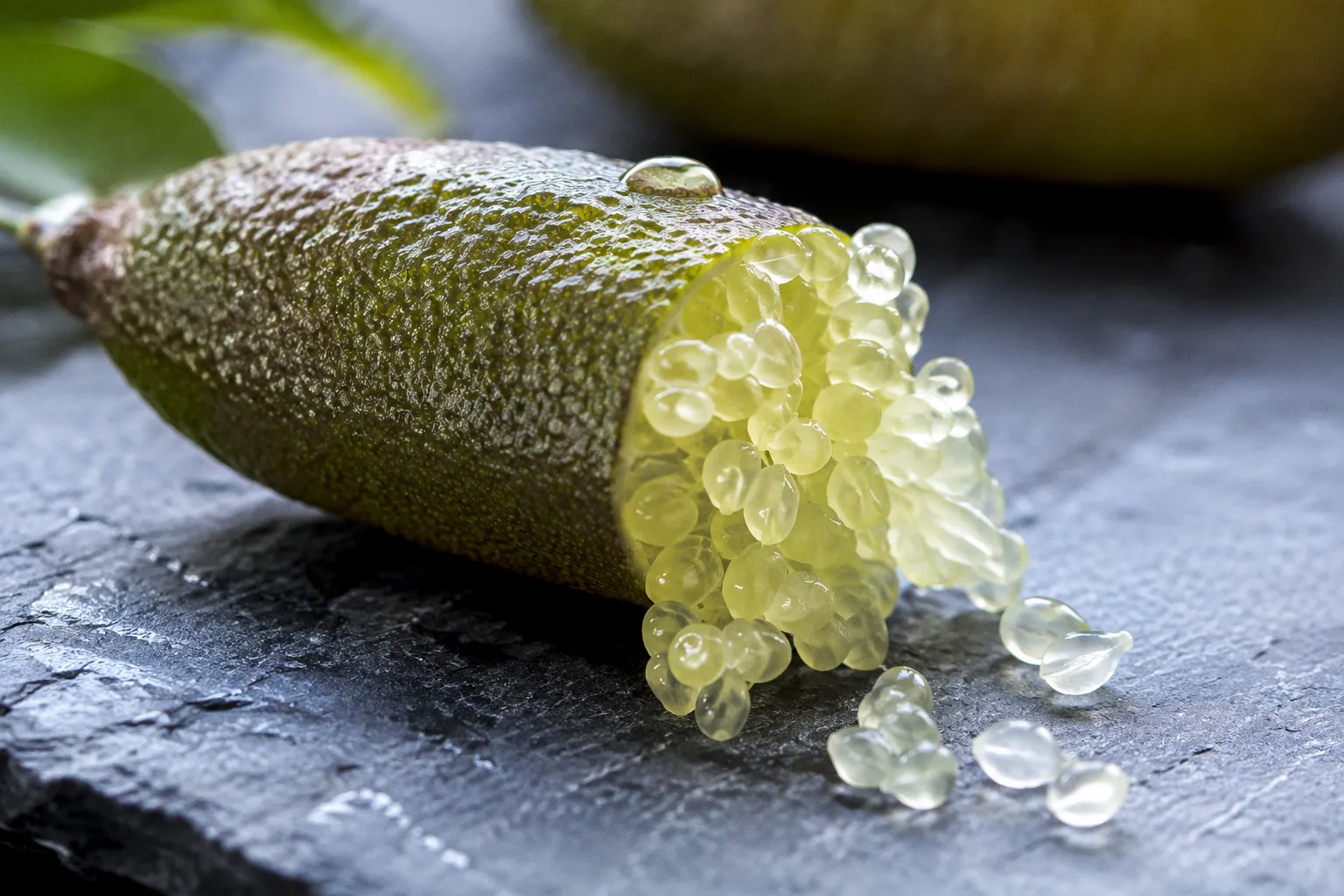
The relevant mechanism is that Citrus australasica contains organic acids, primarily citric acid and quinic acid, alongside phenolic and flavonoid compounds that may support exfoliation and reduce oxidative stress.
The distinction between raw fruit and a controlled cosmetic extract determines whether the ingredient is useful or simply irritating. Finger lime can contribute to the management of surface congestion and abnormal keratinization. It cannot be treated as a replacement for prescription therapy in inflammatory or cystic acne.
The botanical chemistry of caviar lime
Finger lime, also called caviar lime, belongs to the species Citrus australasica, with Microcitrus australasica also used in ingredient nomenclature. It is native to the subtropical rainforests of Southeast Queensland and Northern New South Wales.
Its cosmetic relevance comes from the composition of the fruit extract rather than from the fruit’s appearance or its status as an Australian native botanical. The extract contains organic acids that can function as alpha hydroxy acids, or AHAs. Citric acid is the dominant acid generally associated with the ingredient, while quinic acid also contributes to the acid profile.
The expected effects are surface-level and keratinolytic:
- Reduction of cohesion between dead corneocytes.
- Loosening of compacted keratin at the stratum corneum.
- Improved desquamation.
- Reduced accumulation of dead cells around the follicular opening.
- Support for a skin surface pH that is less favorable to excessive keratinization.
This does not mean that every product containing finger lime extract delivers a meaningful exfoliating dose. INCI placement alone cannot establish activity. The extract may be present in a low concentration, diluted in a carrier, processed for antioxidant fractions, or included primarily as a botanical marketing component.
The formulation must therefore be read as a system. The acid profile, extraction method, pH, solvent, preservation strategy, and contact time all influence the final effect.
The INCI name may appear as:
- Citrus Australasica Fruit Extract
- Microcitrus Australasica Fruit Extract
The two names refer to the same botanical source in different nomenclatural forms. They do not indicate different exfoliation strengths.
Finger lime is not an exfoliating treatment merely because it is a citrus fruit. Its performance depends on the standardized extract and the finished formula.
How finger lime AHAs interact with congested pores
Acne-related congestion begins with more than excess oil. Follicular plugging involves sebum, corneocyte accumulation, altered desquamation, and increased cohesion between dead skin cells. This process is known as hyperkeratinization.
A pore becomes visibly congested when corneocytes do not shed efficiently and remain bound together within the follicular canal. Sebum then contributes to the compacted material. The result can be a closed comedone, an open comedone, or a rough, uneven surface without obvious inflammatory lesions.
Finger lime exfoliation works through the same broad category of mechanism as other AHAs. Organic acids interact with the bonds that hold dead cells together at the surface. With repeated, controlled exposure, this can improve the release of retained corneocytes.
The sequence is straightforward:
1. Acid reaches the stratum corneum.
The formula must remain in contact with the skin long enough for the acid fraction to act. A rinse-off cleanser has a different performance profile from a leave-on serum.
2. Intercellular cohesion is reduced.
The acid environment weakens the bonds between surface corneocytes. This does not remove living epidermal tissue. It changes how efficiently dead cells detach.
3. Surface desquamation becomes more regular.
The outer layer becomes less dependent on aggressive mechanical removal. Scrubs and brushes are not required to create the exfoliating effect.
4. Follicular accumulation may decrease.
If the same keratinization problem is contributing to congestion, improved shedding can reduce the amount of compacted debris near the pore opening.
5. Texture and visible congestion may improve gradually.
This is a cumulative process. A single application cannot correct the follicular cycle.
The mechanism is not identical to salicylic acid. AHAs are primarily water-soluble and act more strongly at the skin surface. Salicylic acid is oil-soluble and has a different affinity for the lipid-rich follicular environment. Finger lime extract may be relevant when the dominant issue is surface roughness and retained corneocytes. It should not be presented as a direct substitute for a beta hydroxy acid in every acne pattern.
Nor does the presence of natural acids make the ingredient automatically non-irritating. Acidity, exposure time, barrier condition, and individual tolerance remain decisive variables.
Finger lime versus isolated exfoliating acids
The comparison below describes mechanisms, not guaranteed outcomes. Commercial products vary substantially.
| Parameter | Finger lime extract | Glycolic acid | Salicylic acid |
|---|---|---|---|
| Primary category | Botanical extract containing organic acids and phytocompounds | Isolated alpha hydroxy acid | Beta hydroxy acid |
| Main solubility profile | Depends on the extract and vehicle; generally associated with water-compatible fruit fractions | Water-soluble | Oil-soluble |
| Main site of action | Primarily surface stratum corneum; possible relevance to follicular keratinization | Surface epidermis and desquamation pathways | Surface and lipid-rich follicular environment |
| Key acne relevance | Congestion linked to retained surface keratin and abnormal shedding | Texture and superficial keratin accumulation | Comedonal congestion and sebum-associated plugging |
| Dose predictability | Variable unless standardized | Usually more predictable when concentration and pH are disclosed | Usually more predictable when concentration and pH are disclosed |
| Main formulation concern | Extract variability, acid strength, photoreactivity controls | Irritation and barrier disruption at excessive strength or frequency | Irritation, dryness, and cumulative exfoliation |
| Evidence limitation | Limited direct clinical comparison with standard acne acids | Larger body of cosmetic and dermatological use | Established role in comedonal skincare, but not interchangeable with prescription acne therapy |
This is why the phrase “natural AHA” requires qualification. A natural source does not produce a separate category of skin biology. The corneocyte bonds respond to the acid environment, not to the marketing origin of the ingredient.
Antioxidant activity is relevant, but not equivalent to acne treatment
Finger lime contains several antioxidant and anti-inflammatory phytocompounds. Reported constituents include tryptophan, ferulic acid, naringin, limocitrin, poncirin, and obacunoic acid. These compounds may help reduce oxidative stress within the formula and at the skin surface.
The fruit has also been assigned different ORAC values depending on variety. Green finger lime has a reported ORAC score of 4,590. Pink finger lime has a reported score of 6,510. Regular lime is reported at 82.
These values demonstrate that the antioxidant profile of finger lime is not identical to that of conventional lime. They do not establish an acne clearance rate, a reduction in lesion count, or superior clinical performance in a finished skincare product.
ORAC is a laboratory measure of antioxidant capacity. It is not a direct measurement of how the extract behaves on human skin. The result can change with the extraction solvent, fruit maturity, processing temperature, storage conditions, and the concentration used in the formula.
The antioxidant fraction still has a rational role. Acne-prone skin is exposed to oxidative processes involving sebum, inflammation, environmental stressors, and repeated irritation from over-treatment. A formula that combines controlled exfoliation with antioxidant support may be better tolerated than a formula that relies on aggressive acid activity alone. That is a formulation hypothesis, not proof that finger lime treats acne independently.
The same caution applies to comparisons with other Australian botanicals. Finger lime should not be confused with Kakadu plum, which is more strongly associated with high vitamin C content. The two ingredients occupy different chemical profiles. Finger lime’s relevance here is its organic acid and phytocompound composition, not an assumed vitamin C concentration.
What the antioxidant data can and cannot show
The data supports several limited conclusions:
- Pink and green finger lime differ in measured antioxidant capacity.
- The fruit contains multiple phenolic and flavonoid compounds.
- Antioxidant activity may help protect the formula and support the management of oxidative stress.
- Antioxidant capacity does not predict the exact behavior of the extract on human skin.
- A high laboratory value does not prove that a product will clear comedones.
- The finished product still requires a suitable vehicle, pH, preservative system, and exposure profile.
This distinction is necessary because botanical skincare frequently treats antioxidant numbers as a proxy for efficacy. The proxy is weak. Comedonal acne is a keratinization disorder with an inflammatory component. Antioxidant capacity addresses only part of that biology.
Safety and formulation: why raw fruit is not a skincare treatment
Applying raw finger lime juice to the face is not equivalent to using a formulated finger lime extract. It introduces uncontrolled acid exposure, variable concentration, unstable plant compounds, and volatile fragrance constituents.
Raw citrus material may also contain photoreactive compounds. For Citrus australasica fruit extract, the Cosmetic Ingredient Review expert panel indicates that 5-methoxypsoralen, also known as bergapten, should remain below 15 ppm to control photo-reactivity concerns.
This threshold applies to a regulated cosmetic ingredient and its safety assessment. It does not convert raw fruit juice into a safe topical preparation. Raw material is not standardized against a known bergapten level, and household application does not provide the stability or testing expected from a finished product.
A professionally produced extract can be processed and evaluated for several variables:
- Botanical identity.
- Plant part used.
- Harvest and storage conditions.
- Extraction solvent.
- Acid profile.
- Photoreactive compounds.
- Microbial quality.
- Preservative compatibility.
- Stability during the product’s intended shelf life.
The extraction method also changes the final chemistry. Water, glycerin, alcohol, and mixed solvents do not collect the same compounds in the same proportions. A fruit extract designed for antioxidant support may not deliver the same acid activity as an extract developed for exfoliation.
This is the central limitation of the category. Two products may list finger lime extract while producing different results because the ingredient is not a single standardized molecule. The product’s pH and complete ingredient list matter more than the botanical name alone.
A formula containing finger lime extract should also be assessed in relation to the rest of the routine. Concurrent use of retinoids, benzoyl peroxide, strong exfoliating acids, abrasive scrubs, or frequent clay masks can create cumulative barrier stress. The resulting erythema and dryness may be misinterpreted as a purging process.
Purging is not a universal explanation for irritation. Persistent burning, scaling, swelling, or worsening sensitivity indicates a tolerance problem. The appropriate response is to reduce the total irritant load, not to increase application frequency.
Integrating finger lime into an acne-prone routine
Finger lime extract is most rationally used as one controlled exfoliating component. It should not be layered indiscriminately with multiple acid products because the source is botanical.
A basic routine can be structured around barrier preservation:
1. Use a low-irritant cleanser.
The cleanser should remove sebum, sunscreen, and particulate residue without excessive surfactant exposure. A compromised lipid barrier increases the probability of stinging from any acid-containing product.
2. Introduce one finger lime product at a time.
The purpose is to establish whether the formula is tolerated and whether it produces a measurable change in congestion. Adding several new actives removes that ability to identify the cause of irritation.
3. Begin with limited frequency.
The correct schedule depends on whether the product is rinse-off or leave-on and on the disclosed acid system. There is no scientifically valid universal frequency for every finger lime extract.
4. Avoid simultaneous high-load exfoliation.
Do not automatically combine a finger lime treatment with glycolic acid, lactic acid, salicylic acid, strong retinoids, and abrasive cleansing. The cumulative exposure is more relevant than the natural origin of any single ingredient.
5. Use broad-spectrum photoprotection.
Exfoliation can increase sensitivity to ultraviolet exposure. Photoprotection is particularly relevant when a product contains citrus-derived materials and when the extract’s photoreactive profile is not clearly described.
6. Assess the type of acne present.
Surface roughness and mild comedonal congestion are more plausible targets than deep, painful, or scarring lesions. Severe inflammatory acne requires a different level of intervention.
7. Evaluate the formula rather than the label claim.
Look for the full INCI list, product format, acid disclosures where available, usage directions, and evidence that the extract has been processed for cosmetic use.
The routine should also account for the skin’s lipid barrier. Barrier-friendly formulations often include humectants, physiological lipids, fatty alcohols, or non-irritating emollients that reduce the drying effect of exfoliation. A product can contain a useful botanical and still perform poorly if the vehicle produces excessive transepidermal water loss or repeated irritation.
Finger lime is not inherently incompatible with sensitive skin. It is also not inherently suitable for it. Tolerance depends on the acid exposure and the condition of the barrier.
The relevant question is not whether finger lime is natural. It is whether the finished formula delivers a controlled acid exposure without destabilizing the barrier.
Where finger lime fits among native Australian botanicals
Australian botanical skincare uses several ingredients with distinct functions. They should not be treated as interchangeable because they come from the same geographic region.
- Finger lime: organic acids, antioxidant phytocompounds, and potential support for surface desquamation.
- Kakadu plum: commonly used for vitamin C-related antioxidant positioning; not a substitute for finger lime’s acid profile.
- Tasmanian mountain pepper berry: generally positioned around soothing and anti-inflammatory support rather than direct exfoliation.
- Australian native seed oils: primarily emollient and barrier-supportive, depending on fatty acid composition.
- Australian pink clay: absorbent mineral treatment that may reduce surface oil temporarily but does not correct abnormal follicular keratinization on its own.
- Organic coastal flora extracts: function depends on the individual species and extraction chemistry, not on the coastal origin as a category.
The practical advantage of combining these materials is not the number of native ingredients on the label. It is the division of functions. One ingredient may address exfoliation, another may support the barrier, and a third may provide antioxidant protection. Adding all three does not necessarily improve the result if the overall formula becomes irritating or occlusive.
For acne-prone skin, the priority remains controlled keratin management with minimal barrier disruption. The botanical story is secondary to the formulation.
The limits of the evidence
The available information supports a plausible mechanism for finger lime extract in congested skin. It does not establish that finger lime is superior to glycolic acid, salicylic acid, adapalene, benzoyl peroxide, or other evidence-based acne treatments.
There are no direct comparative clinical trials in the supplied evidence that test finger lime extract against 10% glycolic acid or 2% salicylic acid for acne reduction. The exact concentration of pure citric acid in raw finger lime extract also varies across harvests and commercial processing. That variability prevents a simple conversion from fruit extract percentage to exfoliating strength.
This matters for product evaluation. A product can reasonably claim that finger lime extract supports exfoliation or helps remove dead surface cells if its formula and substantiation support that language. It should not imply that the ingredient has the same predictable activity as a disclosed concentration of an isolated acid unless that comparison has been demonstrated.
The term “cellular extraction” also requires precision. Extraction separates selected compounds from plant material. It does not create a more powerful version of the fruit by default. The solvent and processing conditions determine which molecules are recovered. Without a standardized specification, the phrase offers little information about acne performance.
For mild congestion, a well-formulated finger lime product may be a reasonable botanical exfoliating option. For persistent inflammatory lesions, nodules, or scarring, it is not an adequate standalone strategy. Prescription retinoids, benzoyl peroxide, salicylic acid, and other clinical treatments act through mechanisms that a fruit extract does not fully reproduce.
Verdict
Finger lime extract has a credible cosmetic mechanism for acne-prone skin. Its citric and quinic acids can support surface exfoliation, while its phenolic and flavonoid compounds provide antioxidant activity. The ingredient may help reduce the accumulation of dead keratinocytes that contributes to rough texture and mild congestion.
Its performance is conditional. The extract must be properly processed, photoreactive compounds must be controlled, and the finished formula must provide a tolerable exposure. Raw finger lime juice is not an acceptable substitute. ORAC values do not prove acne efficacy. Natural origin does not guarantee low irritation.
The definitive position is therefore narrow: finger lime is a useful adjunctive exfoliating botanical when standardized and formulated correctly. It is not a superior replacement for established acne treatments, and it should not be evaluated by its fruit identity alone. The formula determines the result.