Lemon Myrtle: Why It Regulates Sebum and Breakouts
Lemon myrtle is not an exfoliant, a retinoid, or a substitute for acne medication.
Jude Carstairs·Updated: September 06, 2026·13 min read
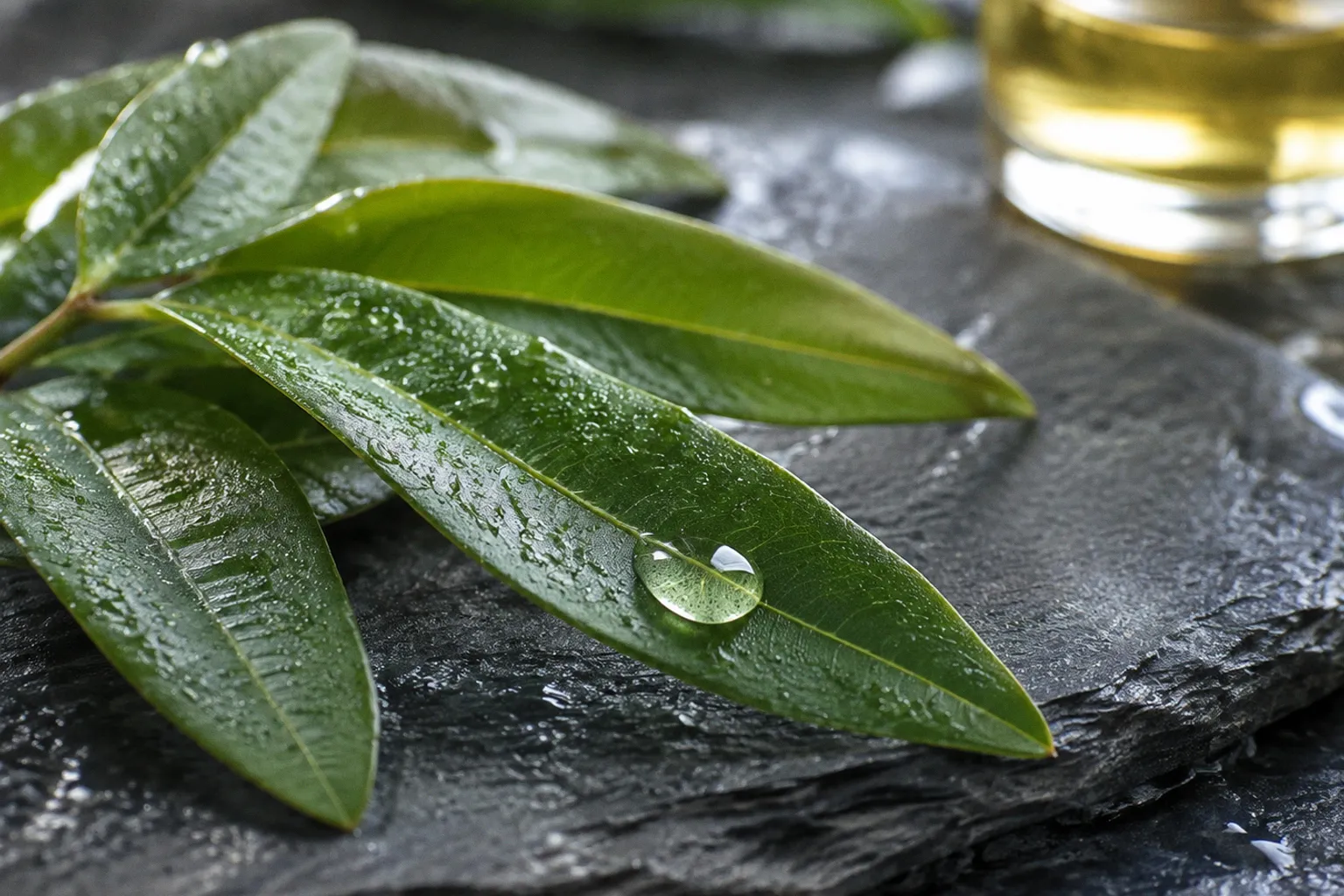
Its relevance to blemish-prone skin comes from a narrower mechanism: the chemistry of Backhousia citriodora may influence microbial activity, oxidative stress, and the conditions that support persistent breakouts.
The central compound is citral. In lemon myrtle essential oil, citral commonly represents 90%–97% of the composition. It is primarily made up of the isomers geranial and neral, identified in one chemical analysis at 52.13% and 37.65%, respectively. That concentration explains both the oil’s antimicrobial potential and its irritation risk.
For lemon myrtle for acne-prone skin, the formulation question is therefore more important than the botanical name alone. A controlled extract in a properly designed serum is not equivalent to applying pure essential oil to an inflamed lesion. The concentration, vehicle, stability system, and exposure time determine the practical result.
The chemistry of citral: a concentrated antimicrobial profile
Lemon myrtle belongs to the group of Australian native botanicals used in cosmetic and antimicrobial research. Its essential oil has a relatively simple chemical profile compared with many complex plant extracts. Citral dominates the composition. Geranial and neral are the principal isomers.
This matters because the biological activity of an essential oil is not distributed evenly across all its constituents. When one compound accounts for most of the formula, the expected activity and the safety limitations become more predictable. Lemon myrtle is chemically potent, but potency is not the same as suitability for direct application.
Citral has several properties relevant to acne-prone skin:
- It can disrupt microbial environments that support the growth of certain skin pathogens.
- It has anti-inflammatory activity in laboratory and cosmetic research contexts.
- It may reduce oxidative damage involving skin surface lipids.
- It can contribute to the fragrance profile of a product, although fragrance is not its skincare function.
- At excessive concentrations, it can increase the risk of irritation and sensitisation.
The last point is not secondary. Essential oils are concentrated volatile mixtures. They are not automatically gentle because they come from plants. A botanical ingredient can be biologically active and dermatologically aggressive at the same time.
The phrase lemon myrtle antibacterial skincare should therefore describe a properly diluted and preserved formulation, not an undiluted oil. The raw material and the finished product have different risk profiles.
Citral is not salicylic acid
A common category error is to treat any antibacterial botanical as a natural form of salicylic acid. Lemon myrtle does not contain salicylic acid on the basis of the available evidence, and it does not function as a direct beta-hydroxy acid exfoliant.
Salicylic acid acts primarily through its keratolytic and comedolytic activity. It helps loosen corneocyte adhesion within the follicular opening and can improve the removal of retained keratin. Citral operates through a different biochemical route, with emphasis on antimicrobial and anti-inflammatory effects.
This distinction affects which lesions the ingredient can plausibly address. A citral-containing product may be relevant when microbial imbalance and inflammation are part of the presentation. It will not perform the same job as a proven comedolytic active in a closed-comedone-dominant routine.
Lemon myrtle has antimicrobial potential. It is not a botanical replacement for every established acne active.
The same applies to sebum regulation. A product may support a more stable oily-skin environment without stopping sebaceous gland activity in the manner of a prescription treatment. Claims about complete hormonal acne control exceed the evidence.
Targeting acne-associated bacteria and biofilm formation
Acne is not caused by one organism in isolation. It involves follicular occlusion, sebum composition, inflammation, keratinisation, and microbial ecology. Cutibacterium acnes, formerly known as Propionibacterium acnes, is part of normal skin microbiota. The problem is not simply that the bacterium exists. The relevant issue is how the follicular environment, bacterial strains, lipid conditions, and immune response interact.
Lemon myrtle essential oil has demonstrated antimicrobial activity against organisms including P. acnes, Staphylococcus aureus, and Staphylococcus epidermidis. These findings support its classification as a botanical antimicrobial for breakouts. They do not establish that every lemon myrtle product will clear clinical acne.
Laboratory antimicrobial results are usually produced under controlled conditions. They may use a defined concentration, a specific culture medium, and a direct exposure that does not resemble a leave-on cosmetic product diluted in water, oil, or an emulsion. The skin introduces additional variables:
- The stratum corneum limits penetration.
- Sebum can alter how an oil partitions across the surface.
- The product vehicle changes availability of the active compounds.
- Contact time may be short or prolonged.
- Irritation can increase barrier disruption and aggravate inflammatory lesions.
- The microbial community is mixed, not a single laboratory strain.
These variables prevent a direct conversion from laboratory efficacy to clinical acne clearance.
Why antibiofilm activity is relevant
Bacteria can exist as free cells or within biofilms. A biofilm is a structured microbial community surrounded by a protective matrix. This structure can make organisms less accessible to antimicrobial action and may contribute to persistence on surfaces and within certain biological environments.
In laboratory evaluations, lemon myrtle essential oil demonstrated biofilm inhibition rates between 85.10% and 96.44% against tested bacterial strains. The reported minimum inhibitory concentration was 6.25 μL/mL against S. epidermidis and S. aureus in the relevant test conditions.
Those numbers are useful for understanding the oil’s activity. They are not dosing instructions for facial skincare. A minimum inhibitory concentration in a laboratory assay cannot be translated into a recommended percentage for a leave-on serum without accounting for the vehicle, skin tolerance, exposure duration, and test design.
The result is still meaningful. It indicates that lemon myrtle is not merely a fragrance-bearing plant extract with vague antibacterial language attached to it. Its volatile constituents can interfere with bacterial growth and biofilm-related processes under experimental conditions.
The limitation is equally clear: there are no equivalent long-term comparative clinical trials establishing that 1% lemon myrtle essential oil performs like 2.5% benzoyl peroxide, topical clindamycin, adapalene, or another standard acne treatment. The ingredient should be assessed within its evidence class, not promoted beyond it.
Lemon myrtle and sebum control: the oleostasis question
Sebum is not an enemy substance. It contributes to skin lubrication and forms part of the surface lipid system. Acne-prone skin often has a more complex problem than simple excess oil. Sebum composition, oxidation, follicular retention, inflammatory signalling, and keratinisation all influence the likelihood that a comedone will progress into an inflamed lesion.
The relevant concept is oleostasis: the maintenance of a relatively stable lipid environment at the skin surface. An ingredient that supports oleostasis may be more useful than one that aggressively strips surface oil. Excessive degreasing can damage the lipid barrier, increase transepidermal water loss, and create irritation that complicates acne management.
A clinical study investigated a 2% Backhousia citriodora extract applied over 28 days. The extract demonstrated protection of squalene from peroxidation and supported the maintenance of oleostasis in oily and combination skin.
Squalene is a normal component of human sebum. It is chemically vulnerable to oxidation. Oxidised squalene has been studied in relation to comedogenic processes and follicular inflammation, although this does not mean that every oxidised lipid directly produces a clinical lesion. The skin system is more complicated than a single trigger-response chain.
The study supports a specific interpretation:
1. A 2% lemon myrtle extract may help protect surface squalene from oxidative change under the tested conditions.
2. This may support a more stable oily-skin environment.
3. A more stable lipid environment could be relevant to blemish-prone skin.
4. The finding does not prove that the extract suppresses human sebocyte lipid synthesis.
5. It does not establish that the same result occurs with lemon myrtle essential oil at another concentration or in another vehicle.
This is why lemon myrtle sebum control should be understood as a possible regulatory effect, not as an oil-removal mechanism. The available evidence does not define the exact molecular pathway by which citral or the broader extract would directly suppress sebocyte lipid production.
Barrier compatibility is part of sebum management
A product designed for acne-prone skin can fail even when its antimicrobial active is credible. The failure may occur in the surrounding formula.
A high-alcohol base, an over-cleansing routine, frequent physical exfoliation, or repeated exposure to undiluted essential oil can damage the lipid barrier. Barrier disruption increases reactivity. It can produce erythema, stinging, scaling, and dehydration. These symptoms are often mistaken for a need to intensify treatment.
A barrier-compatible routine does not mean avoiding all active ingredients. It means controlling the total irritant load. For a lemon myrtle product, that typically involves:
- A measured concentration rather than an undefined amount of essential oil.
- A vehicle that supports even distribution across the skin.
- No assumption that a stronger fragrance indicates greater efficacy.
- Compatibility with a non-comedogenic moisturiser.
- Avoidance of simultaneous overuse of multiple volatile oils and exfoliating acids.
- Patch testing before broader facial application, particularly in reactive skin.
The objective is not to remove every trace of sebum. It is to manage the follicular environment without increasing inflammation through unnecessary barrier stress.
Safe formulation: extract, essential oil, and finished product are not interchangeable
The term lemon myrtle can refer to several materially different ingredients:
| Ingredient form | What it represents | Practical implication |
|---|---|---|
| Lemon myrtle essential oil | A volatile oil highly concentrated in citral | Requires strict dilution; direct application carries a higher irritation and sensitisation risk |
| Lemon myrtle extract | A non-identical preparation with a different constituent profile | Evidence at 2% extract cannot be used to calculate an essential-oil dose |
| Finished cosmetic formula | Essential oil or extract combined with solvents, emollients, emulsifiers, and preservatives | Performance depends on the complete vehicle, not the botanical name alone |
| Fragrant plant blend | A mixture containing lemon myrtle alongside other aromatic oils | The total irritant and sensitising burden may be higher than expected |
Pure lemon myrtle essential oil should be diluted to a maximum concentration of around 1% for topical skin applications, according to the research basis provided for this ingredient. That upper limit should not be interpreted as a universal prescription for every face, every product, or every condition. It is a safety boundary for formulation thinking, not a recommendation to mix essential oil at home.
The difference between 1% essential oil and 2% extract is also substantial. These percentages refer to different raw materials. They cannot be compared numerically as if they represented the same amount of citral. An extract may contain a broader and less concentrated group of constituents. An essential oil may contain citral at 90%–97%. The biological exposure is therefore not defined by the percentage printed on the label alone.
Why spot application can be misleading
Acne lesions are often treated as isolated targets. The underlying process may not be isolated. A spot treatment containing a volatile botanical can reduce surface microbial activity around one lesion while irritating the surrounding skin. If the application increases erythema or causes contact dermatitis, the visible result can be interpreted incorrectly as worsening acne or treatment failure.
A responsible formulation should specify:
- The exact form of Backhousia citriodora used.
- The concentration in the finished product.
- Whether the ingredient is an essential oil or an extract.
- The presence of other aromatic oils.
- The intended frequency of use.
- The product’s compatibility with sensitive or compromised skin.
The absence of this information makes efficacy claims difficult to evaluate. It also prevents a meaningful comparison between products described as botanical blemish spot treatments.
A product with a low concentration of lemon myrtle extract in a balanced emulsion may be more appropriate for regular use than a highly aromatic oil blend. The latter may contain a larger nominal amount of plant material but produce poorer tolerability. Cosmetic chemistry does not reward concentration in isolation.
Where lemon myrtle fits in an acne routine
Lemon myrtle is most defensible as an adjunctive botanical active for oily, combination, and blemish-prone skin. Its role is narrower than that of a complete acne protocol.
A rational routine would separate the functions of different product categories:
- A mild cleanser removes excess oil, sunscreen, and particulate residue without aggressive surfactant exposure.
- A moisturiser supports the lipid barrier and reduces the tendency to compensate for over-cleansing.
- A lemon myrtle formulation contributes antimicrobial and oxidative-stress management properties.
- A proven comedolytic or anti-inflammatory active can address keratinisation or lesion formation through a different mechanism when appropriate.
- Sun protection reduces post-inflammatory hyperpigmentation risk and supports tolerability of active routines.
Lemon myrtle should not be layered automatically with every other botanical marketed for breakouts. Tea tree oil, aromatic extracts, acids, retinoids, benzoyl peroxide, and strong cleansing systems can collectively create an irritant load that is greater than any one ingredient suggests.
The most useful selection criteria are specific:
1. Ingredient identity. Look for Backhousia citriodora and distinguish essential oil from extract.
2. Declared concentration. A product that hides the level of a principal active is difficult to assess.
3. Vehicle design. An emulsion or serum base should distribute the ingredient evenly rather than leave concentrated pools of volatile oil.
4. Fragrance load. Additional essential oils increase the total exposure to potentially sensitising compounds.
5. Routine compatibility. The formula should not force the use of harsh cleansers or repeated spot application.
6. Claim discipline. Statements about supporting blemish-prone skin are more credible than promises to cure hormonal acne.
7. Skin status. Broken, recently exfoliated, sunburned, or visibly irritated skin is a poor setting for a concentrated aromatic active.
For persistent inflammatory acne, nodules, scarring, or recurrent hormonal flares, a botanical product should not displace medical assessment. The available evidence does not show that lemon myrtle replaces prescription therapy or standard first-line acne treatments.
The limits of the current evidence
The evidence for lemon myrtle combines chemical analysis, laboratory antimicrobial testing, and a short clinical evaluation of a 2% extract. These are useful layers, but they do not form the same type of proof.
Chemical analysis establishes composition. It explains why the oil can be biologically active.
Laboratory assays establish antimicrobial or antibiofilm activity under defined conditions. They show what the ingredient can do in a test system.
A 28-day clinical evaluation provides more relevant information about skin surface effects, including squalene protection and oleostasis. However, it does not establish long-term acne lesion reduction across different acne subtypes.
The remaining gaps are material:
- No long-term comparative clinical trial directly compares 1% lemon myrtle essential oil with standard pharmaceutical acne treatments.
- The precise pathway by which citral might affect human sebocyte lipid synthesis remains unresolved.
- Laboratory concentrations cannot be treated as facial application instructions.
- Results for a 2% extract cannot be transferred directly to an essential oil.
- Antibacterial activity does not establish complete control of hormonal acne.
- Antibiofilm activity does not prove prevention of comedones or scarring.
These limitations do not make the ingredient irrelevant. They define its appropriate status. Lemon myrtle is a promising botanical antimicrobial with a concentrated citral profile and evidence for supporting lipid stability. It is not a fully validated acne therapy across all lesion types.
Verdict: useful botanical support, not a replacement for acne treatment
Lemon myrtle for acne-prone skin has a coherent scientific basis. Its high citral content, activity against several skin-associated bacteria, reported antibiofilm effects, and 2% extract data on squalene protection make it more credible than a generic botanical with no defined mechanism.
The practical conditions are strict. Essential oil must be diluted. Extract and oil percentages must not be conflated. A finished formula must be judged by its complete composition and barrier impact. The ingredient should be used to support an acne routine, not to replace comedolytics, anti-inflammatory therapy, or dermatological care when those are indicated.
The definitive position is therefore straightforward: lemon myrtle can contribute to sebum-conscious, blemish-focused skincare, particularly when formulated at controlled concentrations. Its evidence supports antimicrobial and oleostasis-related benefits. It does not support miracle claims, direct treatment of hormonal acne, or the use of undiluted oil on active breakouts.