Spot Treatments vs Blemish Serums: Which One Calms Breakouts?
The fastest way to make a breakout harder to manage is to attack every deep red bump with the strongest drying product in the cabinet.
Leo Ashdown·Updated: September 06, 2026·11 min read
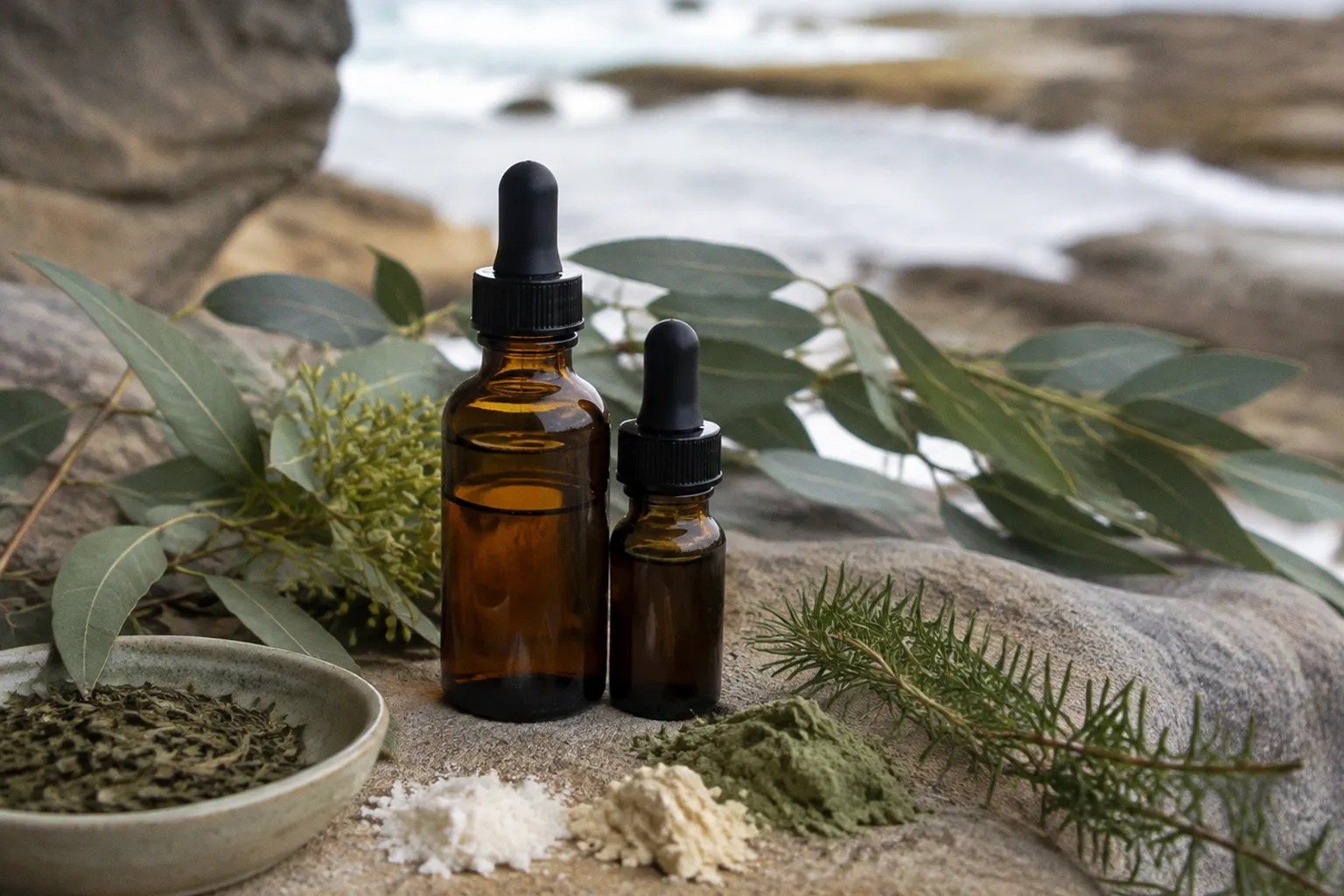
The skin surface tightens, the lesion remains inflamed underneath, and the routine that was meant to correct the problem starts creating a new one: barrier damage.
In the spot treatment vs all over blemish serum decision, the right product depends on the job. A targeted corrector manages an isolated, active blemish. An all-over blemish serum controls recurring congestion across the complexion and helps prevent the next round. Neither works best when it is forced into the role of the other.
The Mechanics of Targeted Spot Correction: When Less Is More
A spot treatment is a concentrated response, not a miniaturised version of a full skincare routine. Spot correctors are designed to deliver higher-potency ingredients directly to individual bumps. Because the active stays on a small area rather than being applied across the face, the surrounding skin receives less exposure and has a lower risk of unnecessary dryness or irritation.
That does not make every spot product automatically suitable for every blemish. A small, well-tolerated amount can make sense for an isolated raised blemish or a lesion with a visible surface. It is less useful as a response to a field of congestion, repeated breakouts across the jawline, or a pattern that returns every few weeks.
The distinction comes down to scope:
| Parameter | Targeted spot treatment | All-over blemish serum |
|---|---|---|
| Primary job | Correct one active blemish | Manage recurring congestion across the face |
| Application area | A pinpoint or very small area | The full affected area |
| Best use | An occasional, developed blemish | Regular prevention and decongestion |
| Main advantage | Concentrated action with less exposure of surrounding skin | Addresses the broader environment in which blemishes recur |
| Main risk | Local dryness, irritation, or an overly early “cap” over a deep lesion | Cumulative irritation when layered with too many active products |
| Routine role | Short-term response | Long-term maintenance |
| What it cannot do alone | Prevent widespread or recurring congestion | Provide maximal correction for one inflamed bump |
Apply a spot corrector after cleansing and toning, if you use a toner. Work from the least contaminated base first, then place a small amount directly on the blemish. Finish with only compatible, non-occlusive layers; a rich cream or heavy facial oil placed over the spot can dilute the product or interfere with how evenly it dries.
A corrector should not become an all-over preventive strategy. Applying a high-potency spot product across the cheeks, jaw or forehead defeats the reason for using a targeted formula. Repeated exposure turns a small-area solution into a full-face irritation risk.
A spot corrector manages the bump; an all-over blemish serum manages the conditions that keep creating it.
Preventative Maintenance: How All-Over Serums Decongest the Complexion
An all-over blemish serum is built for recurrence. If the same areas repeatedly clog, if several small blemishes appear in quick succession, or if closed congestion persists even when there is no large red lesion, treating one bump at a time leaves the underlying routine underpowered.
The job of a clarifying serum is broader. It works across the face to decongest pores, support the skin’s natural renewal process, improve the appearance of uneven tone and reduce the conditions associated with future breakouts. Its purpose is consistency, not an emergency response to one inflamed spot.
Use the all-over approach when:
- congestion appears repeatedly across the same facial zones;
- skin feels rough or textured from buildup rather than one isolated lesion;
- blemishes tend to return as soon as one area clears;
- you need a maintenance step between occasional spot corrections;
- your barrier is calm enough to tolerate a leave-on active regularly.
This does not mean applying a drying spot treatment over the entire face. An all-over blemish serum can use lower or differently delivered concentrations suited to broader, repeated application. Its value comes from steady control, not from forcing the maximum amount of active onto every square centimetre of skin.
Frequency matters. If a new active leaves the face tight, shiny, persistently stinging or unusually fragile, the serum is not demonstrating effectiveness; it is compromising the barrier. Reduce the frequency, remove competing exfoliants or pause the active while the skin recovers. A routine that supports acne control but inflames the surrounding tissue is moving backwards.
Barrier care remains part of the active routine, not a concession made after acne is “finished.” Apply a non-comedogenic moisturiser after the blemish serum, and use sunscreen in the morning. Hydration reduces the temptation to respond to tightness by adding more corrective products. It also makes it easier to distinguish genuine progress from irritation-driven redness.
The Timing Trap: Why Early Spot Treatment Can Prolong Breakouts
A deep blemish is not a dirty pore that needs to be sealed. While it remains firm, painful and below the surface, a strongly drying corrector can create a layer of compacted surface cells while inflammation continues underneath. That premature cap can trap the developing contents of the lesion, delay resolution and increase the likelihood of a post-acne mark.
This is why “more drying” and “more effective” are not the same thing. A blemish does not need to be punished into disappearing. It needs the right intervention at the right stage, with enough barrier support to recover cleanly.
If a new bump is deep and has no visible opening, stop automatically coating it with a concentrated drying treatment. Instead:
1. Cleanse gently without scrubbing.
2. Skip other strong exfoliants for the night.
3. Apply a simple, non-comedogenic moisturiser.
4. Protect the area from sun exposure the following day.
5. Reassess once the lesion has moved closer to the surface or developed a visible pustular centre.
A small spot application may then be reasonable if the surrounding skin is intact. The lesion, not a wide ring of normal skin, should receive the product. If the skin is already raw, split or stinging, adding a concentrated active will not rescue the routine.
The same caution applies to picking, squeezing or applying a thick occlusive layer over an early deep blemish. External pressure and trapped surface buildup can prolong inflammation. Keep the area clean, hydrated and protected rather than aggressively sealed.
This timing issue is also where the two product categories become easy to misuse. A spot corrector is not the correct answer for skin that repeatedly develops several lesions, and an all-over serum is not designed to deliver maximum local intensity to one painful bump. Trying to make one product perform both jobs usually ends in excess active exposure.
Treat a deep blemish gently before it develops a surface. Once the skin is ready, correct the spot; never sacrifice the barrier to force it faster.
Strategic Layering: Integrating Actives into Your Daily Botanical Routine
A well-designed acne routine has a clear sequence. The active goes onto prepared skin, hydration repairs and replenishes, and the final emollient layer reduces transepidermal water loss. Ingredients are introduced one at a time, not assembled because each one sounds helpful in isolation.
Morning routine: maintain, protect, prevent
Begin with a gentle cleanser or a simple rinse if the skin is not dirty. Pat dry, then apply your all-over blemish serum if it is part of the regular maintenance plan. Follow with a light, non-comedogenic moisturiser and finish with sunscreen.
For an isolated blemish that has already reached the surface, a compatible spot corrector can be applied after cleansing and before heavier layers. Do not build a whole second acne routine around it. The goal is to correct the lesion without turning the surrounding skin into collateral damage.
If the face is reactive, you can reduce active frequency rather than stacking every available product. Buffering sensitive skin with a small amount of moisturiser may be appropriate for some formulas, but do not place a product over an occlusive layer if its directions require direct contact with clean, dry skin. Follow the specific product instructions.
Evening routine: correct first, replenish second
At night, remove sunscreen and surface buildup with a gentle cleanser. Then choose one main active direction:
- an all-over blemish serum for recurring congestion; or
- a targeted spot treatment for one developed blemish.
Do not automatically add a second exfoliating or high-potency active on the same night. One leave-on active is easier to evaluate and less likely to cause cumulative irritation.
If your skin is calm, layer a hydrating serum or lightweight moisturiser after the active. Seal the routine with a suitable moisturiser, or use a small amount of a non-comedogenic facial oil as the final step when the skin is dry. That last layer occludes hydration and helps limit transepidermal water loss; it should support the routine, not sit heavily over a congested area.
Barrier trouble appears as persistent stinging, raw patches, unusual tightness, shiny redness or skin that becomes more reactive with every new product. When those signs appear, remove the active and return to cleanser, moisturiser and sunscreen. Do not attempt to solve irritation by switching to another acid or essential-oil treatment every few days.
Navigating Active Ingredients: From Salicylic Acid to Botanical Alternatives
Common nonprescription blemish actives work differently, so choose by tolerance and job rather than by the loudest claim on the label.
- Salicylic acid suits congestion around pores. As a beta-hydroxy acid, it can move through the oil-rich follicular environment and help loosen built-up material. It can still be drying, especially when combined with another exfoliant.
- Benzoyl peroxide is a higher-exposure option for an active blemish. Keep the amount small and watch for dryness or irritation. It can also transfer colour to fabric, so allow it to absorb and follow the product directions.
- Sulfur can be useful when skin needs a targeted approach and does not tolerate other actives well. Apply it only as directed, because its drying effect is not proof that a blemish is healing faster.
- Azelaic acid is a multifunctional option for congested skin and visible post-acne marks. Tingling can occur, so introduce it gradually rather than stacking it immediately with salicylic acid or alpha hydroxy acids.
- Glycolic and lactic acids support surface renewal by loosening the bonds between surface cells. They can improve rough texture, but frequent combination with salicylic acid, benzoyl peroxide or a rough scrub increases the risk of barrier disruption.
A botanical routine does not need to reject these established actives. The useful distinction is between a formulated product and a single trendy ingredient. Tea tree oil, for example, should not be applied neat to a blemish. A properly diluted, formulated tea tree product may be assessed as a botanical spot treatment, but botanical origin does not make an active universally gentle. Patch testing and clear ingredient directions still matter.
Fruit-enzyme cleansers can offer a gentler preparation step by focusing on surface buildup. They are not automatic substitutes for a targeted acne active, and a botanical “salicylic acid alternative” should not be treated as chemically identical to salicylic acid merely because both ingredients are associated with bark, fruit or plant extracts. Evaluate the finished formula and its directions.
Botanical anti-inflammatory ingredients can support a hydrating or barrier layer, but they should not be used to claim that an essential oil can match the correction of benzoyl peroxide. The exact botanical concentration needed to perform identically is unknown, and the source plant does not guarantee equivalent activity.
Finally, do not overlook a suitable non-comedogenic facial oil in a dry or reactive routine. Used sparingly after the active and moisturiser, it can occlude hydration and reduce transepidermal water loss. The routine should still be light over acne-prone areas. More oil is not a response to active-induced dryness.
The Practical Reset: A Closing Troubleshooting Checklist
If the routine is becoming difficult to manage, simplify the decision rather than adding another corrective layer.
- A new deep bump stings after spot treatment: stop the active, cleanse gently, moisturise and protect it from sun exposure. Do not apply a stronger product on top.
- The entire face feels tight or shiny after a serum: reduce the frequency or pause the active. Restore the barrier before returning to acne-focused treatment.
- The same spot returns repeatedly: recurring congestion is a field problem. Move from emergency spot correction to a measured all-over maintenance plan.
- There is widespread texture but no active inflammation: an all-over clarifying serum may be more appropriate than repeated spot treatment, provided the barrier is calm.
- Several actives are causing irritation: keep only the cleanser, moisturiser and sunscreen. Reintroduce one product at a time rather than changing several ingredients together.
- Makeup keeps pilling over a spot: use less product, allow it to dry fully and avoid applying a heavy oil or cream over the corrector.
- Blemishes are deep, painful, widespread or scarring: a spot corrector is not a complete treatment plan. Seek a comprehensive dermatological assessment.
- Nothing appears to improve: do not automatically increase potency. Check the amount, frequency, product compatibility and whether the routine is causing low-grade irritation.
The practical choice is straightforward: use a spot corrector for a developed, isolated blemish; use an all-over blemish serum for recurring congestion and prevention. When a lesion is still deep below the skin, protect and calm first. Sequence one active at a time, replenish the barrier and avoid turning correction into punishment.