Navigating Private-Label Skincare: How to Maintain Quality on a Budget
According to Retail News Asia, Australian shoppers are moving toward private-label products as discretionary spending weakens.
Iris Ellingham·updated September 07, 2026
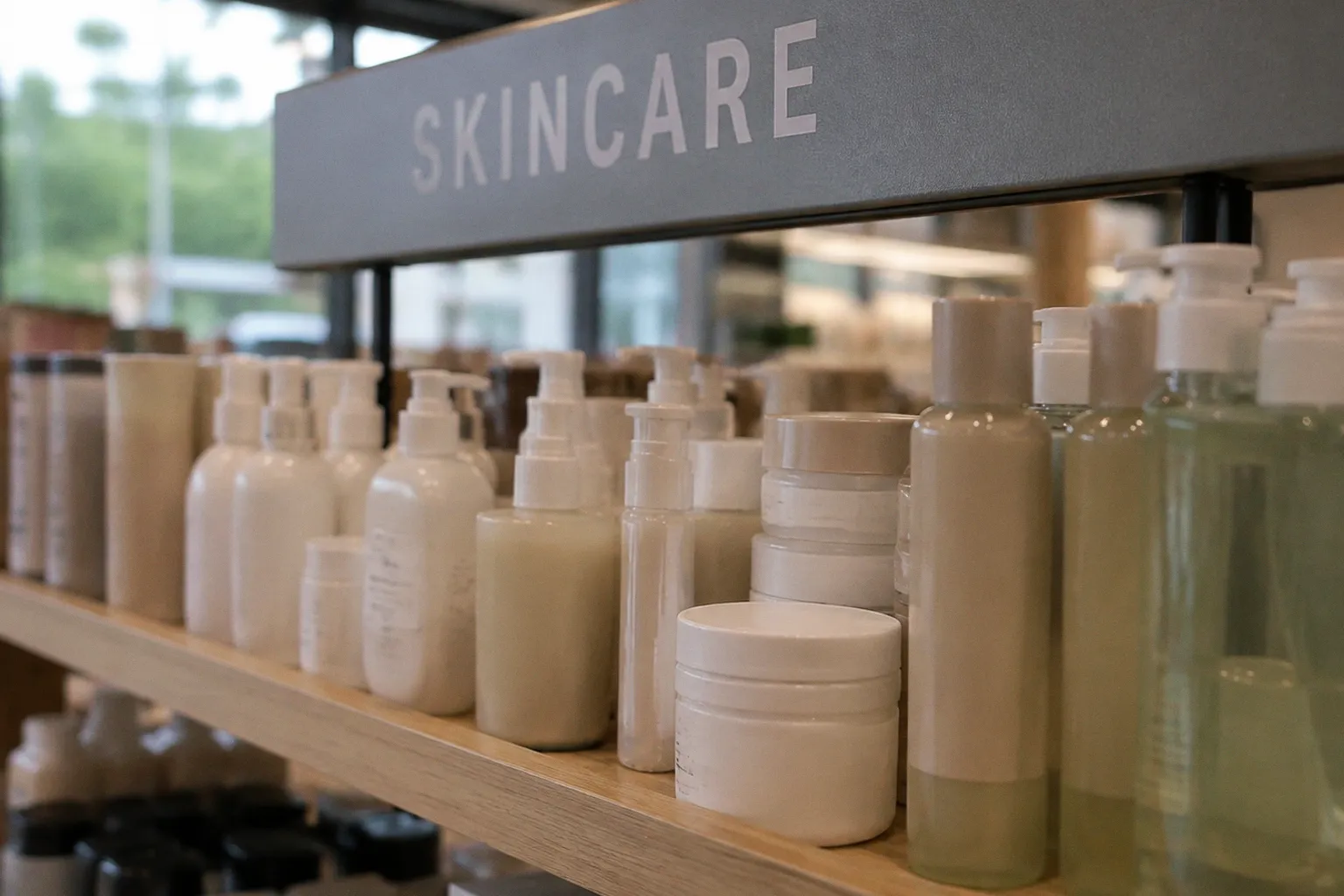
The report matters to skincare buyers because a tighter household budget can change not only where people shop, but also how they judge a botanical formula: price becomes more visible, while ingredient quality still requires careful attention.
Value is not the same as a lower price
A private-label skincare product may be positioned as an affordable alternative, but the label itself does not establish whether the formula is suitable for acne-prone or easily irritated skin. When comparing products, begin with the complete INCI list rather than the front-of-pack language.
Look for the active botanical and its form. A plant extract can be prepared through different extraction methods, including maceration or solvent-based extraction, and the resulting profile of bioactive compounds may vary. Names such as Camellia sinensis leaf extract, willow bark extract, or tea tree oil describe ingredients, not automatically their concentration, stability, or practical performance.
For acne-focused routines, the more useful question is whether the formula is built around a coherent combination of ingredients. A product that pairs a botanical extract with barrier-supportive components may be more practical than one carrying a longer list of fashionable plants but offering little clarity about their role.
What to check before replacing a familiar product
If the retail shift encourages you to move from a premium brand to a private label, change one product at a time. This makes it easier to notice whether a new cleanser, serum, or moisturiser is contributing to dryness, congestion, or irritation.
Check the product’s intended use and application instructions, then examine the full ingredient list for potential sources of sensitivity. Essential oils and fragrant plant constituents are still chemically active, even when a product is marketed as natural or organic. For blemish-prone skin, a simpler formula can make the routine easier to assess.
Packaging also deserves attention. Opaque or air-restrictive packaging is generally more appropriate for formulas containing oxidation-sensitive botanical compounds than a wide-mouth jar that is opened repeatedly. This is not a verdict on a product by itself, but it is a useful part of a broader formulation check.
The practical signal for A-Beauty shoppers
The report describes a retail environment in which consumers are seeking value while discretionary categories face pressure. For Australian botanical skincare, that makes transparent formulation more important, not less. A lower price can be helpful, but it should not replace questions about the extract, the vehicle carrying it, the fragrance load, or the product’s place in a barrier-friendly routine.
Before buying, compare the private-label formula with the product it is meant to replace. Identify the shared function—cleansing, hydration, exfoliation, or blemish support—and then compare the active ingredients, supporting emollients, preservatives, and fragrance components. If the label does not provide enough information to make that comparison, treat the missing detail as a reason to pause rather than as proof of quality.
The next development to watch is whether the reported shift toward private labels continues as Australian consumers reassess discretionary purchases. For now, the soundest approach is deliberate substitution: follow the INCI list, introduce products gradually, and choose botanical formulas whose chemistry is visible rather than hidden behind broad claims of natural value.