Adult Breakouts: What to Assess Before Changing Your Routine
Adult acne is not one condition with one botanical answer. A breakout along the jawline, a field of small bumps across the forehead, and inflamed spots on the back may all be called acne, yet they…
Iris Ellingham·Updated: September 06, 2026·16 min read
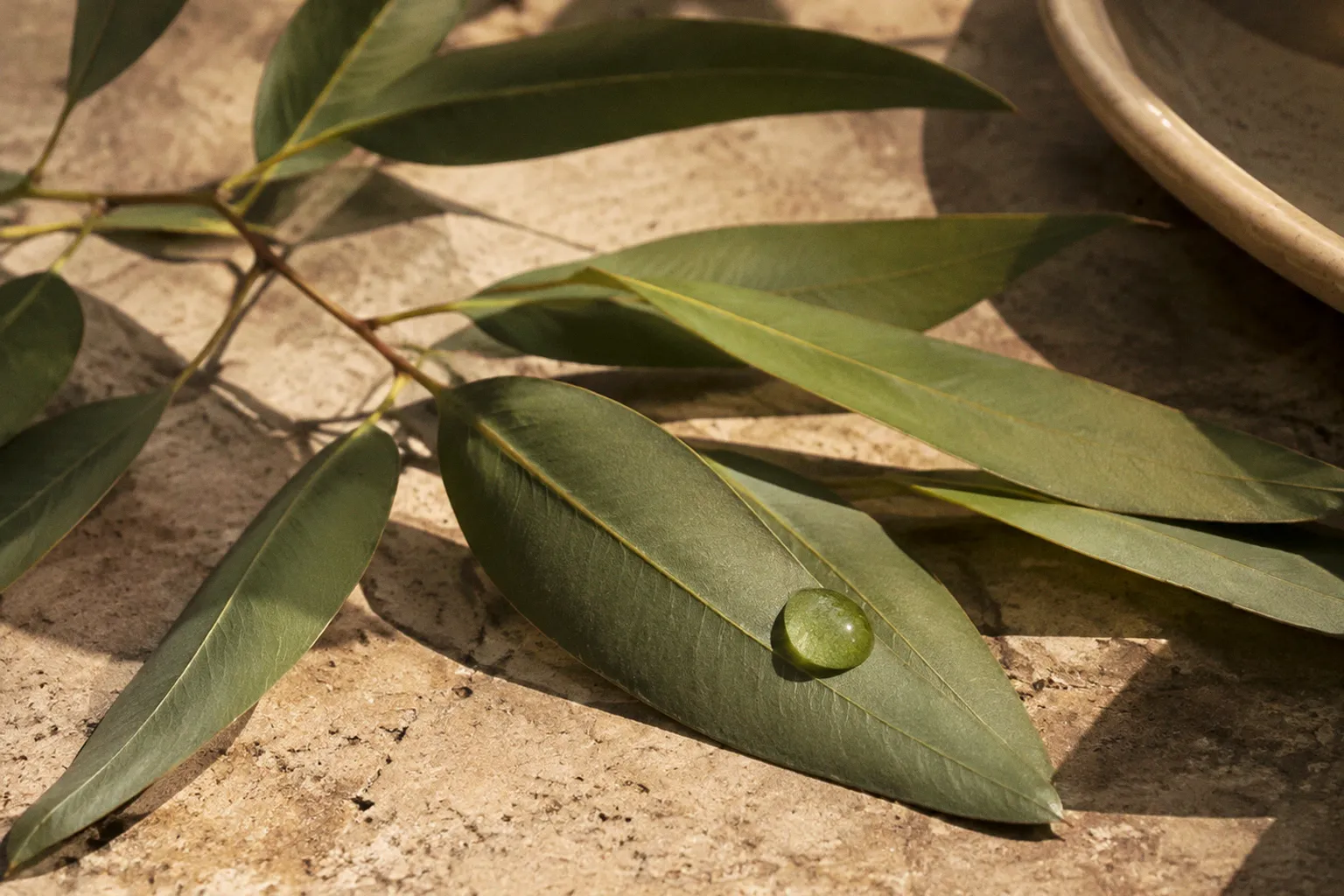
Adult acne is not one condition with one botanical answer. A breakout along the jawline, a field of small bumps across the forehead, and inflamed spots on the back may all be called acne, yet they can reflect different combinations of sebum production, follicular congestion, hormonal fluctuation, irritation, and barrier disruption.
The first question is therefore not which new serum to buy. It is what to check before treating adult acne naturally: where the blemishes appear, how the skin behaves between breakouts, which products touch it every day, and whether the timing suggests an internal shift rather than a cleansing problem. This assessment is what keeps a botanical routine useful instead of merely fragrant, elaborate, and increasingly irritating.
Mapping your breakouts: location is a clue, not a diagnosis
Adult female acne most commonly affects women over the age of 25. It may continue from adolescence or appear for the first time in adulthood. The distribution often changes with age: while adolescent acne can be widespread across the forehead, nose, and cheeks, adult breakouts frequently gather around the lower face.
The chin, jawline, and area beside the mouth deserve particular attention because sebaceous glands in these regions can respond strongly to hormonal stimulation. Breakouts that repeatedly intensify before menstruation, then settle and return in a similar pattern, suggest that the routine should be assessed alongside menstrual-cycle changes, contraception, pregnancy, perimenopause, or menopause. That pattern does not prove a single cause, but it is more informative than judging the skin by one difficult morning.
Location also helps separate facial acne from congestion caused by contact or occlusion. Small, fairly uniform bumps along the hairline may be influenced by hair oils, styling products, dry shampoo, hats, or sweat. Blemishes on the cheeks may reflect cosmetics, pillow contact, friction, or a damaged barrier. This is not a reason to assign blame to one object immediately. It is a reason to observe the pattern before adding another active ingredient.
The back and chest require a slightly different reading. Acne affects approximately 15% of people with acne on the chest, while more than half of acne sufferers experience it on the back. These areas are exposed to sweat, friction from clothing and sportswear, occlusive body products, and delayed cleansing after exercise. A facial routine transferred to the back is not always practical, and a highly concentrated spot treatment can become needlessly drying over a large area.
A useful map records four details:
- Exact location: jawline, chin, cheeks, forehead, hairline, chest, shoulders, or back.
- Lesion type: blackheads, whiteheads, small red papules, pustules, or deeper tender nodules.
- Timing: continuous, cyclical, seasonal, post-exercise, or linked to a product change.
- Sensation: itching, burning, tightness, tenderness, or no sensation at all.
The last point is often neglected. Acne lesions are commonly tender or inflamed, but a sudden eruption of itchy, uniform bumps may require a different line of inquiry. Persistent burning and tightness, especially after cleansing, can indicate irritation rather than a need for stronger exfoliation.
Breakout location cannot explain everything, but it can prevent you from treating the entire face as if every pore were responding to the same signal.
The barrier paradox: when “clean” becomes too stripped
The skin barrier is not an aesthetic detail. It is a structured interface of corneocytes, lipids, natural moisturising factors, and surface chemistry that helps regulate water loss and irritation. When repeated cleansing, strong acids, abrasive particles, or high concentrations of essential oils disturb that structure, acne-prone skin may become both oilier and more reactive.
This is the barrier paradox: the skin feels insufficiently clean, so the routine becomes more aggressive; the more aggressive routine creates dryness and irritation; irritation makes redness and texture more visible, while the compromised barrier tolerates fewer products. The result can look like a need for even more exfoliation.
Over-drying does not remove the biological drivers of acne. It can impair moisture-barrier function and contribute to increased oil production, which may aggravate the cycle of congestion and inflammation. That is why a botanical acne routine assessment should begin with the washing step rather than the most sophisticated serum on the shelf.
Dermatologists generally recommend washing the face no more than twice daily with a mild cleanser and lukewarm water. Very hot or very cold water can be uncomfortable, but the greater concern is repeated friction and the cumulative effect of a cleanser that removes too much surface lipid. Morning and evening cleansing may be sufficient for many people; after heavy sweating, a gentle rinse or appropriate cleanse can be considered without turning the skin into a surface that must be repeatedly polished.
Signs that the routine may be over-cleansing
Look for a cluster rather than one isolated symptom:
- The face feels tight immediately after washing.
- Moisturiser stings where it previously did not.
- The skin becomes shiny but flaky within the same day.
- Redness extends beyond individual blemishes.
- New products cause burning rather than a mild, brief sensation.
- Breakouts increase after introducing several exfoliating products at once.
- The skin feels rough even though it is being scrubbed or acid-treated regularly.
These signs do not mean every active ingredient must be abandoned. They indicate that the order of operations needs to change. A calmer barrier makes it easier to evaluate whether an ingredient is helping congestion or merely producing a short-lived sensation of intensity.
Botanical ingredients can also participate in this problem. Essential oils are chemically active, not automatically gentle because their origin is a leaf, flower, or resin. Tea tree oil, for example, contains terpinen-4-ol and other volatile compounds that may be useful in a carefully formulated blemish product, but undiluted oil can irritate the skin. Citrus oils, strongly aromatic extracts, and products with a high essential-oil load may be poorly suited to a compromised barrier, particularly when combined with acids or retinoid products.
The practical question is not whether a product is natural. It is whether its concentration, vehicle, pH, fragrance load, and application area make sense for the present condition of the skin.
Adult-onset acne or a pattern carried forward from adolescence?
The distinction between persistent acne and adult-onset acne is not merely semantic. It changes what you look for in the routine.
Persistent acne may involve a long history of comedones and inflammatory lesions across several facial zones. The skin may have responded to some treatments in the past, then become less tolerant after years of alternating between aggressive products and periods of minimal care. Adult-onset acne can appear after a relatively clear period and may arrive with a new distribution, especially around the jawline and chin.
Both patterns can be influenced by hormones, but they are not explained by hormones alone. Sebum composition, follicular shedding, microbial activity, inflammation, product occlusion, stress, sleep disruption, and medication changes can all alter the visible picture. The appropriate response is not to find one perfect cause and dismiss everything else. It is to identify the most stable pattern first.
A simple record over several weeks can be more useful than a rotating shelf of treatments. Note the date, location, lesion type, menstrual timing where relevant, new products, changes in contraception, unusual stress, and any increase in sweating or friction. This is not meant to turn skincare into a laboratory notebook. It is a way to distinguish a recurring pattern from the noise of daily variation.
The pattern often matters more than the isolated blemish
Consider these broad possibilities:
| Observed pattern | What it may suggest | How to respond in a botanical routine |
|---|---|---|
| Recurrent tenderness along the chin and jawline | Hormonal influence may be involved | Keep the routine stable, avoid aggressive stripping, and consider medical advice if lesions are deep, persistent, or scarring |
| Small bumps concentrated at the hairline | Product transfer, occlusion, or sweat may contribute | Review hair and styling products, cleanse gently after sweating, and avoid adding multiple face actives |
| Blackheads and whiteheads across the forehead and nose | Follicular congestion and excess sebum | Use a consistent, non-abrasive routine; introduce one pore-clearing active at a time |
| Burning, tightness, and scattered redness with breakouts | Barrier impairment or irritant reaction | Reduce cleansing intensity and fragrance load before reassessing acne treatments |
| Lesions on the back and chest after exercise | Sweat, friction, and occlusion may be involved | Change out of damp clothing, wash gently, and select a body product that rinses cleanly without heavy occlusion |
| Sudden, itchy, uniform bumps | The eruption may not be typical acne | Pause experimentation and seek a qualified assessment if it persists or spreads |
This table is a guide to observation, not a diagnostic system. Deep, painful, or scarring acne should not be left to an indefinite experiment with home remedies. Botanical care can support tolerability and consistency, but it should not be presented as a guaranteed substitute for evaluation when the condition is severe or changing rapidly.
Read the ingredient list as a formulation, not a marketing story
A product can contain a recognised botanical and still be unsuitable for acne-prone skin. The plant extract is only one part of the formulation. Its solvent, concentration, delivery system, preservatives, fragrance materials, and accompanying emollients determine how it behaves on the face.
This is especially important with oils. Non-comedogenic is a useful formulation intention, but it is not an absolute promise that applies identically to every skin type. A facial oil may feel elegant and reduce the sensation of dryness, yet a dense, occlusive layer can be unhelpful if the skin is already congested or if it is applied over several leave-on products.
When evaluating a blemish-clearing serum or botanical spot treatment, look for a clear role:
- A mild cleansing product should remove sunscreen, sebum, and daily residue without leaving the skin squeaky or tight.
- A humectant and barrier-supporting moisturiser should reduce water loss and improve comfort without creating a heavy film that the skin cannot tolerate.
- An exfoliating product should target follicular congestion with a defined frequency, not be layered with several other exfoliants simply because each one is described as gentle.
- A spot treatment should be reserved for active lesions rather than spread across the entire face by default.
- A botanical oil or balm should have a clear formulation rationale and should be patch-tested, particularly when essential oils are present.
Botanical actives: what they can and cannot tell you
Several plant-derived ingredients appear frequently in acne-focused skincare, but their chemistry should be described precisely.
Tea tree oil contains terpinen-4-ol, a volatile monoterpene associated with antimicrobial and anti-inflammatory activity in topical research. Its presence does not make every tea tree product equivalent. Oxidised or undiluted oil can be more irritating, and the face is not an appropriate place for casual, neat application from an essential-oil bottle.
Willow bark contains salicin and related phenolic compounds. The skin does not simply convert a willow extract into the same product as a formulated salicylic acid treatment. Extraction method, standardisation, pH, and concentration all matter. Willow bark may be included as a supportive botanical in a cleanser or toner, but it should not be treated as a guaranteed botanical substitute for salicylic acid.
Green tea provides polyphenols such as epigallocatechin gallate, which are studied for their relationship to oxidative stress, inflammation, and sebum-related pathways. A well-formulated extract can fit comfortably into a barrier-conscious routine, but the label alone cannot establish how much active material remains after extraction or how it will perform in that specific vehicle.
Fruit enzymes, including papain from papaya and bromelain from pineapple, are proteolytic enzymes used in some exfoliating cleansers and masks. They can loosen surface corneocyte cohesion, but their effect depends heavily on formulation and exposure time. On sensitised or over-exfoliated skin, an enzyme cleanser may be too stimulating even if it is marketed as a gentle alternative.
The extraction process deserves attention. A water infusion, glycerin extract, alcohol tincture, cold-pressed oil, and long maceration do not produce interchangeable materials. They draw out different classes of compounds. Water favours many hydrophilic constituents; oils are suited to lipophilic molecules; alcohol-water systems can capture a broader range of constituents but may be less comfortable for very reactive skin. The word “extract” on a label is therefore incomplete without some understanding of the vehicle.
A plant name is not an efficacy claim. The useful question is which bioactive compounds were extracted, in what vehicle, at what concentration, and for what skin application.
Hormonal fluctuation belongs in the assessment
Hormonal shifts linked to menstrual cycles, pregnancy, changes in birth control, perimenopause, and menopause can influence sebum secretion and breakout severity. The skin may become oilier, drier, more reactive, or simply less predictable as endocrine patterns change. Treating each flare as a failure of cleansing can make the routine harsher at exactly the moment when the barrier needs more restraint.
Hormonal acne often follows a recurring lower-face pattern, but not every jawline blemish is hormonal, and not every hormonal flare is confined to the jaw. The useful approach is to compare several cycles where possible and look for repeat timing, depth, tenderness, and duration. If lesions are consistently deep, painful, scarring, or accompanied by other symptoms, a healthcare professional can assess whether medical treatment or investigation is appropriate.
Changes in contraception deserve particular care. A new contraceptive method, stopping one, or moving through a period of hormonal transition can coincide with an altered acne pattern. This does not mean skincare is irrelevant. It means the routine should not be expected to correct an internal shift by force of exfoliation.
The same principle applies around menopause and perimenopause, when declining and fluctuating oestrogen can alter the relationship between sebum, dryness, and barrier function. An adult acne routine that once tolerated strong acids may become uncomfortable when the surrounding skin is drier. The right adjustment may involve less frequent exfoliation and more support for the barrier, not a stronger spot treatment.
For a natural hormonal acne remedy, the word “natural” requires particular discipline. Botanical ingredients may reduce the burden of irritation, provide antioxidant compounds, or support a more consistent routine. They cannot reliably predict or control an individual endocrine pattern, and there is no universal timeline in which a botanical routine resolves hormonally influenced acne without medical intervention.
A calmer assessment before introducing anything new
When the skin is changing, adding three products at once removes the possibility of learning from the result. A measured routine has fewer variables and therefore gives each adjustment a fairer test.
Begin with the cleanser. Use a mild formula with lukewarm water, no more than twice daily in ordinary circumstances. Then examine the moisturiser. If the skin is tight, stinging, or visibly flaky, barrier support should come before intensive blemish treatment. Sunscreen also belongs in the assessment, particularly if the routine includes exfoliating acids or if blemishes are leaving persistent marks.
Next, remove obvious sources of duplication. A cleanser containing fruit enzymes, a toner with willow bark, a serum with acids, and a tea tree spot product may each sound modest in isolation. Used together, they can produce a considerable exfoliating and irritant load.
A practical sequence looks like this:
1. Map the breakouts for several weeks. Record location, lesion type, timing, and sensation rather than relying on memory.
2. Stabilise cleansing. Avoid repeated washing, hot water, scrubs, and the idea that squeaky skin is healthier skin.
3. Reduce overlapping actives. Keep one primary blemish-focused active while the barrier settles.
4. Review every leave-on product. Look for heavy occlusive textures, fragrance materials, essential oils, and recent additions that coincide with the flare.
5. Introduce one botanical at a time. Patch-test first and apply it to a limited area before extending use.
6. Judge the product by tolerability and pattern. Less redness and fewer new lesions matter more than an immediate tingle or a dramatic feeling of tightness.
7. Escalate when the pattern requires it. Persistent deep acne, scarring, sudden severe onset, or a lack of improvement despite a stable routine warrants professional assessment.
Patch testing cannot predict every facial reaction, but it is preferable to applying a new concentrated extract over the entire face during an active flare. Essential oils require particular caution. They should be used only when already properly diluted in a finished formulation designed for facial skin; direct application from a bottle is not a controlled skincare practice.
Sourcing matters as much as the botanical name
A plant extract has a better chance of being useful when its origin and formulation are transparent. Look for the botanical name, the part of the plant used, the extraction method where relevant, and a complete ingredient list. A product that describes itself only as a proprietary botanical complex gives the reader little opportunity to assess concentration or compatibility.
For acne-prone skin, sourcing questions are practical rather than ornamental:
- Is the extract standardised or otherwise described with enough detail to understand its identity?
- Is the product intended for leave-on facial use or only for rinsing?
- Does the formula rely heavily on essential oils for scent?
- Are exfoliating ingredients present in more than one product in the routine?
- Is the packaging appropriate for volatile or oxidation-sensitive compounds?
- Does the brand provide batch, shelf-life, and storage guidance?
- Can the product be introduced without replacing every other part of the routine?
Maceration deserves a brief distinction here. When plant material is steeped in a carrier oil, the resulting macerate contains oil-soluble constituents, but it is not automatically a concentrated or standardised extract. The quality depends on the plant material, time, temperature, carrier oil, filtration, and stability of the final preparation. A carefully made macerate can be a considered ingredient; it is not inherently superior because the process sounds traditional.
The same care applies to “clean” and “organic” claims. Organic cultivation may speak to agricultural standards, but it does not by itself establish that a product is non-comedogenic, suitable for sensitive skin, or effective against inflammatory acne. Those are separate questions. Botanical science is strongest when the plant, the chemistry, and the formulation are discussed together.
The point is not to treat harder
The most reliable starting point for identifying breakout causes naturally is observation with enough restraint to preserve the skin’s ability to respond. Lower-face recurrence, barrier symptoms, ingredient duplication, body-area friction, and hormonal timing each provide a different piece of the assessment. None should be turned into a simplistic rule.
A botanical routine works best when it is intentionally narrow: gentle cleansing, adequate barrier support, one clearly chosen active, and enough time to observe a pattern. Tea tree oil, green tea polyphenols, willow-derived compounds, and fruit enzymes may each have a place, but their value depends on extraction, concentration, vehicle, frequency, and the condition of the skin receiving them.
Adult acne is not evidence of poor hygiene, and it is not a moral failure of the routine. It is a biological condition shaped by follicles, sebaceous glands, inflammation, barrier function, and internal change. Before replacing every product, read the pattern. Before increasing strength, check whether the skin is already irritated. Before trusting a botanical claim, follow the compound from plant material through extraction and into the finished formula.
That is the more durable form of natural skincare: not a promise of instant correction, but a disciplined way to make the next decision with clearer evidence and less harm.