Tasmanian mountain pepper berry: calming acne-prone skin
If you have lived with reactive, acne-prone skin for any length of time, you already know the central paradox of caring for it: the products meant to clear congestion often leave behind a layer of…
Iris Ellingham·Updated: September 19, 2026·17 min read
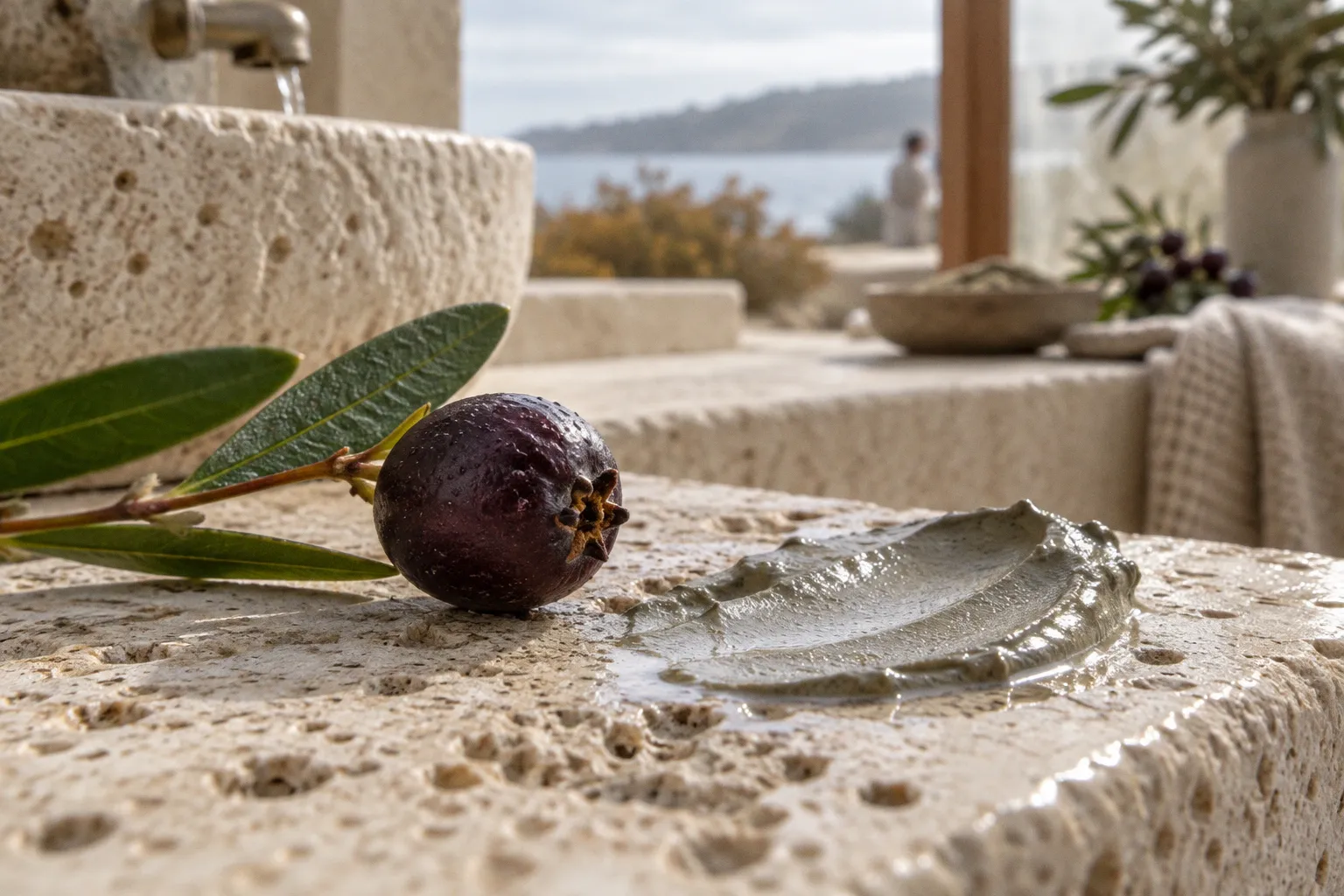
If you have lived with reactive, acne-prone skin for any length of time, you already know the central paradox of caring for it: the products meant to clear congestion often leave behind a layer of redness, tightness, and what formulators politely call “sensory discomfort.” Each active that targets a breakout can trigger its own inflammatory response, and you end up managing two conditions at once.
The Australian native botanical Tasmannia lanceolata — Tasmanian mountain pepper berry — is one of the more interesting plant extracts to enter modern formulations precisely because it speaks to both halves of that equation. It is not an acne treatment in the same category as salicylic acid, benzoyl peroxide, or a retinoid. Its value is different: it may help quiet the sensations and visible reactivity that make an acne routine difficult to sustain, while contributing antioxidant and barrier-supportive benefits.
That distinction matters. Calming acne-prone skin is not the same as clearing every blocked pore. But a routine that causes less stinging and redness is usually easier to use consistently, and consistency is where most long-term acne care succeeds or fails.
The Science of Polygodial: How Pepper Berry Targets Sensory Receptors
The headline compound in Tasmanian pepper extract is polygodial, a sesquiterpene dialdehyde that gives the berry its characteristic warm, peppery bite. In culinary use, the same molecule produces a gentle heat on the tongue. On the skin, its activity is discussed in a different context: polygodial interacts with sensory receptors on nerve endings in the epidermis, including TRPV1, the ion channel that also responds to capsaicin in chilli peppers.
The important point is not that the ingredient simply “numbs” the skin. Rather, polygodial appears to influence the signalling involved in sensations such as heat, itching, and stinging. That modulation may help reduce the intensity of the inflammatory response associated with irritation. For a person using exfoliating acids or a retinoid, the practical appeal is obvious: the ingredient is aimed at the discomfort surrounding an active treatment, not at replacing the treatment itself.
Polygodial is interesting because it works at the level of skin sensation, where irritation often becomes impossible to ignore.
Acne-prone skin can be inflammatory even before a blemish becomes visible. A developing microcomedone may involve changes in sebum, follicular keratinisation, and local immune signalling long before it appears as a raised lesion. The surrounding skin can also have a lower tolerance for friction, cleansing, weather changes, and strong actives. This is why someone may experience persistent tightness or burning even when their acne is relatively limited.
A botanical that helps lower the sensation of irritation without aggressively stripping the surface has a useful place in that environment. Polygodial also has documented antimicrobial activity, which makes it relevant to a skin ecosystem where Cutibacterium acnes is present. Still, its role in a finished cosmetic formula is more sensibly described as calming and supportive than as a stand-alone antibacterial acne intervention.
That difference is worth keeping visible. An extract may have antimicrobial activity in laboratory conditions without behaving like a proven acne medication in a daily routine. The most defensible way to use Tasmanian pepper berry is as part of a broader formulation designed to make acne-prone skin more comfortable and resilient.
Rapid Relief: Clinical Insights into Itch and Burning Sensations
Few botanical extracts come with the kind of immediate-performance data associated with Tasmanian pepper. In manufacturer-conducted in-vivo testing on subjects with sensitive skin, formulations containing the extract reduced sensations of itching by up to 79% and burning by 58% within five minutes of application. Those figures describe the tested formulations and the specific outcomes measured; they should not be read as a guarantee that every pepper berry serum will produce the same response.
The speed is nevertheless notable. Many familiar soothing ingredients — allantoin, bisabolol, and panthenol among them — are used primarily for hydration, barrier support, and the gradual reduction of discomfort. Tasmanian pepper is of interest because its proposed action includes the sensory signalling itself. A fast subjective improvement can be meaningful when the main obstacle to an acne routine is not a lack of treatment options but the fact that the skin feels too uncomfortable to continue.
The evidence has limits. Manufacturer testing is not a substitute for large, independent clinical trials, and the long-term comparison of pure polygodial with pharmaceutical acne treatments such as benzoyl peroxide or tretinoin has not been established. The available data is more useful for understanding the ingredient as a comfort layer inside a routine, particularly during the early stages of introducing a stronger active.
That makes it relevant to people beginning retinoids, acid exfoliants, or other treatments that can cause temporary dryness and sensitivity. A Tasmanian pepper serum applied after cleansing and before the main treatment may help some users tolerate the transition more comfortably. It may also be useful on days when the skin is reactive for reasons unrelated to acne: cold wind, hard water, over-cleansing, friction from a mask, or cumulative exposure to dry indoor air.
The response will not be identical for everyone. Skin sensitivity is subjective, and the perceived effect of a calming ingredient can depend on the rest of the formula, the condition of the barrier, the amount applied, and what else is used in the same routine. Some people may notice a change in burning or tightness quickly; others may experience a subtler benefit that becomes apparent only when the product is used consistently.
That variability is not a weakness specific to pepper berry. It is a basic fact of topical skincare. A five-minute result observed in a controlled test tells us that rapid relief is possible. It does not set a deadline by which every individual must feel the same effect.
Beyond Calming: Antioxidant Power and Capillary Support
Polygodial is the molecule most often discussed, but Tasmanian pepper berry contains other bioactive compounds that perform less dramatic, more structural work. Its anthocyanin content is reported at levels three to four times higher than that of blueberries by antioxidant capacity, a striking comparison given how often blueberries are used as a familiar benchmark.
Anthocyanins are phenolic compounds associated with the neutralisation of reactive oxygen species — unstable molecules generated during UV exposure, pollution contact, and inflammatory activity. Acne-prone skin is not automatically damaged skin, but oxidative stress can contribute to the persistence and severity of inflammation. It can also complicate the recovery period after a lesion has healed, when post-inflammatory marks remain visible even though the original breakout is gone.
A topical source of anthocyanins therefore offers more than a vague “glow” benefit. It may support the skin’s ability to manage oxidative stress around areas that are already inflamed or easily marked. That does not make pepper berry a pigment-correction ingredient in the same sense as a dedicated brightening active, but antioxidant support can be useful in a routine designed to reduce the aftermath of breakouts.
Rutin, a flavonoid glycoside also present in the berry, is discussed for a different reason. Where anthocyanins are primarily associated with antioxidant activity, rutin is associated with the integrity and tone of small blood vessels. In reactive skin, superficial vessels may contribute to a persistent flushed appearance, particularly around the nose and cheeks. This is not the same as treating rosacea, and a cosmetic extract should not be presented as a substitute for medical care. It does, however, explain why Tasmanian pepper formulations are often positioned for visibly sensitised skin rather than only for active blemishes.
The combination of these activities gives the ingredient a wider role than an emergency anti-sting product. It may help with the immediate feeling of irritation, while the antioxidant and vascular-supportive aspects address some of the redness and uneven appearance that remain after the most obvious inflammation has settled.
The strongest case for pepper berry is not that it replaces an acne active. It is that it helps the skin tolerate the work an acne active is already doing.
Formulation Standards: Navigating Concentrations and Safety
Tasmanian pepper extract is used in cosmetic formulations at concentrations typically between 0.1% and 2%. The position within that range can suggest how the ingredient is intended to function, although an INCI list alone cannot reveal the full activity of a finished product.
At the lower end, around 0.1%, the extract is likely to act as a supporting soothing ingredient within a larger formula. It may contribute to comfort without being the central story of the product. At the upper end, closer to 2%, it is more likely to be positioned as a primary calming active, particularly in products intended for visibly reactive, sensitised, or post-treatment skin.
More is not automatically better. High doses of native plant extracts, including Tasmanian pepper, have shown potential cytotoxicity in laboratory models of skin cells. The same compounds that influence inflammatory or sensory pathways can become irritating when the concentration, delivery system, or overall formula is poorly controlled. This is a general feature of concentrated bioactives, not a reason to dismiss the botanical.
It is also why a raw extract should not be treated as interchangeable with a properly formulated serum. The vehicle, pH, supporting ingredients, preservation system, extraction method, and total concentration all influence how the skin experiences an ingredient. A formula can also combine several botanicals at moderate levels rather than relying on a single extract at an unnecessarily high dose.
Some research on combinations of Australian native extracts suggests that formulations containing multiple botanicals may show lower cytotoxicity than certain single-extract preparations. That finding supports cautious interest in formulation synergy. It does not establish a universal rule that every plant moderates every other plant, and it does not prove that botanicals from the same region are chemically adapted to cancel one another’s harsher effects.
For the reader, the practical implication is straightforward:
- Look for the INCI name Tasmannia lanceolata fruit extract or Tasmannia lanceolata leaf extract.
- Treat a disclosed concentration or standardised polygodial content as useful information, not as a guarantee of performance.
- Prefer brands that can explain the extraction and formulation process rather than presenting the ingredient as a raw, undiluted miracle.
- Be cautious with products that encourage applying concentrated botanical material directly to the skin.
- Patch test when the formula is new, especially if the skin is already compromised or reacting to another active.
Tasmanian pepper appears most often in serums, recovery creams, post-treatment balms, and leave-on products. In a wash-off cleanser, contact time may be too short for the ingredient’s sensory benefits to be the main reason for choosing it. That does not make a pepper berry cleanser useless, but it does change what can reasonably be expected from it.
Tasmanian Pepper Berry vs Salicylic Acid
Because Tasmanian pepper is increasingly discussed alongside conventional acne actives, a side-by-side comparison is useful. The two ingredients are not interchangeable, and treating them as competitors creates a false choice.
| Parameter | Tasmanian pepper extract | Salicylic acid |
|---|---|---|
| Primary mechanism | Sensory receptor modulation, with anti-inflammatory and soothing potential | Keratolytic action that helps loosen dead cells and reduce follicular congestion |
| Main benefit in a routine | Comfort and reduction of perceived irritation | Direct support for managing blocked pores and excess surface build-up |
| Onset of perceived comfort | May be rapid in suitable formulations; manufacturer testing reported effects within five minutes | Usually not positioned as an immediate anti-sting ingredient |
| Common limitation | Evidence and response can vary by extract, concentration, and formulation | Dryness, peeling, or irritation can occur, especially when introduced too often |
| Best role | Supportive layer around stronger treatment steps | Primary acne active for some forms of congestion |
| Suitable as an acne monotherapy | Generally no; it is better understood as supportive | It may be used as a stand-alone topical active in appropriate routines |
The table is not an argument for replacing salicylic acid with pepper berry. Salicylic acid acts directly on the processes involved in surface build-up and congestion. Tasmanian pepper addresses a different layer: the sensations and inflammatory reactivity that can make treatment difficult to tolerate.
Used together, they may occupy complementary positions in a routine, but “together” does not mean applying every active at once. A person with fragile or over-exfoliated skin may need to introduce the salicylic acid and the calming serum separately, reduce frequency, or use the botanical on alternate days. The best combination is the one the skin can sustain.
Botanical Synergy: Why Pepper Berry May Work Better in a Complete Formula
One of the more interesting findings in the broader research on Australian native extracts is that the cytotoxicity observed in some laboratory models may be lower when certain extracts are combined with other native botanicals. This is a reason to examine complete formulations rather than assuming that the strongest single-ingredient product will be the most effective.
It is not, however, evidence for a sweeping evolutionary explanation. The fact that several plants evolved in related landscapes does not by itself show that their compounds were shaped to moderate one another’s harsher effects. The more cautious interpretation is that specific combinations may produce a more balanced activity profile, depending on the compounds, ratios, extraction methods, and delivery system involved.
That distinction may sound technical, but it changes how a product should be assessed. A serum combining Tasmanian pepper with another Australian botanical may be designed to spread the formula’s activity across several extracts, potentially reducing the need for a very high concentration of one isolated material. The benefit comes from the tested formulation and its chemistry, not simply from the geographic origin of the ingredients.
Kakadu plum, Davidson plum, and finger lime are often discussed alongside Tasmanian pepper because they bring different profiles to a formula. Kakadu plum is associated with antioxidant and vitamin C content. Davidson plum contributes acids and anthocyanins. Finger lime is used in formulations positioned around renewal and antioxidant support. Those descriptions do not mean that every product containing these ingredients will behave identically, nor that combining them automatically improves acne.
The sensible question is whether the formula has a coherent purpose. Is it built to calm irritation, support the barrier, and complement an acne active? Or is it simply collecting a series of attractive native ingredients without enough attention to concentration and tolerability?
For someone with reactive, acne-prone skin, the distinction between a single-ingredient extract and a multi-botanical formula is therefore worth making. A blend may offer a broader range of supportive compounds and may be less dependent on pushing one extract to a high level. At the same time, more ingredients can also mean more opportunities for irritation, particularly if the formula includes fragrance, essential oils, exfoliating acids, or a large number of unfamiliar plant materials.
The word “synergy” should be used carefully. It can describe a plausible formulation advantage, but it should not be used to promise that ingredients cancel each other’s risks or guarantee a stronger acne result.
Building Pepper Berry Into an Acne Routine
Tasmanian pepper extract fits most naturally into a routine that already has a clear treatment structure. It is not the step that should carry the entire burden of pore clearing. Instead, it can sit between basic barrier support and a more demanding treatment active.
A simple evening sequence might look like this:
1. Cleanse without aggressive scrubbing or repeated washing. If the skin feels tight immediately after cleansing, the cleanser may already be contributing to the problem.
2. Apply a hydrating layer if needed, allowing it to settle rather than leaving the skin dripping wet.
3. Use the Tasmanian pepper product as directed. A serum or light treatment generally belongs before a heavier moisturiser.
4. Apply the acne active at a frequency the skin can tolerate. If the routine includes a retinoid or exfoliating acid, do not assume that more frequent application will produce faster results.
5. Finish with a moisturiser that supports the barrier.
In the morning, pepper berry can be used beneath moisturiser and sunscreen, particularly when the main complaint is overnight tightness or environmental reactivity. Sunscreen remains essential. A botanical antioxidant does not replace UV protection, and reducing visible irritation does not prevent all of the biological effects of ultraviolet exposure.
The order can be adjusted around the formula. A very watery serum may be used before a treatment active, while a richer balm may work better after the active or on nights when the active is skipped. The product’s texture and instructions matter more than a rigid universal sequence.
Patch testing is especially sensible when the skin is already inflamed. Apply a small amount to a limited area and observe the response over time. A product that feels comfortable on the first use may still become irritating if layered with several other actives or applied too frequently. Conversely, a mild initial tingle does not automatically mean the formula is harmful; the relevant question is whether the sensation settles or escalates into persistent burning, swelling, itching, or visible dermatitis.
Do not use a lack of immediate sensation as a quality-control test. Some people will notice a quick reduction in heat or stinging. Others may not feel a dramatic change, even when the product is well formulated and useful as part of a broader routine. The subjective response can be influenced by the starting condition of the barrier, the amount applied, the accompanying ingredients, and individual sensitivity.
A first application that feels neutral does not prove that the extract is under-concentrated or that the polygodial has been damaged. It may simply mean that the skin was not experiencing intense sensory irritation at that moment, or that the benefit is subtle for that particular user. If the product causes no improvement after repeated, appropriate use, the formula may not be a good match — but that conclusion should come from the overall pattern, not from a single application.
A calming botanical can make an acne routine more livable, but it cannot turn an unsuitable routine into a suitable one.
What Tasmanian Mountain Pepper Berry Can — and Cannot — Do
Tasmanian mountain pepper berry is best understood as a supportive botanical for sensitive, acne-prone skin. Its strongest proposition is the combination of a distinctive sensory mechanism with antioxidant and soothing activity. The polygodial story gives it more substance than a generic claim about “natural calming,” while the broader plant profile helps explain its presence in recovery and redness-focused formulas.
It may be especially relevant when:
- an acne active is useful but difficult to tolerate;
- the skin tends to sting or flush after cleansing;
- blemishes leave behind prolonged redness;
- the routine needs a lightweight calming layer rather than another exfoliant;
- environmental changes make the skin feel hot, tight, or reactive.
It is less likely to be enough when the main concern is persistent comedonal congestion, severe inflammatory acne, scarring, or a rash that has not been diagnosed. In those cases, a botanical serum should not delay appropriate medical advice. Comfort is valuable, but comfort alone does not address every cause of acne or inflammation.
The comparison with salicylic acid makes the boundary clear. Salicylic acid can help manage congestion. Pepper berry may help the surrounding skin tolerate treatment and recover from irritation. One is not a more “natural” replacement for the other; they are different tools with different jobs.
The same caution applies to claims about native Australian ingredients. Their origin can be meaningful in terms of research, sourcing, and formulation tradition, but it does not guarantee that a product will suit every skin type. The finished formula still determines the experience. Concentration, extraction method, preservatives, fragrance, pH, and the rest of the ingredient list all matter.
The honest position is this: no botanical, however well researched, replaces a properly constructed acne regimen when the condition is moderate to severe. What Tasmanian mountain pepper berry offers is more specific and more useful — a possible way to reduce the sensory burden of treatment, support a reactive skin barrier, and add antioxidant care without making the routine more aggressive.
For acne-prone skin that has become trapped between congestion and irritation, that is not a cure. It is a meaningful piece of formulation strategy.