Why the L'Oréal and COSMAX Partnership Matters for Your Botanical Skincare Routine
The clean beauty world is paying attention to a fresh wave of industry signals: beauty giant L'Oréal has signed a memorandum of understanding with Korean cosmetics manufacturer COSMAX to co-develop…
Iris Ellingham·updated September 14, 2026
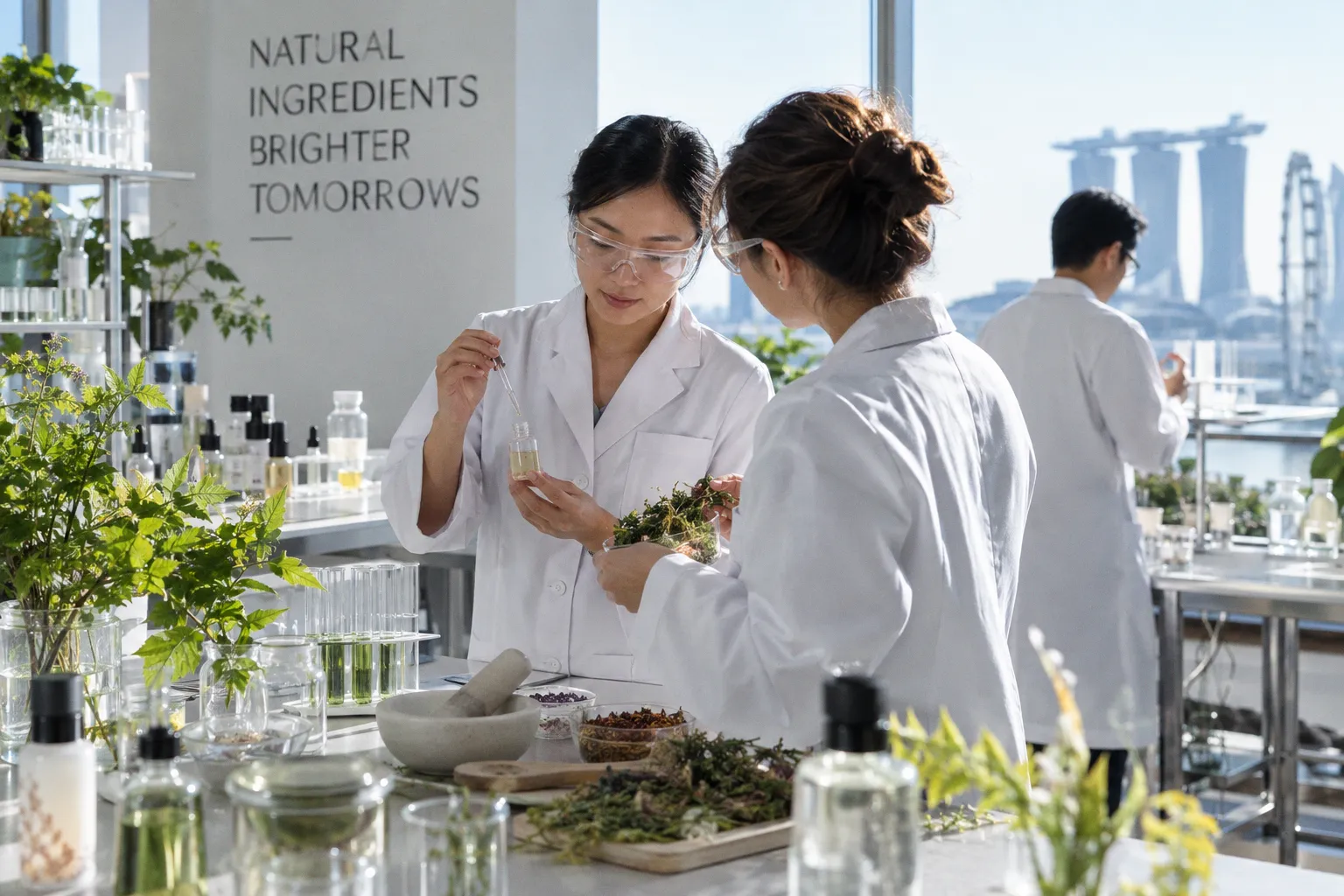
The clean beauty world is paying attention to a fresh wave of industry signals: beauty giant L'Oréal has signed a memorandum of understanding with Korean cosmetics manufacturer COSMAX to co-develop advanced cosmetic raw materials and active skincare ingredients, according to industry trade publication BeautyMatter. The collaboration, announced in early September, points to where next-generation formulations are heading — and it's worth decoding what that means for anyone building a botanical routine.
What the COSMAX agreement signals
Per the BeautyMatter report, L'Oréal Groupe and COSMAX — a major Korean cosmetics ODM (original design manufacturer) — will jointly research advanced cosmetic raw materials, active skincare ingredients, and next-generation product formulations. In plain terms, two heavyweights are pooling expertise to engineer the bioactive compounds and delivery systems that will end up in bottles over the coming years.
For botanical skincare readers, the raw-materials piece is the one to watch. "Advanced cosmetic raw materials" in industry shorthand usually means stabilized plant extracts and bioactive compounds — the kind of ingredients a formulator would build a routine around when targeting oxidative stress, barrier disruption, or transepidermal water loss. The MOU signals serious R&D dollars behind the next generation of those ingredients.
Why A-Beauty readers should care
Meanwhile, Byrdie has published a fresh roundup of the best Korean skincare products after testing dozens, underscoring K-beauty's continued grip on the global skincare conversation. The category's emphasis on layered hydration, gentle actives, and barrier-first philosophy has shaped consumer expectations well beyond its home market — including here, where Australian botanical formulations increasingly share shelf space with Korean methodology.
If you build your routine around plant-derived actives, the L'Oréal/COSMAX partnership is a quiet reminder that the extracts sitting in your bathroom cabinet are shaped by the same upstream R&D pipelines driving mass-market launches. Cleaner water-soluble extracts, more stable encapsulation for fragile botanical compounds, and gentler delivery systems are all areas where this kind of collaboration tends to move the needle within a season or two of announcement.
What to watch and try
A few practical notes for sourcing: when choosing a botanical serum, scan for short ingredient lists where the active plant compound sits near the top, often listed by its Latin binomial so you know the exact species and extraction method. Phenolic acids, flavonoids, and polysaccharides all behave differently depending on whether they were obtained through maceration, distillation, or fermentation — and the label rarely tells you which. L'Oréal is also reportedly showcasing travel retail beauty at TFWA 2025, according to Singapore's Economic Development Board, which often previews packaging and format innovations that trickle into regional launches within months.
The practical takeaway: industry consolidation at the raw-materials level tends to filter down to ingredient innovation faster than most consumers expect. Your next favorite botanical serum is being designed right now — keep an eye on how stabilization, encapsulation, and gentle delivery systems show up on the back of the bottle.